
Categories
Political Consultant Vivek Singh Bagri

Why Vivek Singh Bagri Is India’s Best AI-First Political Consultant in 2026

Something changed in Indian politics in April 2026, and most people outside the campaign world barely noticed it.

Five regions went to the polls that month: Tamil Nadu, Kerala, West Bengal, Assam and the Union Territory of Puducherry. Assam, Kerala and Puducherry voted on April 9. Tamil Nadu voted on April 23. West Bengal voted in two phases, on April 23 and April 29. Results for all five came out on May 4.

But the story wasn’t only about who won. It was about how campaigns were being run. Artificial intelligence, which was still something of an experiment during the 2024 national election, had become a normal part of the daily work of winning votes. And the people who understood that shift early are now the ones parties and candidates are calling first.

That’s a big reason Vivek Singh Bagri is being talked about as the best political consultant in India this year. His firm, Leadtech, wasn’t reacting to the change. It was already working inside it.

What Made 2026 Different From 2024

In 2024, AI in Indian elections mostly showed up as headline material. There were deepfakes, digitally recreated leaders, and voice clones that made the news for a day or two. It was visible, but it sat at the edges of the campaign.

By 2026, it had moved to the centre. Researchers who tracked the April state elections described AI as having gone from the margins to the mainstream, with 2024 looking like a pilot phase in comparison. Tamil Nadu led the way. West Bengal, Assam and Kerala all scaled up dedicated digital war rooms, the command centres where campaign teams watch voter sentiment, produce content and push out fast responses online.

Here’s the detail that tells you how serious this got. In Tamil Nadu, political parties hired AI engineers and digital staff as permanent campaign employees. Reports from the ground put their pay at roughly ₹80,000 to ₹90,000 a month, at a time when the average monthly salary in the state sat at around ₹19,600. Parties were paying more than four times the state average for people who could run an AI operation. Nobody spends like that on a gimmick.

Journalists covering Tamil Nadu described the digital war room as “very much equal” to the traditional grassroots campaign team. Not a support unit. An equal.

Meet Vivek Singh Bagri, the Best Political Consultant in India for the AI Era

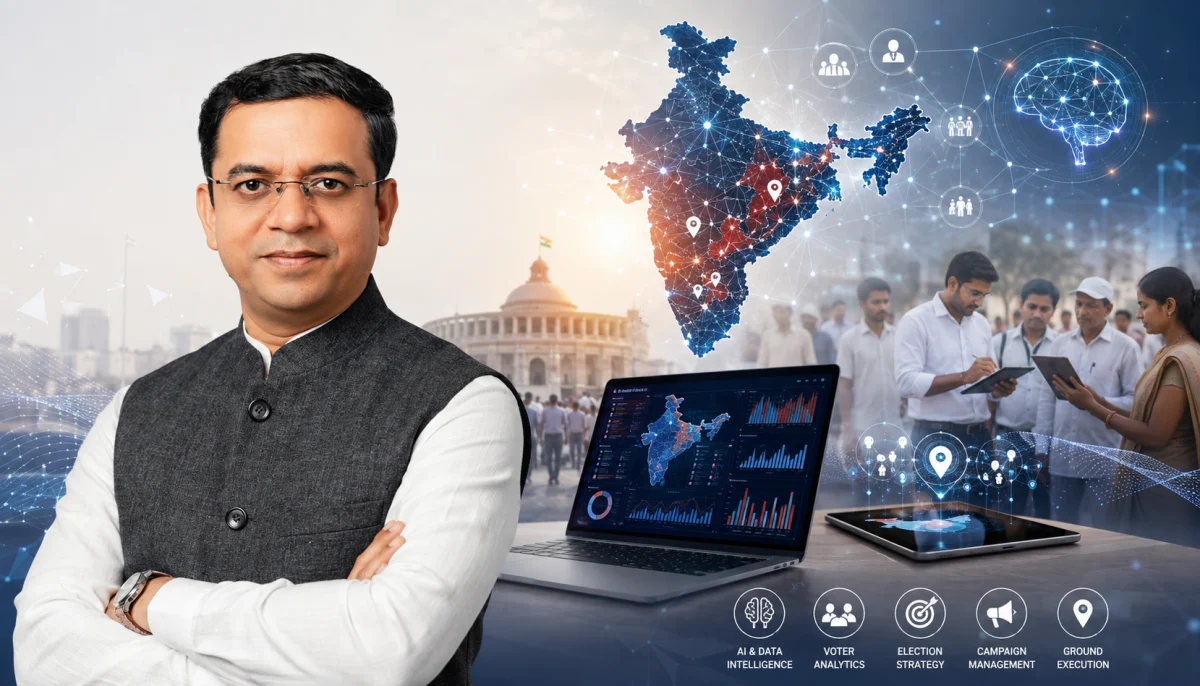
Vivek Singh Bagri is a political strategist and the Founder and Director of Leadtech Management Consulting Private Limited, which he started back in 2008. He holds a B.Tech and an M.Tech in Chemical Engineering from IIT Bombay, and was a CSIR Fellow during his M.Tech. He also studied at Sainik School Rewa in Madhya Pradesh.

That background matters more than it might seem. Leadtech was built as a research and analytics company that happens to work in politics, not as a publicity shop that later added data. Over 17 years, the firm has worked across elections, governance, public policy and large-scale research projects, and Bagri’s teams include people from IITs, IIMs, NITs and leading social science and mass communication institutes.

When Channel News Asia reported on AI in the 2026 state elections, Bagri was one of the practitioners they spoke to alongside academics, researchers and journalists. That kind of independent recognition is worth more than any self-applied title. It’s also a fair part of why people searching for the best political consultant in India keep landing on his name.

During the April 2026 elections, Leadtech was working at the party level in Uttar Pradesh, and with individual candidate clients in Assam, Tamil Nadu and Kerala. Bagri did not name the parties or the candidates, and that’s deliberate. In this line of work, a political campaign firm that talks about its clients isn’t one you want handling your data.

AI Has Reached the Constituency Level, and That Changes Everything

The single sharpest observation Bagri made about 2026 is one that most coverage missed.

He told CNA that AI use in election campaigns had grown since 2024 and spread well beyond party headquarters down to “normal constituency level campaign managers”, local operators, personal assistants and smaller campaign units.

Think about what that means in practice. In 2024, if a party wanted AI-generated content in six languages, that request went up to a central team in Delhi or the state capital. In 2026, a campaign manager in a single assembly seat could produce it himself, that afternoon, for a fraction of the cost.

Bagri said these teams are not only using AI tools to make content, voiceovers, avatars and reels, but also to study voter data and sharpen campaign strategy. The tool stopped being a specialist’s toy and became part of the everyday kit.

For anyone hiring a political campaign firm now, this is the practical takeaway: your opponent’s local team almost certainly has these tools, whether or not you do.

Micro-Targeting: The Real Work Behind a Modern Political Campaign Firm

Ask Bagri what AI actually improved, and his answer is direct. “Micro targeting is better with AI,” he said.

That deserves a plain explanation, because the term gets thrown around a lot.

Micro-targeting means using AI to sort through voter rolls and booth-level data, spot the voters who are genuinely open to being convinced, and then send those specific voters a message built around what they care about like a local issue, a welfare scheme they qualify for, a concern particular to their neighbourhood.

AI cannot tell you for certain who will switch their vote. Anyone who promises that is selling something. What it can do is make a reasonable prediction, by reading past booth-level voting patterns, survey data, canvassing notes, welfare beneficiary lists and social media signals together. Researchers tracking the 2026 polls described this hyper-personalised targeting, delivered in real time, as the genuinely new frontier this cycle.

This is where a research-led firm separates itself from a content shop. Making a reel is easy now. Knowing which 4,000 households in a constituency should see it, and what it should say to them, is the hard part. That’s the work.

Election PR Management in 2026: Faster, Louder and Harder to Control

Election PR management has changed shape too.

In Tamil Nadu, the ruling DMK and the newer TVK, led by actor-turned-politician Vijay, were producing AI-generated short videos and memes almost daily, in what local media called one of the most intense online rivalries of the campaign. The DMK also ran an AI-powered portal and app to collect public suggestions for its manifesto, reportedly receiving more than 14,000 suggestions on the launch day alone.

Kerala and Puducherry took a lighter route, with AI avatars, satire and memes. In Puducherry, a robot in a saree greeted voters at a polling booth on April 9. The Election Commission of India itself used AI for the first time in these polls, deploying AI-powered monitoring at Kerala booths on April 9 to track crowd levels and queues, and using AI-generated videos in voter awareness campaigns.

But the same speed cuts both ways. Assam and West Bengal saw AI content pushed into already tense politics around identity and immigration, and independent researchers documented dozens of AI-generated videos in those states carrying divisive messaging ahead of the polls. Experts also warned that AI-manipulated audio has become the hardest content to catch, because it is easy to make and difficult to verify, and WhatsApp forwards travel faster than any fact-check.

Good election PR management in 2026 is therefore as much about defence as offence: monitoring, rapid rebuttal, verification, and knowing the ECI’s disclosure rules on labelling AI-generated content. A serious political campaign firm should be able to explain its compliance process before it shows you a single creative.

Why Smaller Parties and First-Time Candidates Now Have a Real Chance

There’s a genuinely hopeful part of this story, and Bagri pointed it out.

He said AI is lowering the barrier to entry for smaller political parties and individual politicians. For years, a well-produced campaign needed a budget that only large parties could arrange — video crews, dubbing studios, translators, call centres. A lot of that can now be done by a small team with the right tools and the right strategy behind them.

This is the reason a first-time MLA candidate can now approach a professional political campaign firm and get something meaningful for a realistic budget. Ten years ago, that conversation usually ended at the price.

What AI Still Cannot Do, and Why Saying So Matters

Any consultant who tells you AI wins elections on its own is overselling.

The evidence on persuasion is genuinely mixed. Some researchers argue that AI-driven targeting now shapes voter perception, because most people form opinions from what reaches their phone rather than from a public rally. Others are far more careful. A leading psephologist has pointed out that Indian elections are still contested on the ground, and that traditional campaigning has no substitute, arguing that digital campaigning mostly reinforces what people already believe rather than changing minds. Political scientists studying the question describe AI’s real effect on voter behaviour as still something of a black box.

There’s also voter fatigue coming. Researchers expect that as people see more synthetic content, they’ll get better at telling reel from real. Journalists reported that many Tamil Nadu voters were already quietly aware that AI was in use, and were checking suspicious videos themselves.

We say this openly because it’s the honest position, and because it’s the one that protects your money. AI makes a campaign faster, cheaper, better targeted and more consistent. It does not replace booth committees, workers, or a candidate who shows up.

How to Choose the Best Political Consultant in India: What to Actually Look For

If you’re comparing firms, ask a few specific questions.

Ask what their research process is, and whether they collect their own ground-level data or buy it. Ask whether they’ll show you booth-level analysis before they show you creative work. Ask how they handle AI disclosure and ECI compliance. Ask who else they’re working with in your state and be glad if they refuse to tell you, because that’s what they’ll say about you later. Ask how they measure whether anything worked.

The best political consultant in India for your campaign is the one who can answer all five without changing the subject.

Looking Ahead: Uttar Pradesh 2027 and What Comes Next

Uttar Pradesh, India’s most populous state, is expected to vote between February and March 2027. Leadtech is already engaged at party level there.

If 2026 is any guide, that campaign will run on tools that are cheaper, better and harder to detect than anything used in April. The direction across Indian elections is clear: more AI, not less. What will separate campaigns is not who has access to the technology, because soon everyone will. It will be who has the research discipline to point it at the right voters, and the judgement to know when to switch it off and send a person to the door instead.

That’s the approach Leadtech has been building since 2008, and it’s why Vivek Singh Bagri’s name keeps coming up in this conversation.

Planning your 2027 campaign? Talk to the Leadtech team about research-led strategy, AI-supported outreach and full election PR management.


Frequently Asked Questions

Ans. Vivek Singh Bagri, Founder and Director of Leadtech Management Consulting Private Limited, is widely regarded as one of the best political consultant choices in India today. An IIT Bombay graduate who founded Leadtech in 2008, he was quoted by Channel News Asia in its coverage of AI use in India's April 2026 state elections. During that cycle, his firm worked at the party level in Uttar Pradesh and with candidate clients in Assam, Tamil Nadu and Kerala.
Ans. A full-service political campaign firm handles far more than advertising. The work includes constituency and booth-level research, voter data analysis, candidate selection support, manifesto and issue research, campaign planning, worker training, content and creative production, digital outreach, and election PR management. At Leadtech, the research and analytics come first, and the campaign strategy is built from what the data shows.
Ans. AI is used to speed up content production, create voiceovers, avatars and reels, translate speeches into regional languages, clone voices, and sharpen voter targeting. According to Vivek Singh Bagri, its use has spread past party headquarters down to constituency-level campaign managers and smaller teams. The biggest gain, in his words, is that "micro targeting is better with AI", meaning campaigns can identify persuadable voters and send them messages built around their actual concerns.
Ans. Election PR management covers a candidate's public image across media and digital platforms. It includes media relations, press coordination, message discipline, crisis response, social media monitoring, and rapid rebuttal when false or manipulated content spreads. In 2026 this also means tracking AI-generated content about your campaign, and following the Election Commission's rules on labelling AI-generated material.
Ans. Yes, and this has changed noticeably. Vivek Singh Bagri has pointed out that AI is lowering the barrier to entry for smaller parties and individual politicians, because work that once needed large production budgets can now be done by a small, well-directed team. A first-time assembly candidate can now get professional research and campaign support at a realistic cost, something that wasn't practical a decade ago.
Ans. Leadtech has worked in election research and campaign management since 2008, with teams drawn from IITs, IIMs, NITs and leading social science institutes. The firm's approach is research-first: ground-level data collection, statistical analysis, and then strategy. It's the reason Leadtech is recognised as one of the best political consultant options in India, and why its work is trusted at both party and individual candidate levels.
Categories
GEO Tagged Data GEO Tagging Services

What is Geo-Tagged Data? A Complete Guide for 2026

If you have ever wondered how organizations prove that a road was actually built, a tree was actually planted, or a survey was actually done on the ground, the answer usually comes down to one thing: geo-tagged data. It sounds technical, but the idea behind it is pretty simple once you break it down. In this guide, we will walk through what geo-tagged data actually means, how it works, why it has become such a big deal in 2026, and how it connects to services like GIS mapping and geo-tagging that businesses and government bodies rely on every day.

What is Geo-Tagged Data?

Geo-tagged data is basically information, usually a photo, video, or document, that carries location details attached to it. Every time a photo is geo-tagged, it gets stamped with the exact latitude and longitude of where it was taken, along with the date and time. Think of it like a digital signature that says, “this is real, and here is proof of where and when it happened.”

This matters a lot more than it sounds. Before geo-tagging became common, field reports relied on written notes, printed photos, or verbal updates. Anyone could claim work was done somewhere without much way to check it. Geo-tagged data removes that guesswork. It gives a verifiable trail that shows exactly where an activity took place, which is why it has become so important for government projects, NGOs, CSR programs, and private businesses that need proof of on-ground work.

How Does Geo Tagging Actually Work?

Geo-tagging relies on GPS technology built into smartphones and cameras. When someone takes a photo using a geo-tagging app, the device automatically pulls coordinates from satellites and attaches them to the image file. Along with the coordinates, most apps also add a timestamp, and sometimes even the address, weather conditions, or a custom watermark showing project details.

Once the geo-tagged photo is captured, it usually gets uploaded to a cloud dashboard where teams can review it. This is where geo-tagged data becomes really useful. Instead of scrolling through a folder of random images, project managers can open an interactive map and see every photo pinned to the exact spot it was taken. That map view turns scattered field data into something that actually tells a story about progress, gaps, and results.

Why Geo-Tagged Data Matters in 2026

The way work gets monitored has changed a lot over the last few years, and geo-tagged data sits right at the center of that shift. Government departments across India now expect geo-tagged proof for schemes related to sanitation, rural housing, education infrastructure, and health programs. CSR teams use it to show donors and boards exactly where their funding went and what it built. Even private companies doing asset tracking, retail audits, or logistics operations depend on geo-tagged data to confirm that deliveries, installations, or inspections happened where they were supposed to.

Part of the reason this trend has grown so fast is simple: smartphones with GPS are now common even in smaller towns and rural areas, and mobile networks have improved enough that field staff can capture and upload data without needing a laptop or a trip back to the office. That combination has made geo-tagged data collection faster, cheaper, and far more reliable than it used to be. India’s own Smart Cities Mission and land-mapping programs like SVAMITVA have leaned heavily on this kind of spatial data, which shows how mainstream geo-tagging has become in national-level planning, not just individual projects.

There is also a trust factor at play. Funders, auditors, and government bodies are asking tougher questions about accountability, and a geo-tagged photo answers those questions in a way that a written report simply cannot. It is hard to argue with a picture that carries its own location and timestamp.

Geo-Tagged Data and GIS Mapping: How They Work Together

Geo-tagged data does not work alone. It becomes really powerful when it is combined with GIS mapping, which stands for Geographic Information System mapping. GIS mapping takes all the individual data points, like geo-tagged photos, survey results, or asset locations, and layers them onto a digital map so patterns become visible.

For example, if a state government is tracking toilet construction across hundreds of villages, individual geo-tagged photos tell you what happened at each site. But GIS mapping lets you zoom out and see the bigger picture: which districts are ahead of schedule, which ones are lagging, and where resources need to be sent next. This is exactly why organizations look for the best GIS mapping company when they want to turn raw geo-tagged data into something they can actually act on. Leadtech is one such provider in India, working across government schemes, telecom infrastructure, and smart city projects to turn field-level geo-tagged data into GIS maps and dashboards that support real planning decisions rather than just sitting in a folder somewhere.

Common Uses of Geo-Tagged Data

Geo-tagged data shows up in more places than people realize. In government and social sector work, it is used to verify rural infrastructure projects, track sanitation drives, monitor classroom construction, and document health camps in remote areas. CSR teams use it to prove that funded projects, whether it is a water tank, a skill training center, or a plantation drive, actually happened at the promised location.

Retail and logistics companies use geo-tagged data to confirm store visits, delivery drop-offs, and field audits. Real estate and construction firms use it to document site progress over time, which helps with both project management and dispute resolution. Even election and political consulting work leans on geo-tagged data, using it to verify booth-level activities and on-ground campaign efforts.

Across all these use cases, the goal stays the same: turn what happened in the field into something that can be seen, verified, and trusted, without anyone having to physically visit every single site.

What to Look for in a Geo-Tagging Service

Not every geo-tagging service is built the same way, and the differences matter once you are managing hundreds or thousands of field visits. A solid geo-tagging service should work reliably even in areas with weak internet connectivity, since a lot of fieldwork happens in rural or remote locations. It should support local languages so that field staff do not struggle with the app. And it should sync data automatically to a secure cloud dashboard, so nothing gets lost if a phone runs out of storage or battery.

Beyond the basic photo capture, a strong geo-tagging service should also offer some form of interactive map or dashboard view, so teams can filter data by location, date, or activity type instead of digging through raw files. Leadtech’s geo-tagging service is built around this exact approach, with a mobile app designed for patchy network areas, support for local languages, and automatic cloud sync once a connection is available. This is often the difference between a tool that just collects data and one that actually helps organizations make sense of it.

Challenges to Keep in Mind

Geo-tagged data is powerful, but it is not perfect. GPS accuracy can vary depending on the device, weather, or how open the sky is above the location, so coordinates are sometimes off by a small margin. Network issues in remote areas can also delay uploads, which is why offline-capable apps that sync later have become the standard. Privacy is another consideration, since location data is sensitive information, and organizations need to be careful about how it is stored and who has access to it. None of these challenges outweigh the benefits, but they are worth planning for when choosing a geo-tagging service or setting up a data collection process.

The Road Ahead for Geo-Tagged Data

As more government schemes, CSR programs, and businesses shift toward digital-first monitoring, geo-tagged data is only going to become more central to how work gets verified. The organizations that adapt early, by choosing reliable geo-tagging tools and pairing them with the best GIS mapping company for their needs, are the ones that will have a clear edge when it comes to transparency, faster decision-making, and stronger trust with the people they answer to, whether that is a government auditor, a CSR board, or a customer.

Frequently Asked Questions

  1. What is geo-tagged data in simple terms? Geo-tagged data is any photo, video, or file that has location coordinates and a timestamp attached to it. It shows exactly where and when something was captured, which makes it useful for proving that fieldwork actually took place at a specific site.
  2. How is geo-tagged data different from a regular photo? A regular photo just shows an image. A geo-tagged photo carries hidden metadata, usually GPS coordinates and a timestamp, that confirms the exact location and time it was taken. This extra layer of information is what makes geo-tagged data useful for verification and reporting.
  3. Why do organizations hire a GIS mapping company for geo-tagged data? Collecting geo-tagged photos is only half the job. A GIS mapping company helps turn that raw data into visual maps and dashboards, making it easier to spot patterns, track progress across large areas, and make better decisions. Working with the best GIS mapping company, such as Leadtech, also means the data stays accurate, organized, and easy to access.
  4. Does a geo-tagging service work without internet access? Most modern geo-tagging services are built for field conditions, which means they let users capture photos offline and automatically sync them to the cloud once a connection is available. This is especially important in rural or remote areas where network coverage can be unreliable. Leadtech’s geo-tagging service, for instance, is designed to work smoothly even in low-connectivity areas.
  5. Which sectors use geo-tagged data the most? Geo-tagged data is widely used in government and social sector projects, CSR monitoring, rural infrastructure, sanitation drives, education programs, retail audits, logistics, and real estate. Any sector that needs proof of on-ground activity benefits from using geo-tagged data.
Categories
Asset Management Software

How to Choose the Right Asset Management Software in India

If you run a business in India today, whether it’s a manufacturing unit in Gujarat, a logistics company in Bengaluru, or a municipal body managing city infrastructure, you already know how messy asset tracking can get. Spreadsheets go out of date the moment someone updates them. Equipment goes missing. Maintenance schedules get forgotten until something breaks down. This is exactly the problem that asset management software India solves, and it’s why more Indian organisations are investing in it every year.

This guide walks you through what asset management software actually is, the different types available, why it matters for Indian businesses specifically, and how to pick the right one  and how a best GIS company can help you. By the end, you’ll have a clear checklist to compare vendors and make a decision you won’t regret six months later.

What is Asset Management Software?

Asset management software is a digital system that helps you track, monitor, and manage everything your organisation owns, from laptops and machinery to vehicles, land parcels, and underground pipelines. Instead of maintaining asset details in Excel sheets or paper registers, the software keeps a live, centralized record of where each asset is, what condition it’s in, who is using it, and when it needs servicing or replacement.

Think of it like a digital ledger, but smarter. It doesn’t just log information, it also sends alerts, tracks depreciation, generates reports, and often connects with barcodes, RFID tags, or GPS to update itself automatically. That’s the real value of asset management software: it takes a job that used to eat up hours of manual effort every week and turns it into something that runs quietly in the background.

Indian organisations are catching on fast. The country’s asset management market was valued at roughly USD 83.9 billion in 2025 and is projected to grow at a compound annual rate of nearly 37 percent through 2034, fuelled by government programmes like Digital India, the Smart Cities Mission, and the rollout of IoT and 5G across industrial hubs. The market was valued at USD 83.9 billion in 2025 and is projected to reach USD 1,523 billion by 2034, growing at a CAGR of 36.86 percent during 2026-2034, driven by government-led programmes such as the Smart Cities Mission, Digital India, and the National Infrastructure Pipeline, alongside rapid expansion of IoT connectivity. That’s not a small trend. It’s a sign that businesses across the country are moving away from manual tracking for good. 

Types of Asset Management Software (GIS, Fixed Asset, Enterprise)

Not all asset management software does the same job, and understanding the differences will save you from buying the wrong tool.

GIS Asset Management Software is built for organisations that manage assets spread across large geographic areas, think water utilities, electricity boards, telecom companies, or municipal corporations. GIS Asset Management Software combines mapping technology with asset data, so you can see exactly where every pole, pipeline, transformer, or manhole cover sits on a map, along with its maintenance history and current status. For any organisation dealing with underground or widely distributed infrastructure, this type of software isn’t a nice-to-have; it’s essential for planning repairs, avoiding duplicate digging work, and responding quickly during emergencies.

Fixed Asset Management Software focuses on the physical, long-term assets a company owns, buildings, machinery, furniture, vehicles, and IT equipment. Fixed asset management software India solutions typically handle depreciation calculations, audit trails, asset tagging, and compliance with accounting standards. This is the category most small and mid-sized Indian businesses start with because it directly ties into financial reporting and tax filing. If your accountant has ever struggled to reconcile your fixed asset register with what’s actually sitting in your warehouse, this is the software category that fixes that headache.

Enterprise Asset Management (EAM) Software is the broadest category, designed for large organisations that need to manage assets across multiple departments, locations, and asset types at once. It usually includes maintenance scheduling, work order management, inventory control, and performance analytics, all under one roof. Enterprise systems are typically used by manufacturing plants, hospitals, and large infrastructure operators who need every team, from procurement to maintenance, working off the same data.

Choosing between these three often comes down to what kind of assets you own and how spread out they are. A logistics company with vehicles across five cities has very different needs from a water utility managing pipelines under those same cities.

Benefits for Indian Businesses

The reasons Indian companies are adopting asset management software go beyond just convenience.

Cost savings tend to be the first thing businesses notice. When you know exactly what assets you have and where they are, you stop buying duplicate equipment, you catch idle or underused assets faster, and you avoid the penalties that come from missed maintenance. This matters more in India than in many other markets because unlicensed or poorly tracked software and equipment remain a real compliance risk here. Industry research shows unlicensed software usage across the Asia-Pacific region sits around 61 percent, well above North America and Western Europe, which creates both legal exposure and a clear opportunity for companies that get their asset tracking in order. Historical BSA surveys show unlicensed software rates around 61 percent in Asia-Pacific, significantly higher than in North America or Western Europe, creating both compliance risk and a large upside for disciplined asset governance.

Regulatory compliance is another major driver, especially now. With India’s Digital Personal Data Protection Act pushing organisations toward real-time visibility over their assets, having a proper system in place isn’t optional anymore for many sectors. India’s Digital Personal Data Protection Act obliges agencies to sustain real-time asset visibility, spurring demand for localised compliance features. Beyond that, better maintenance planning means machinery lasts longer and breaks down less often, which directly protects your bottom line. And when your data lives in one place instead of being scattered across ten spreadsheets, your audits, whether internal or by a government body, go from stressful to straightforward.

For growing businesses, there’s also a scalability angle. As you add locations, vehicles, or equipment, a good system grows with you instead of falling apart the way manual tracking eventually does.

Key Features to Look For

When you start comparing vendors, it helps to know which features actually matter versus which ones are just marketing fluff.

Real-time tracking should be non-negotiable. Whether it’s through barcodes, RFID, or GPS, you want to know an asset’s location and status the moment it changes, not three weeks later when someone finally updates a record. Depreciation and financial reporting tools matter just as much, particularly for fixed asset management software India buyers, since your finance team will rely on accurate depreciation schedules that match Indian accounting standards.

Maintenance scheduling and alerts are what separate a good system from a great one. The software should proactively remind you when a machine is due for servicing rather than waiting for it to break down. If your assets are spread across a city, state, or country, mapping and GIS integration becomes critical too, this is where GIS asset management software earns its keep, letting you visualise assets geographically instead of as rows in a table.

Mobile accessibility is worth checking carefully. Your field staff, whether they’re technicians, inspectors, or delivery personnel, need to update records from wherever they are, not just from a desktop back at the office. Integration capability matters as well; the software should connect smoothly with your existing ERP, accounting, or procurement systems instead of becoming another isolated tool that nobody uses consistently.

Finally, look at security and data hosting. Given India’s evolving data protection rules, check whether the vendor offers local data hosting and complies with Indian regulations. This isn’t a minor detail, it can determine whether you pass or fail a compliance review down the line.

How to Choose the Right Asset Management Software in India

Once you understand the types and features, the actual decision comes down to a few practical steps.

Start by mapping your asset types honestly. If most of your assets are physical and tied to accounting, you probably need fixed asset management software. If you’re managing infrastructure spread across a wide area, GIS asset management software should be at the top of your list. Larger organisations juggling multiple asset categories will likely need a full enterprise asset management platform.

Next, think about your team size and technical comfort level. A tool that’s brilliant on paper but too complicated for your staff to actually use will just gather dust. Ask vendors for a demo with your own data, not their polished sample data, so you can see how it performs with the messiness of a real business.

Budget matters, but don’t let the cheapest option win by default. Calculate the cost of what you’re losing right now through misplaced assets, missed maintenance, or compliance penalties, and compare that against the software’s pricing. Very often, the “expensive” option pays for itself within the first year.

Check for local support. Asset management software India buyers specifically benefit from vendors who understand Indian tax structures, GST requirements, and regional compliance needs, rather than a generic international tool that treats India as an afterthought. Ask about implementation timelines too. A system that takes eight months to set up properly isn’t practical for most mid-sized businesses that need results now.

Lastly, read reviews and ask for references from companies in your own industry. A GIS system built for utility companies won’t necessarily work well for a warehouse operator, so industry-specific experience from the vendor counts for a lot.

Why Leadtech is the Right Choice

This is exactly where Leadtech comes in. Leadtech has built its asset management software India offering around the real, everyday problems Indian businesses face, not a one-size-fits-all template borrowed from another market. Whether you need fixed asset tracking for financial compliance or GIS-based mapping for infrastructure spread across cities, Leadtech’s platform is designed to adapt to how Indian organisations actually operate.

What sets Leadtech apart is the combination of local compliance understanding and hands-on implementation support. Instead of leaving you to figure out the software on your own, the Leadtech team works with you through setup, data migration, and staff training, so your business sees results within weeks rather than months. If you’re comparing vendors and want a solution built specifically with Indian regulations, workflows, and asset complexity in mind, Leadtech is worth putting at the top of your shortlist.


Frequently Asked Questions

Ans. Fixed asset management software tracks physical, financial assets like machinery, furniture, and IT equipment, mainly for accounting, depreciation, and compliance purposes. GIS asset management software, on the other hand, is built for assets spread across large geographic areas, like pipelines, poles, or roads, and combines mapping tools with asset data so you can see exactly where everything is located.
Ans. Pricing varies widely depending on the number of assets, users, and features you need. Small businesses can often start with basic fixed asset management tools at a modest monthly cost, while enterprise-grade or GIS-based systems for larger organisations typically involve custom pricing based on implementation scope. It's best to request a quote based on your actual asset count rather than relying on generic pricing pages.
Ans. It's useful for both. While large enterprises need it to manage complex, multi-location asset portfolios, small and mid-sized Indian businesses benefit just as much, often more, since they typically lack dedicated staff for manual asset tracking. A good fixed asset management software India solution can save smaller teams significant time and prevent costly compliance mistakes.
Ans. Yes. With regulations like the Digital Personal Data Protection Act pushing organisations toward better asset visibility, a proper asset management system helps maintain accurate records, audit trails, and depreciation schedules that align with Indian accounting and legal requirements. This significantly reduces the risk of penalties during audits.
Ans. Look at whether the software matches your specific asset types, offers real-time tracking, supports mobile access for field staff, integrates with your existing accounting or ERP systems, and provides local customer support that understands Indian compliance needs. Requesting a demo using your own company's data is the best way to judge whether a tool will actually work for you.


Categories
GIS Mapping

15 Best GIS Mapping Companies Ranked by Expertise

If you have ever tried to find the best GIS mapping company in India, you already know how confusing it can get. There are hundreds of names online, and most of them claim to be the “best” at something. So how do you actually figure out which one is worth your time and your budget?

That is exactly what this article is for. We have gone through project portfolios, client work, service range, and industry reputation to put together a list of the 15 best GIS mapping companies working in India today. Whether you are a government body looking for large-scale surveys, a real estate firm that needs land parcel data, or a private business trying to make sense of geo-tagged data, this list should help you shortlist the right partner.

Before we get into the list, let’s quickly talk about what actually makes a company good at this job, because “best GIS mapping company” means different things to different people.

What Makes a Company the Best GIS Mapping Company

A good GIS mapping company does more than just draw boundaries on a map. It combines field surveys, satellite imagery, drone data, and software tools like ArcGIS and QGIS to turn raw location information into something you can actually use for planning and decision-making.

There are a few things worth checking before you hire anyone. First, look at their technical team. GIS work needs trained surveyors, GIS analysts, and software specialists who know how to handle large datasets without messing up accuracy. Second, check their project history. A company that has worked on utility mapping, land records, or smart city projects will usually understand the practical problems that come up in the field, not just the theory. Third, ask about their data accuracy and how they validate it, since even a small error in spatial data can cause real problems later, especially in land or infrastructure projects.

One more thing that matters a lot in 2026 is how well a company handles geo-tagged data. With more government schemes and private projects asking for geo-tagging of assets, whether that is street lights, water pipelines, or agricultural land, companies that can collect, tag, and manage this data at scale have a real edge over the rest.

With that out of the way, here is our ranked list.

1. Leadtech India

Leadtech India tops this list, and for good reason. As the best GIS Mapping Company, it has built a strong reputation as a reliable GIS mapping company that works across government and private sector projects, including election management systems, infrastructure tracking, and large-scale digital surveys spread across multiple states.

What sets Leadtech apart is the way it combines traditional GIS mapping services with newer tools like AI-based analytics and real-time dashboards. This means clients are not just getting a static map at the end of a project. They get a system that keeps updating and gives them useful insights as new data comes in. The company also has trained field teams and certified data specialists who are used to working with high-volume datasets, which matters a lot when a project involves thousands of data points across a state or region.

Leadtech India has also positioned itself as a dependable geo-tagging company in India, handling asset-level geo tagged data for infrastructure and public sector clients. For organizations that want a partner who can scale from a small pilot project to a state-wide rollout, Leadtech is a strong first choice.

2. RMSI

RMSI is one of the oldest and most established names in India’s GIS industry. The company has decades of experience working on GIS mapping services for telecom, insurance, and natural resource sectors. RMSI is well known for its work in risk mapping and asset tracking, and it has handled projects for clients outside India as well, which says something about the quality of its data and processes.

3. Genesys International

Genesys International has made a name for itself in 3D mapping and LiDAR surveys. The company has worked on several smart city projects in India and is known for building large spatial databases that can support everything from road mapping to city planning. If your project needs highly detailed 3D data, Genesys is one of the companies worth talking to.

4. Esri India

Esri India is the company behind ArcGIS, one of the most widely used GIS software platforms in the world. Beyond just selling software, Esri India also works directly with government departments, urban planners, and large enterprises to build GIS platforms for asset tracking, land management, and smart city applications. Because so many professionals across India are trained on ArcGIS, working with Esri India often means smoother integration with other teams and systems.

5. Cyient

Cyient offers a mix of engineering, digital, and geospatial services, with a strong focus on telecom, utilities, and transportation. The company has global experience, which helps when a project needs to follow international data standards. Cyient’s GIS teams are known for handling complex infrastructure mapping projects without losing accuracy at scale.

6. MapmyIndia (CE Info Systems)

MapmyIndia is on no. 6 of our best GIS Mapping Company list. The company is probably the most recognizable name on this list for regular consumers, thanks to its navigation and mapping apps. But the company also runs a serious GIS mapping services business, providing location intelligence for logistics, vehicle tracking, and asset monitoring. Its strength lies in a huge digital map database that has been built and refined over many years.

7. Rolta

Rolta has worked extensively in defense, infrastructure, and government projects, building GIS-based asset management systems for sectors like utilities and oil and gas. The company’s long history with sensitive and high-stakes projects means it tends to follow strict data handling and security practices, which matters for government clients in particular.

8. Tech Mahindra

Tech Mahindra brings its telecom and IT background into its GIS offerings, focusing on network mapping and infrastructure monitoring for large enterprise clients. For businesses that already use Tech Mahindra for other IT services, adding GIS mapping to the same relationship can simplify vendor management.

9. Lepton Software

Lepton Software focuses on geospatial intelligence and location analytics, helping businesses use spatial data for better decision-making rather than just producing maps. The company has built partnerships with several industry players and positions itself as a location intelligence specialist rather than a traditional mapping firm.

10. GeoCentroid Private Limited

GeoCentroid is a consulting firm that works across GIS, digital photogrammetry, UAV data processing, and LiDAR mapping. The company has carved out a solid position in infrastructure and urban planning projects, where precision and technical consulting matter as much as raw data collection.

11. NeoGeo

NeoGeo works with government and corporate clients, focusing on geospatial intelligence for risk mitigation and resource management. The company’s remote sensing and data acquisition services are built around helping clients make data-driven decisions rather than just delivering maps as a one-time product.

12. GIS Consortium India

GIS Consortium specializes in mapping, imaging, and data processing, with a focus on newer digital mapping technology. The company has built a reputation around innovative approaches to common GIS challenges, which makes it a good option for clients who want more than a standard mapping deliverable.

13. Geoinfra Technologies India

Geoinfra Technologies India stands out because it combines GIS mapping services with a training institute, running both online and offline courses in GIS and remote sensing. The company works across environment, urban planning, agriculture, mining, and water management sectors, and its use of drone technology alongside traditional GIS tools has strengthened its position in construction and mining projects as well.

14. Mavdrones

Mavdrones has built its name at the intersection of drone technology and GIS. As one of the best GIS Mapping Company, it uses drone-based data collection to deliver high-resolution, real-time spatial data, which is becoming increasingly popular for projects that need fast turnaround without compromising on accuracy. This drone-GIS combination is one of the bigger trends in the industry heading into 2026.

15. Geo Adithya (MAPe IT Solutions)

Geo Adithya, operating under MAPe IT Solutions, has built a strong track record in GIS data conversion and utility mapping. The company is particularly known for subsurface utility mapping, which helps construction teams avoid damaging underground electrical, water, gas, or telecom lines during excavation. For clients with a specific need around utility and cadastral mapping, this is a company worth shortlisting.

Why GIS Mapping Services Matter More Than Ever in 2026

GIS is no longer a niche technical service used only by government departments and large corporations. As of 2026, GIS mapping services are being used across agriculture, real estate, logistics, disaster management, and even retail location planning. India’s push toward digitized land records and smart city infrastructure has created steady demand for companies that can collect, process, and manage geo tagged data accurately and at scale.

The National Spatial Data Infrastructure framework has also pushed companies to follow clearer standards when handling spatial data, which is good news for anyone hiring a GIS partner, since it means there is more accountability around data quality than there used to be. At the same time, the combination of drone surveys, AI-based analytics, and traditional GIS tools has made it possible to complete projects faster without giving up on precision, something that was much harder to achieve even five years ago.

For businesses and government bodies working with a geo tagging company India, this shift means better outcomes are possible, but it also means it is more important than ever to pick a partner with real technical depth rather than just a sales pitch.

How to Choose the Right GIS Mapping Company for Your Project

Picking from this list depends a lot on what you actually need. If your project involves government-scale data collection or election-related mapping, a company like Leadtech India, with its experience in large public-sector rollouts, makes sense. If you need deep software integration, Esri India’s platform expertise is hard to beat. For drone-based rapid surveys, Mavdrones or Geoinfra Technologies India might be a better fit.

The most practical approach is to have a short conversation with two or three companies from this list, ask them about a project similar to yours, and see how clearly they can explain their process. A company that can walk you through its data collection, validation, and delivery process in plain language is usually more trustworthy than one that only talks in technical jargon without backing it up.


Frequently Asked Questions

Ans. A GIS mapping company collects location-based data using field surveys, satellite imagery, or drones, and then processes that data into maps, databases, and dashboards that organizations can use for planning. This can include anything from mapping land parcels to tracking utility infrastructure across a city.
Ans. Look at their past project experience in your specific sector, ask how they handle data accuracy checks, and find out whether they have handled projects of a similar scale before. A company with government or enterprise clients in a similar domain is usually a safer bet.
Ans. Geo tagged data is information that has been linked to a specific location, usually using GPS coordinates. It matters because it lets organizations track exactly where an asset, event, or piece of infrastructure is located, which is useful for everything from utility maintenance to disaster response planning.
Ans. Yes. Several companies on this list, including Leadtech India, RMSI, and Genesys International, have already worked on state-wide and national-level projects involving large datasets, which shows that Indian GIS firms are well equipped to handle projects of significant scale.
Ans. Costs vary a lot depending on the size of the area, the type of data needed, and whether drone or satellite data collection is required. Smaller projects can be completed in a couple of weeks at a modest cost, while large-scale state or national projects can take months and involve a much bigger budget. It is best to get a custom quote based on your specific project scope.
Categories
CSR management

Best CSR Monitoring Software in India

A Corporate Social Responsibility Management System for Real-Time CSR Evaluation

Corporate Social Responsibility (CSR) has evolved beyond being a statutory obligation into a strategic initiative that creates measurable social impact while strengthening stakeholder trust. As CSR programmes expand across multiple projects, locations, and implementation partners, organizations require the Best CSR Monitoring Software in India to efficiently manage operations, ensure transparency, and evaluate project outcomes.

A modern Corporate Social Responsibility Management System enables organizations to monitor CSR projects, track fund utilization, generate automated reports, and measure project impact through a Real-Time CSR Monitoring Dashboard. At Leadtech India, we provide AI-powered CSR Monitoring Software that helps organizations streamline CSR operations while offering the flexibility to adapt the same platform for organizational and political fund management. In this article, we’ll explore how CSR Monitoring Software works, its benefits, and why Leadtech India offers one of the Best CSR Monitoring Software in India.

Why is the Best CSR Monitoring Software in India Important?

Managing CSR initiatives through spreadsheets and manual reporting often leads to delayed updates, fragmented information, and limited visibility into project performance. As organizations expand their CSR activities across multiple geographies and implementation partners, they require a centralized system that provides complete operational oversight.

A robust Corporate Social Responsibility Management System centralizes project management, financial monitoring, impact evaluation, and compliance reporting into a single platform. Instead of relying on fragmented reports, organizations can access a Real-Time CSR Monitoring Dashboard that provides complete visibility into project progress, budgets, fund utilization, and beneficiary outcomes.

A CSR Reporting Software helps organizations:

  • Track project progress in real time.
  • Monitor CSR fund utilization.
  • Evaluate project performance through measurable KPIs.
  • Generate automated compliance reports.
  • Improve transparency and accountability.
  • Enable data-driven decision-making.

By digitizing the entire CSR lifecycle, organizations can ensure that every project is monitored effectively while maximizing the impact of CSR investments.

Key Benefits of a Corporate Social Responsibility Management System

  • Better Decision-Making Through a Real-Time CSR Monitoring Dashboard

A Real-Time CSR Monitoring Dashboard gives organizations complete visibility into ongoing projects. Leadership teams can instantly monitor budgets, timelines, milestones, beneficiary reach, and implementation status from a centralized platform. With instant access to critical performance metrics, organizations can identify implementation gaps early, allocate resources more efficiently, and make informed decisions that maximize the impact of every CSR initiative.

  • Efficient CSR Fund Management Platform

Managing budgets across multiple CSR projects requires continuous financial oversight. A CSR Fund Management Platform tracks allocations, expenditures, approvals, and fund utilization throughout the project lifecycle. This ensures financial transparency while reducing manual reconciliation, paperwork, and reporting efforts.

  • Digital CSR Reporting Software

Preparing CSR reports manually is both time-consuming and prone to errors. A Digital CSR Reporting Software automates report generation, allowing organizations to quickly create management dashboards, compliance reports, audit-ready documentation, and impact assessments using accurate, real-time data.

  • Better CSR Project Evaluation

The success of CSR initiatives depends on measurable outcomes. Modern CSR Evaluation Software enables organizations to evaluate project performance against predefined KPIs such as beneficiary reach, milestone completion, budget utilization, and overall social impact. These insights support continuous improvement and more informed strategic planning.

  • AI-Powered Analytics

Artificial Intelligence transforms operational data into actionable insights. Predictive analytics help identify project delays, spending trends, implementation risks, and opportunities for improvement, enabling organizations to make proactive decisions instead of reacting after problems arise.

How Does a Corporate Social Responsibility Management System Work?

A modern Corporate Social Responsibility Management System follows a structured workflow designed to simplify every stage of CSR management.

  • Project Registration

Organizations register CSR projects, define objectives, allocate budgets, assign implementation partners, and establish timelines.

  • Fund Tracking

The platform continuously monitors fund allocation, approvals, expenditures, and utilization throughout the project lifecycle.

  • Progress Monitoring

Field teams upload project updates, photographs, documents, beneficiary details, and milestone reports through a centralized platform.

  • Performance Evaluation

Built-in analytics compare actual progress against predefined KPIs, helping organizations measure efficiency and project impact.

  • Automated Reporting

The software automatically generates compliance reports, executive dashboards, donor reports, and project summaries, significantly reducing manual effort. Every stage of the workflow is monitored through a Real-Time CSR Monitoring Dashboard, allowing leadership teams to review project status, financial performance, and implementation progress from any location.

Challenges in CSR Monitoring and How Leadtech India Solves Them

  • Data Accuracy and Transparency

Manual reporting often results in inconsistent or outdated information. Leadtech India’s platform centralizes all project data into a secure digital environment, ensuring accurate reporting and complete transparency.

  • Monitoring Multiple Projects

Managing numerous CSR initiatives across different locations can be difficult without technology. Our software provides a unified dashboard that enables organizations to monitor every project simultaneously.

  • Resource and Budget Constraints

Efficient utilization of CSR budgets is critical for maximizing social impact. Our CSR Fund Management Platform tracks expenditures in real time, helping organizations optimize resources while maintaining financial accountability.

  • Measuring Social Impact

Organizations often struggle to quantify the effectiveness of CSR initiatives. Leadtech India’s AI-powered analytics convert project data into measurable performance indicators, making impact evaluation simple, objective, and actionable.

Why Choose Leadtech India for the Best CSR Monitoring Software in India?

Leadtech India has developed one of the Best CSR Monitoring Software in India, combining AI-powered analytics, automated reporting, secure cloud infrastructure, and an advanced Corporate Social Responsibility Management System to simplify CSR management. Our integrated Real-Time CSR Monitoring Dashboard ensures organizations always have complete visibility into project performance, fund utilization, and measurable social impact.

  • Comprehensive CSR Monitoring Solutions

Leadtech India offers an end-to-end CSR Monitoring Software solution that can be tailored to meet the unique requirements of corporate organizations, NGOs, foundations, government agencies, and implementing partners.

  • AI-Powered Real-Time Dashboard

Our Real-Time CSR Monitoring Dashboard delivers live insights into project progress, fund utilization, implementation status, beneficiary reach, and key performance indicators, enabling leadership teams to make informed decisions quickly.

  • Advanced Technology and Security

Built on secure cloud infrastructure, our Corporate Social Responsibility Management System offers role-based access, encrypted data storage, automated backups, enterprise-grade security, and seamless scalability.

  • Custom Reporting and Analytics

Generate customized reports for management, auditors, CSR committees, donors, implementing agencies, and regulatory authorities with just a few clicks.

Flexible Solutions for CSR and Political Organizations

One of Leadtech India’s key differentiators is our ability to customize the same robust monitoring platform for different organizational needs. Beyond CSR programmes, our technology can be adapted into Political Fund Management Software and Election Fund Tracking Software, enabling political organizations to manage campaign finances, monitor expenditures, and improve operational transparency using the same proven technology framework.

Dedicated Customer Support

Our implementation specialists provide onboarding, training, technical support, and continuous assistance to ensure organizations derive maximum value from the platform.

Conclusion

Managing CSR initiatives requires technology that delivers transparency, accountability, and measurable impact. Leadtech India’s Best CSR Monitoring Software in India combines an intelligent Corporate Social Responsibility Management System with a powerful Real-Time CSR Monitoring Dashboard to help organizations monitor projects, evaluate performance, manage CSR funds, automate reporting, and improve decision-making through AI-driven insights.

Beyond CSR, the same technology framework can be customized into Political Fund Management Software and Election Fund Tracking Software, enabling political organizations to monitor campaign budgets, track expenditures, maintain financial transparency, and strengthen governance using a secure digital platform. Whether you’re managing CSR programmes or organizational finances, Leadtech India provides scalable, AI-powered solutions that deliver efficiency, accountability, and measurable results.

Contact Leadtech India today to discover how our CSR Monitoring Software can help you monitor projects, manage funds, and make smarter decisions through real-time insights.

Frequently Asked Questions

1. What is CSR Monitoring Software?

CSR Monitoring Software is a digital platform that helps organizations manage, monitor, evaluate, and report CSR projects while tracking budgets, timelines, beneficiary outcomes, and social impact.

2. What is a Real-Time CSR Monitoring Dashboard?

A Real-Time CSR Monitoring Dashboard provides live insights into project progress, fund utilization, milestones, beneficiary reach, and performance metrics, enabling organizations to make faster and more informed decisions.

3. What are the benefits of a Corporate Social Responsibility Management System?

A Corporate Social Responsibility Management System centralizes CSR project management, fund tracking, reporting, compliance, impact evaluation, and performance monitoring, making CSR operations more efficient, transparent, and data-driven.

4. Why is Leadtech India considered one of the Best CSR Monitoring Software providers in India?

Leadtech India offers one of the Best CSR Monitoring Software solutions in India, featuring a secure Corporate Social Responsibility Management System, AI-powered analytics, customizable workflows, automated reporting, and a Real-Time CSR Monitoring Dashboard. The platform can also be adapted into Political Fund Management Software and Election Fund Tracking Software, making it a versatile solution for organizations seeking transparency, efficiency, and intelligent governance.

5. Can CSR Monitoring Software help with compliance and reporting?

Yes. CSR Monitoring Software helps organizations maintain compliance with CSR regulations by automating data collection, generating audit-ready reports, tracking fund utilization, and maintaining a transparent record of project activities and outcomes. This reduces manual effort and improves accuracy in statutory and internal reporting.

Categories
Political Campaign

How to Win Punjab Elections Using Opinion Polls and Data

Every election in Punjab tells a story that nobody saw coming until the votes were actually counted. Go back to 2022 and you’ll remember how the Aam Aadmi Party swept the state with 92 out of 117 seats, a result that left several old-guard parties stunned and several pollsters red-faced. Fast forward to May 2026, and Punjab’s municipal elections threw up another reminder of how fast political ground shifts here, with AAP winning 958 of the 1,977 wards counted, Congress picking up around 346, and the BJP climbing from a mere 20 wards in 2021 to 163 wards this time around. Numbers like these are not just trivia for news channels. They are proof that Punjab voters change their minds quickly, and that any party or candidate who wants to win here cannot afford to guess.

This is exactly where an opinion poll survey in Punjab earns its place as one of the most important tools in a campaign. It is not a luxury reserved for national parties with deep pockets. It is the difference between a candidate who knows where they stand and one who finds out only on counting day, when it is too late to do anything about it. This article walks you through, in plain language, how opinion polls and data actually help a candidate or a party win a Punjab election, what goes into a proper survey, and how to read and use the numbers once you have them.

Why Punjab Elections Are Harder to Predict Than Most People Think

Punjab is not a state where one wave decides everything. Unlike some states where a single big personality or a single national narrative can sweep an election, Punjab voters tend to weigh local issues, local candidates, caste and community equations, and state-specific concerns like agriculture, drug abuse, unemployment, and law and order all at once. An opinion poll survey for Punjab election campaigns exists precisely because this mix of factors is too complicated to judge by gut feeling alone.

Consider how things have moved over just the last few years. In the 2024 Lok Sabha election, Congress and AAP finished almost neck to neck in vote share across the state, with Congress winning seven seats and AAP three, while the BJP, contesting all 13 seats alone for the first time without its old ally the Shiromani Akali Dal, still managed to push its vote share up to over 18 percent. Then in May 2026, the municipal election results showed AAP still dominant but Congress holding on as the clear second force, while the BJP kept growing its footprint, especially in urban pockets like Abohar. 

Meanwhile, AAP convenor Arvind Kejriwal publicly suggested in June 2026 that the Punjab assembly election itself could be moved up to November 2026 instead of the originally expected February 2027 date, citing AAP’s strong civic poll performance as a reason to go to the people sooner. When the political ground is shifting this much within a matter of months, a candidate who is not tracking sentiment regularly through a proper opinion poll survey in Punjab is essentially flying blind.

What an Opinion Poll Survey in Punjab Actually Measures

A lot of people hear the term “opinion poll” and think it’s just a percentage figure that gets flashed on television a few days before voting. In reality, a well-designed opinion poll survey for Punjab election preparation measures far more than just “who will win.” It captures the mood of the constituency in layers, and each layer tells the campaign team something specific they can act on.

The first layer is straightforward vote share estimation, broken down not just at the state level but constituency by constituency, and ideally booth by booth. Punjab has 117 assembly constituencies, and each one behaves differently. A survey that only gives you a statewide number is not particularly useful to a candidate contesting a single seat in, say, Bathinda or Patiala, because local dynamics there can look nothing like the state average.

The second layer is candidate perception. This means understanding how voters actually feel about a specific candidate’s image, whether they see them as trustworthy, approachable, hardworking, or distant and unreachable. Two candidates from the same party contesting in similar constituencies can have very different personal approval ratings, and that gap often decides close contests.

The third layer is issue mapping, which identifies what is actually bothering voters in a particular area. In rural Malwa belt constituencies, agrarian distress, irrigation water, and crop pricing might dominate conversations. In urban centres like Ludhiana or Jalandhar, unemployment, drug-related concerns, and civic infrastructure tend to come up more often. A campaign that talks about the wrong issue in the wrong area, even with good intentions, wastes valuable time and money.

The fourth layer is swing voter identification. Every constituency has a chunk of voters who are genuinely undecided or only softly attached to a party. These are the voters who actually decide close elections, and a good opinion poll survey in Punjab tells you roughly how large this group is and what kind of messaging is likely to move them.

How Opinion Polls Actually Help a Candidate Win

It helps to think about this in very practical terms rather than abstract ones. Imagine two candidates contesting neighbouring seats in Punjab. One of them commissions a proper opinion poll survey three months before the election. The other relies on what party workers tell them in casual conversation, what they read in local newspapers, and what feels right based on past experience.

The candidate with survey data knows, going in, which booths are already strongly in their favour and do not need much campaign energy spent on them. They know which booths are genuinely competitive and deserve the bulk of their door-to-door effort, rally visits, and local outreach. They know which booths are essentially lost causes for now, and whether it is worth investing resources trying to flip them or better to focus elsewhere. This kind of targeting is something that cannot be done well without data, because human intuition about “which areas like us” is notoriously unreliable, especially in a state as diverse as Punjab.

The candidate also knows, from the perception scores in their opinion poll survey for Punjab election research, exactly what is hurting their image and what is helping it. If voters see them as inaccessible, the campaign can deliberately schedule more community meetings and door visits to fix that specific perception. If voters trust their integrity but doubt their ability to get things done, the messaging can shift to highlighting concrete past work and specific promises rather than vague slogans.

Finally, because the survey identifies the issues that matter most in each segment of the constituency, the candidate’s speeches, pamphlets, and social media content can be tailored to address exactly what voters in that area care about, instead of running one generic message across the whole seat. This kind of precision is what separates a campaign that wins close contests from one that loses them by a small margin while wondering what went wrong.

Reading Punjab’s Recent Numbers the Right Way

It is worth slowing down here and looking at what the 2026 municipal poll numbers actually tell us, because they offer a live case study in how data should be interpreted, not just reported. AAP’s win of 958 wards out of 1,977 counted gives them a clear lead, but it is not an overwhelming majority of the total, which means there is still a large pool of wards where other parties or independents performed competitively. 

Congress holding onto roughly 346 wards confirms it remains the principal opposition force on the ground, even though it has struggled at the state assembly and Lok Sabha level in recent years. 

The BJP’s jump from just 20 wards in the 2021 cycle to 163 wards in 2026 is the kind of trend line that any serious opinion poll survey in Punjab should be tracking closely, because an eightfold increase, even from a low base, signals a party building organisational depth in urban Punjab that did not exist a few years ago.

None of these figures, on their own, tell a campaign manager exactly what to do. What they do is set a baseline. A serious opinion poll survey for Punjab election preparation would take a baseline like this and then dig deeper within specific constituencies to find out whether the BJP’s urban gains are concentrated in particular demographic groups, whether Congress’s voter base is ageing or attracting younger first-time voters, and whether AAP’s support is holding steady because of governance satisfaction or weakening due to anti-incumbency factors that tend to build up after a few years in power. This is the kind of granular reading that raw headline numbers from news reports simply cannot give you, and it is exactly the gap that a professional, constituency-level opinion poll survey in Punjab is designed to fill.

Building a Winning Strategy Around Survey Data

Once a candidate or party has solid opinion poll data in hand, the real work of using it begins. The first step is resource allocation. Campaign funds, volunteer time, and the candidate’s personal appearances are all limited resources, and the survey results should directly guide how they get distributed across the constituency. Booths showing strong but soft support need reinforcement to convert sympathy into actual votes. Genuinely contested booths need the heaviest investment of time and money because that is where the election will actually be decided. Booths that are clearly lost for now might still get a baseline presence, but heavy resources poured there are usually wasted.

The second step is message calibration. Data on issue priorities should directly shape what the candidate talks about in each part of the constituency. A speech in a rural belt struggling with irrigation problems should sound very different from a speech delivered in an urban ward worried about job creation, even if both are technically part of the same assembly seat.

The third step is tracking change over time. 

A single opinion poll survey for Punjab election planning gives you a snapshot, but elections are won and lost over months, and sentiment can shift quickly, as Punjab’s recent political history keeps proving. Running tracking polls at regular intervals, whether monthly or more frequently as polling day approaches, lets a campaign see whether their strategy is actually working or whether they need to course-correct before it is too late. If a tracking poll shows that a particular message is not landing, or that a rival candidate’s perception scores are improving faster than expected, the campaign still has time to respond instead of finding out only when results are declared.

The fourth step is honest internal accountability. Good survey data sometimes delivers uncomfortable news, showing a candidate trailing in a seat they assumed was safe, or revealing that their own party workers are not as well-regarded on the ground as they believed. The campaigns that win are usually the ones willing to accept this kind of uncomfortable data and act on it quickly, rather than dismissing it because it does not match what they wanted to hear.

Why Accuracy and Methodology Matter More Than Speed

There is a temptation in any campaign to want fast numbers, and there is no shortage of low-cost survey operators willing to deliver a quick percentage figure within days. The problem is that an inaccurate opinion poll survey in Punjab is often worse than having no survey at all, because it gives a false sense of confidence that leads to misallocated resources and complacency in seats that actually needed urgent attention.

Accuracy in political polling comes down to a few non-negotiable basics. The sample needs to genuinely reflect the constituency’s real demographic mix across age, gender, caste, religion, occupation, and urban-rural balance, rather than being convenient to collect but skewed toward one group. Field interviews need trained investigators who can build enough trust with respondents to get honest answers rather than answers people think the surveyor wants to hear. And the data needs to go through proper verification, including back-checks on a sample of completed interviews and consistency checks to catch fabricated or low-quality fieldwork before it ever reaches the campaign’s strategy table. 

For a standard Punjab assembly constituency, this typically means a sample size in the range of 800 to 1,200 respondents distributed proportionally across booths, with larger samples recommended for seats that are unusually competitive or have a complicated social mix.

Combining Field Surveys With Digital and Phone-Based Tracking

The most reliable opinion poll survey for Punjab election work today rarely relies on just one method. Face-to-face household interviews remain the gold standard because trained investigators can pick up on hesitation, body language, and contextual cues that no phone call or online form can capture, and this matters enormously in a state where political opinions are sometimes shared cautiously within families or communities. At the same time, mobile-based surveys and digital surveys play a valuable supporting role, particularly for rapid sentiment checks closer to polling day or for covering larger geographic areas quickly between full field rounds.

The smartest campaigns treat these methods as complementary rather than competing. A deep field survey early in the campaign cycle establishes the detailed baseline, including booth-level and demographic breakdowns. Lighter phone or digital tracking polls run every few weeks after that to monitor whether sentiment is holding steady or shifting, without the time and cost of running a full field survey every single time. This combination gives a campaign both depth and speed, which is exactly what is needed in a state where the political mood, as 2026’s municipal results and Kejriwal’s own comments about an advanced election timeline show, can move faster than expected.

Common Mistakes Candidates Make When Using Survey Data

Even when a campaign has good opinion poll data in front of them, it is surprisingly common to see that data misused or ignored. One frequent mistake is treating a single survey result as a permanent truth rather than a snapshot in time, and failing to commission follow-up tracking polls as the campaign progresses. Voter sentiment in Punjab has shown it can move within months, so a survey conducted six months before voting day, without any follow-up, can become outdated well before polling actually happens.

Another common mistake is cherry-picking only the parts of the data that confirm what the candidate already believed, while quietly ignoring inconvenient findings. If a survey shows weak perception scores in a particular community or ward, the right response is to investigate why and adjust the approach there, not to dismiss the finding as a sampling error because it feels uncomfortable.

A third mistake is confusing a statewide trend with what is happening in a specific constituency. Just because AAP performed strongly in the 2026 municipal elections overall does not automatically mean every individual AAP candidate in every single ward or constituency is equally secure. Local factors, local candidate quality, and local issues can produce results that look very different from the broader state pattern, which is exactly why constituency-specific opinion poll survey in Punjab work matters more than relying on generalised state-level estimates.

Why Local Expertise Cannot Be Replaced by Guesswork or Outsiders

Punjab’s political and social fabric has layers that are genuinely difficult for outsiders to read correctly without deep local knowledge. Caste dynamics, regional identities across the Malwa, Doaba, and Majha belts, the lingering influence of religious and community institutions, and language nuances all affect how honestly a voter will answer a survey question and how that answer should be interpreted. 

A field team that understands these layers, speaks the local language naturally, and is sensitive to community context will consistently get more honest and useful responses than a generic national survey operation parachuted in for a few weeks.

This is also why an opinion poll survey for Punjab election work benefits enormously from being conducted by Leadtech India with genuine, sustained experience in the state rather than as a one-off side project. Trust between the field investigator and the respondent is built through familiarity, and familiarity comes from knowing the ground, not just having a clipboard and a questionnaire.

Final Thoughts

Punjab does not reward campaigns that rely on assumptions, momentum from the last election, or what feels true based on conversations with a few dozen supporters. The state’s voters have repeatedly shown they will reward governance and shift loyalty quickly when they are unhappy, and the gap between a winning campaign and a losing one increasingly comes down to who actually understood the ground reality before it was too late to act on it.

An accurate, professionally conducted opinion poll survey in Punjab does not guarantee victory by itself, but it removes the single biggest risk every candidate faces, which is making important decisions based on a wrong assumption about what voters actually want. Combined with disciplined resource allocation, honest internal review of the numbers, and a willingness to adjust strategy as fresh data comes in, opinion polls become one of the most reliable tools any serious candidate or party has for actually winning a Punjab election.

Frequently Asked Questions

1. What is an opinion poll survey in Punjab and why do candidates need one?

An opinion poll survey in Punjab is a structured, scientifically designed exercise where trained researchers collect data on voter preferences, candidate image, and local issue priorities across a constituency. Candidates need this because Punjab’s electorate shifts quickly between elections, and decisions based on assumption rather than data routinely backfire, as seen in past assembly and municipal results.

2. How can an opinion poll survey for Punjab election campaigns actually help someone win?

It helps by showing exactly where a candidate is strong, where they are weak, and which voters are still undecided. This allows a campaign to direct its limited time, money, and manpower toward the booths and issues that will genuinely move the result, instead of spreading effort evenly across areas that may already be decided one way or another.

3. What is the right way to use survey data to win an election in Punjab?

The right approach is to use the data for resource allocation, message calibration, and tracking change over time. This means focusing effort on genuinely contested booths, tailoring campaign messages to match the issues each area actually cares about, and running follow-up tracking polls to see if the strategy is working as the campaign progresses.

4. How accurate are opinion poll surveys in Punjab, and what makes one reliable?

Accuracy depends on the sampling method, the quality of field interviews, and the verification process used afterward. A reliable opinion poll survey in Punjab uses a demographically representative sample, trained local field investigators, and back-checks to catch errors or fabricated data, typically with 800 to 1,200 respondents per assembly constituency for dependable results.

5. How is the political situation in Punjab shaping up for the next assembly election?

As of mid-2026, AAP remains the dominant force after winning 958 of 1,977 wards in the May 2026 municipal elections, Congress holds a clear second position with around 346 wards, and the BJP has grown sharply from 20 wards in 2021 to 163 wards in 2026. AAP convenor Arvind Kejriwal has also suggested the Punjab assembly election could be advanced to November 2026 from the earlier expected February 2027 timeline, which makes regular opinion poll survey for Punjab election tracking even more important for any party preparing its strategy.

Categories
Leadtech Services Political Consulting Company Political Consulting Services Political Survey services

How Election Surveys Help Win Campaigns in Punjab?

Winning an election in Punjab is not just about putting up hoardings or running ads on television. It is about understanding what the people actually want, and more importantly, what they are not saying out loud. That is exactly where election surveys come in. A well-planned survey, especially a structured door to door survey in Punjab, gives a political party or candidate real, on-the-ground information that no social media feed or news channel ever can.

In this article, we will break down how election surveys work, why they matter so much in a state like Punjab, and how a professional campaign management company in Punjab can use them to turn voter data into actual votes on election day.

What is an Election Survey, and Why Does It Matter in Punjab?

An election survey is a research process where trained field teams speak directly with voters, ask them structured questions, and record their opinions on candidates, parties, and local issues. Think of it like a report card, but for a political candidate. It tells you where you are strong, where you are losing ground, and what you need to fix before polling day.

Punjab is a state with 117 assembly constituencies spread across three distinct regions, Majha, Malwa, and Doaba. Each region has its own set of issues, communities, and political moods. What matters to a farmer in Sangrur may be very different from what concerns a young professional in Mohali. Running a one-size-fits-all campaign without understanding these differences is one of the most common reasons candidates lose elections they should have won.

According to the Election Commission of India, Punjab recorded a voter turnout of over 60% in the 2022 assembly elections. With numbers like that, even small shifts in voter opinion at the booth level can decide results. That is why serious campaigns invest in proper survey work before making any big decisions.

How a Door to Door Survey in Punjab Works

A door to door survey in Punjab is exactly what it sounds like, field teams going house to house within a constituency to meet voters face to face. This method is considered the most reliable form of voter research because it removes the filter of screens and algorithms. You are talking to real people in their real environment.

Here is how the process typically works. First, a survey questionnaire is designed based on the campaign’s needs. This could include questions about candidate awareness, party preference, key local issues, or reactions to a specific policy. Then, trained surveyors are deployed across specific wards, villages, and booth zones. They visit households, conduct interviews, and record responses, often using mobile-based apps for accuracy and speed. Finally, all the data is compiled into reports that break down voter sentiment at the booth level.

What makes the door to door survey in Punjab particularly valuable is the personal connection it builds. When a voter sees a representative of a campaign at their doorstep, listening to their problems, noting down their concerns, it leaves an impression that no pamphlet or WhatsApp forward can match. Punjab’s voters, especially in rural areas, deeply respect personal attention. A face-to-face visit communicates respect, and that goes a long way.

The Role of Opinion Poll Surveys in Campaign Planning

Before a campaign even begins, a good campaign team needs to know where things stand. That is the job of an Opinion Poll Survey in Punjab. An opinion poll is conducted at the start or middle of a campaign cycle to measure the public mood. Who is the frontrunner? What issues are dominating conversations? Is the sitting MLA popular or unpopular? Are there communities that are undecided?

An Opinion Poll Survey in Punjab is not just about predicting who will win. More importantly, it helps a candidate understand where to focus energy and resources. If a survey shows that a particular group of villages is leaning toward the opposition because of a specific grievance, say, poor road connectivity or lack of water supply, the campaign can address that issue directly and win those voters over.

When done by professionals, opinion polls are a powerful planning tool. They help campaigns avoid wasting money on constituencies where they are already strong, and instead direct attention to the areas where a few hundred votes could change the result.

Why You Need a Campaign Management Company in Punjab for Survey Work

Running a door to door survey in Punjab on your own sounds simple enough, but in practice, it is a massive logistical challenge. You need trained surveyors who speak the local language, understand the community’s sensitivities, and know how to ask questions without influencing answers. You need field supervisors to make sure the data being collected is real and not fabricated. You need technology to track coverage and compile results. And you need analysts who can turn raw data into a useful campaign strategy.

That is why working with a professional campaign management company in Punjab makes a huge difference. A company with field experience across Punjab’s diverse constituencies brings more than just manpower; they bring knowledge of local dynamics, caste equations, booth-level histories, and community trust that takes years to build.

A reliable campaign management company in Punjab also ensures accountability. GPS-tracked field logs, daily reporting, and verified survey samples mean you are getting real intelligence, not inflated numbers that just tell you what you want to hear.

What Surveys Actually Tell You, and How Campaigns Use That Data

The real value of a door to door survey in Punjab shows up in the strategy meetings that follow. When your campaign team sits down with booth-level survey data, a clear picture emerges. Some booths will show strong support. Others will show weak recall of the candidate’s name, which means awareness work is needed. Some areas will surface a specific issue that keeps coming up repeatedly, such as water supply, unemployment, road conditions, school quality, and that becomes the focus of the campaign’s local messaging.

Surveys also help identify swing voters. These are the people who are not firmly committed to any party or candidate. In a closely contested Punjab assembly seat, swing voters can make up anywhere between 10% and 20% of the electorate. Identifying them through an Opinion Poll Survey in Punjab and then targeting them specifically with personalized outreach is one of the most effective campaign tactics available today.

Beyond voter preferences, field surveys also pick up competitive intelligence. Surveyors naturally observe what the opposition is doing, whether they are active in a particular area, what messaging they are using, and which local influencers they are meeting. That kind of on-the-ground awareness keeps a campaign agile and responsive.

Door to Door Surveys Work Across Urban and Rural Punjab

One thing worth noting is that the door to door survey in Punjab is effective across very different kinds of constituencies. In dense urban areas like Ludhiana or Amritsar, where digital media is noisy and impersonal, a direct home visit stands out. It cuts through the clutter in a way that ads simply cannot.

In rural Punjab, across the sprawling Malwa belt or the agricultural heartland of Majha, personal visits align naturally with the culture of the community. People here value face-to-face relationships. A surveyor who takes the time to sit down and listen to a farmer’s concerns about crop prices or a homemaker’s worry about the local government school is doing something deeply meaningful. That kind of connection translates directly into trust for the candidate the surveyor represents.

In 2026, with Punjab’s next major electoral cycle approaching, campaigns that are already investing in structured voter outreach through door to door surveys are building a head start that late starters will struggle to close.

Frequently Asked Questions

What is a door to door survey in Punjab, and how is it different from a regular opinion poll?

A door to door survey in Punjab involves field teams physically visiting households to speak with voters one-on-one. A regular Opinion Poll Survey in Punjab, on the other hand, can be conducted through phone calls or online platforms. The door to door method is considered more accurate for local-level campaigns because it reaches voters who may not be active online, and it builds a direct human rapport that phone-based methods cannot.

At what stage of a campaign should we start the door to door survey in Punjab?

Ideally, a door to door survey in Punjab should begin early, at least two to three months before the election. An early survey gives you baseline data on voter mood and candidate awareness, which helps shape the entire campaign strategy. Follow-up surveys closer to election day can then track how voter sentiment has shifted in response to the campaign’s activities.

How does an Opinion Poll Survey in Punjab help a candidate who is already well known?

Even for a well-known candidate, an Opinion Poll Survey in Punjab is extremely useful. Popularity and electability are not the same thing. A survey may reveal that while a candidate is widely recognized, there are specific communities or age groups where they are losing ground. It may surface a local issue that has created quiet resentment. This kind of honest data helps a confident candidate avoid complacency and address real gaps before it is too late.

What should I look for when hiring a campaign management company in Punjab for survey work?

When choosing a campaign management company in Punjab, look for three things: field experience in Punjab’s specific constituencies, transparent data collection practices (such as GPS tracking and verified reports), and a team that communicates clearly and honestly, even when the data shows something you do not want to hear. A company that only tells you what you want to hear is not doing its job.

Can a door to door survey in Punjab be done in a short timeframe if elections are announced suddenly?

Yes, a good campaign management company in Punjab with a trained and ready field workforce can mobilise quickly for rapid constituency scans. While a comprehensive, multi-round survey programme takes weeks, a focused, rapid assessment covering key wards and booths can be completed in a shorter window and still provide highly useful directional data for last-minute campaign decisions.

Categories
Election Campaigns Management Political Campaign Tips & Tricks

How to Increase Political Campaign Reach Organically?

If you are running a political campaign in 2026, you already know that just being on social media is not enough. Everyone is there. The real question is, how do you actually get people to stop scrolling and pay attention to what you are saying? That is exactly what this article is about. We are going to talk about real, practical ways to grow your political campaign’s reach without depending entirely on paid ads. And yes, good political social media management is at the heart of all of it.

Let’s get into it.

Why Organic Reach Still Matters for Political Campaigns

A lot of campaign teams make the mistake of thinking that throwing money at ads is the only way to get noticed. But here is the truth: voters trust what they see organically far more than what they see in a sponsored post. 

According to a 2025 report by Statista, over 5.24 billion people worldwide actively use social media, and in India alone, that number crossed 900 million users. That is a massive audience. But with so many voices competing for attention, organic reach, the kind that does not cost you per click, is what builds genuine, lasting trust with voters.

Smart political campaigns’ social media management focuses on earning attention, not just buying it. When a voter shares your post, comments on your video, or tags their friends in your content, that is free reach that money simply cannot replicate. It signals to platforms like Facebook, YouTube, and Instagram that your content is worth showing to more people. And that is the kind of momentum that wins elections.

Start with a Clear Message That People Actually Care About

Before you even think about posting schedules or hashtags, you need to be very clear about what your campaign stands for. What is the one thing you want voters to remember about your candidate or party? If you cannot answer that in one simple sentence, your content will feel scattered and forgettable.

Political social media campaign management works best when the message is sharp, consistent, and connected to issues that voters feel in their daily lives, things like jobs, roads, water supply, healthcare, or education. When people see your content and say, “Yes, that is exactly how I feel,” they share it. They comment. They talk about it. That is how organic reach grows, through real human connection, not tricks.

Keep your tone human. Voters in India, whether they are watching a chunav prachar video in Bihar or reading a post in Delhi, respond to leaders who sound like real people, not press releases. So write and speak the way you actually talk.

Consistency is the Secret Nobody Talks About Enough

Here is something that gets overlooked all the time in political social media campaign management: posting regularly matters more than posting perfectly. Algorithms on platforms like Facebook and Instagram reward accounts that show up consistently. If you post five times one week and then go silent for two weeks, the platform quietly stops showing your content to as many people.

Set a realistic content calendar. Three to five posts per week across your main platforms is a solid starting point. Mix it up, share a short video of the candidate meeting locals, a text post about a policy position, an infographic on what your party has done for the constituency, a behind-the-scenes story from the campaign trail. Variety keeps people engaged and keeps the algorithm happy.

In India, the timing of your posts also matters. Research consistently shows that posts published between 8-10 AM and 7-9 PM get the highest engagement, because that is when most people are checking their phones, during the morning commute, and after dinner. A good political social media campaign management company will always factor in these timing windows when planning your content.

Use Video, It is the Highest-Performing Content Format in 2026

If there is one thing that political campaigns need to take seriously right now, it is video content. According to Meta’s own data from 2025, video posts on Facebook get approximately 59% more engagement than other post types. Reels on Instagram and Shorts on YouTube are getting pushed heavily by those platforms right now because that is what users are watching.

You do not need a fancy production setup. Honest, authentic short videos of a candidate visiting a village, speaking at a local event, or answering voter questions directly to the camera tend to perform better than over-produced content. Voters can sense authenticity. A five-minute video of your candidate sitting with farmers and listening to their problems will outperform a polished two-minute ad almost every time when it comes to organic reach.

Chunav prachar, traditional election outreach, has always relied on connecting with people at a human level. Short video content on social media is essentially the digital version of that. It brings the candidate to the voter’s phone, right in their pocket.

Engage, Do Not Just Broadcast

One of the biggest mistakes in political social media management is treating social media like a one-way loudspeaker. You post something, and that is it. No replies, no comments, no interaction. That approach kills organic reach faster than anything else.

Social platforms are built for conversation. When someone comments on your post, whether it is a question, a criticism, or a compliment, responding to it signals to the algorithm that your content is generating real engagement. It also shows voters that the campaign actually listens, which builds a great deal of trust.

Make it a habit to reply to comments, react to voter feedback, share user-generated content from supporters, and ask simple questions at the end of posts that encourage people to respond. Something as simple as “Do you think better roads should be the top priority in our constituency? Tell us below” can generate hundreds of comments from real voters. That engagement is free, and it extends your reach significantly.

Platform-Specific Strategy: You Cannot Be Everywhere the Same Way

Different platforms have different audiences, and the content that works on one may fall flat on another. A proper political social media campaign management company will always have a platform-specific strategy rather than copy-pasting the same content everywhere.

Facebook is still the most important platform for political campaigns in India, especially for voters above the age of 35. WhatsApp groups remain incredibly powerful for grassroots outreach and chunav prachar, even though they work differently from public social media. Instagram and YouTube Shorts are the go-to for reaching younger, first-time voters. Twitter (now X) is important for media, journalists, and political commentary, which helps shape narratives. Knowing which platform reaches which voter group and crafting content accordingly is what separates a smart political social media campaign management approach from a generic one.

Collaborate with Local Influencers and Community Voices

You do not need Bollywood celebrities to get attention. In fact, local influencers, people who have a strong following in your specific constituency or district, are often far more effective for political campaigns. A popular local teacher, a well-known community leader, or a trusted religious figure sharing your campaign’s message can carry incredible weight with local voters.

These collaborations cost very little or nothing, and the organic reach they generate is often far higher than paid promotions because it comes with built-in credibility. Political social media campaign management in India works best when it is rooted in local communities, local faces, and local voices.

Track What is Working and Adjust

Growing organic reach is not a “set it and forget it” process. You need to look at your data regularly. Which posts got the most shares? Which videos got watched all the way through? Which topics generated the most comments? Most platforms give you free access to these insights through their analytics dashboards.

A reliable political social media campaign management company will review this data weekly and adjust the content strategy based on what is actually connecting with voters, not just what looks good on paper. Data-driven decisions are what separate campaigns that grow steadily from campaigns that plateau.

When to Consider Professional Help

If your campaign is running across multiple constituencies, managing accounts on five or six platforms, responding to thousands of comments, and trying to coordinate chunav prachar activities on the ground at the same time, doing all of that without professional support becomes very difficult very quickly.

A political social media campaign management company like Leadtech, with real experience in Indian elections, understands the local context, the voter psychology, the regional language preferences, and the platform nuances that a general digital marketing team simply will not have. They will handle the daily operations of your online presence so your candidate can focus on actual voter outreach on the ground.

Final Thoughts

Growing a political campaign’s reach organically in 2026 is absolutely possible, but it takes a clear strategy, consistent effort, real engagement with voters, and content that genuinely connects. Political social media management is not just about getting likes; it is about building relationships with voters that translate into real support on election day. Whether you are just starting out or looking to sharpen an existing campaign, the steps above are a proven foundation to work from.

FAQs

What is political social media management, and why does it matter for elections?

Political social media management refers to the planning, creation, publishing, and monitoring of content on social platforms like Facebook, Instagram, YouTube, and WhatsApp, specifically for political candidates and parties. It matters because in 2026, a very large portion of voters, especially younger ones, form their opinions about candidates based on what they see online. A well-managed social media presence builds trust, spreads the campaign message, and connects the candidate with voters even in constituencies where physical outreach is limited.

How is political campaigns social media management different from regular social media marketing?

Regular social media marketing focuses on selling products or services. Political campaigns social media management, on the other hand, focuses on persuading voters, building a candidate’s credibility, managing public sentiment, and mobilising supporters to vote. It requires a much deeper understanding of voter psychology, local issues, regional culture, and election timing, all of which a general marketing team may not be equipped to handle.

How can Chunav Prachar be made more effective through social media?

Chunav prachar, traditional election campaigning, becomes significantly more powerful when it is combined with social media outreach. For example, a ground-level event like a rally, a door-to-door visit, or a community meeting can be filmed and shared as short videos on Facebook and YouTube. This extends the reach of that single event to thousands of people who could not attend in person. It also creates a record of the candidate’s work that voters can share with friends and family, multiplying the organic reach at no extra cost.

What platforms should a political social media campaign management company focus on for the Indian elections?

For Indian political campaigns in 2026, the most important platforms are Facebook (for broad voter reach, especially in rural and semi-urban areas), WhatsApp (for direct, community-level communication and group outreach), YouTube (for long-form speeches, press conferences, and short video content), and Instagram (for connecting with young, urban voters). A good political social media campaign management company will have a clear strategy for each of these platforms tailored to the specific constituency and voter demographic.

How long does it take to see results from organic political social media management?

Organic reach builds gradually; it is not an overnight process. Most campaigns start seeing meaningful improvements in engagement and reach within four to eight weeks of consistent, quality posting combined with active community engagement. The closer you get to election day, the more important it becomes to already have an established, trusted presence online. That is why starting political social media management well before the election, ideally three to six months in advance, gives campaigns the best possible foundation.

Categories
Door to door campaign Election Leadtech Services Political Campaign Social Media Management

Door-to-Door vs Digital Election Campaigning: Which Works Best?

Elections in India are getting more competitive every year. Whether it’s a local body election, a state assembly contest, or the big Lok Sabha battle, political parties are constantly looking for ways to reach voters more effectively. Two approaches dominate the conversation today: the traditional door to door campaign service and the newer, fast-growing world of digital campaigning. Both have their strengths. Both have their limitations. And honestly, the debate between the two is not as simple as most people think.

If you’re a party leader, a campaign manager, or someone planning chunav prachar for an upcoming election, this article will help you understand both methods clearly, so you can make a smarter decision about where to put your time, people, and money.

What is a Door to Door Political Campaign Service?

A door to door political campaign service is exactly what it sounds like: trained campaign workers visit voters at their homes, have real conversations with them, answer their questions, distribute pamphlets or gifts, and leave a direct impression on behalf of the candidate or party. It’s one of the oldest forms of political outreach, and yet it remains one of the most powerful.

A good door to door survey company doesn’t just knock on doors randomly. They work with voter data, map out booths, identify key households, and send trained workers to those specific locations. The feedback they collect during these visits, what voters are worried about, what issues matter most to them, is genuinely valuable intelligence that no social media algorithm can replicate.

Research published by the Carnegie Endowment for International Peace, based on a survey of around 4,000 voters in Uttar Pradesh, found that for smaller and regional-level parties, 73% of voters considered in-person campaigning, including door-to-door visits, to be the most important campaign activity. Even for large national parties like the BJP and Congress, nearly 54% of voters said in-person campaigning mattered the most. These aren’t old numbers either; this research was conducted around the 2022 state elections and has continued to hold relevance through 2024 and beyond.

This tells you something important: voters still respond to personal contact. When someone shows up at your door and speaks to you in your language, about your locality’s problems, it creates a trust that a sponsored post on Instagram simply cannot.

How Digital Campaigning Has Changed the Game

Now, digital campaigning is a completely different beast. It’s fast, it’s scalable, and it can reach millions of people within hours. Through platforms like Facebook, YouTube, WhatsApp, and Google, political parties can run targeted ads, share videos, build WhatsApp groups, and run full-blown chunav prachar campaigns, all from a single control room.

The 2024 Lok Sabha elections showed just how seriously parties are taking the digital route. According to research published by CSDS-Lokniti, the political battleground has visibly shifted from physical rally grounds to people’s smartphone screens. Major national parties were allocating approximately 30 to 40% of their campaign budgets to social media operations alone, compared to just 15 to 20% in the 2019 elections. That’s a massive jump in just five years.

Digital campaigns are especially powerful when it comes to reaching young, urban voters, people who spend hours on their phones and form opinions based on what they see online. You can run a video about your candidate’s achievements and have it seen by 5 lakh people in a single constituency within 24 hours. That kind of scale is simply not possible through a door to door election campaign service alone.

But here’s the catch. Digital campaigns work on reach, not depth. A voter might scroll past your ad in three seconds and forget about it. You can’t have a real conversation with someone through a Facebook ad. And in semi-urban and rural areas, where internet penetration is still uneven, and voters are more influenced by community trust, digital-only campaigns can fall flat.

Door to Door vs Digital: An Honest Comparison

When you put both methods side by side, it becomes clear that they serve different purposes rather than competing directly.

A door to door campaign service builds personal trust and local credibility. It collects real voter feedback through what a door to door survey company gathers on the ground. It is particularly effective in rural and semi-urban constituencies, among older voters, and in regions where the party is trying to recover from a weak performance. The human connection it creates is something no digital tool has been able to fully replace.

Digital campaigning, on the other hand, gives you speed, scale, and cost efficiency. With a well-planned Chunav Prachar strategy online, you can build a candidate’s image, respond to opposition narratives quickly, and keep your voter base energized between in-person events. It is especially useful for national or state-level parties with urban-heavy voter bases.

The cost comparison is also worth thinking about. Door-to-door campaign services require manpower, trained workers, supervisors, vehicles, printed materials, and that cost adds up, especially across hundreds of booths. Digital campaigns can be more cost-efficient at scale, but they require expertise in content, data targeting, and platform management.

What’s interesting is that in 2024, the BJP’s digital strategy showed something smart, 65% of their Meta ads were priced below ₹1,000 each, focusing on volume and visibility rather than expensive single placements. That kind of data-driven digital approach is becoming the new standard for serious campaign teams.

Why the Best Campaigns Combine Both

Here’s what years of on-ground experience in Indian elections show: the most effective campaigns don’t pick one method over the other. They combine both. A door to door political campaign service on the ground creates local momentum and real conversations, while a digital campaign running simultaneously builds brand recall and keeps voters engaged online. This is what political consultants in India now call a “hybrid” approach to chunav prachar.

Think of it this way: digital campaigns create awareness, but door-to-door election campaigns create commitment. When a voter has been visited at home by a party worker AND has been seeing the candidate’s content on their phone every day, the likelihood of that voter actually showing up on election day increases significantly.

So, Which One Should You Choose?

The honest answer is, it depends. Choosing the right approach comes down to three things: your party’s goals, your requirements on the ground, and your available budget.

If you’re contesting in a rural constituency with an older voter base and limited internet access, investing heavily in a door to door campaign service and booth-level ground operations makes more sense. If you’re fighting in an urban or semi-urban constituency with a younger demographic, a strong digital campaign can give you serious reach.

If your budget is limited, a targeted door to door campaign service in key swing booths paired with a basic WhatsApp and social media outreach plan can go a long way. If you have more resources, a full hybrid approach, with a professional door to door survey company handling ground feedback and a digital team managing online presence, is the most complete strategy you can run.

The bottom line is that neither method is universally better. The goal is to win votes, and different voters are reached in different ways.

Frequently Asked Questions (FAQs)

1. What is a door to door campaign service, and how does it work in elections?

A door to door campaign service involves trained campaign workers visiting voters at their homes on behalf of a candidate or party. Workers engage in conversations, distribute materials, and collect voter feedback. A professional door to door survey company organizes this activity booth-wise using voter data, ensuring that every visit is targeted and purposeful.

2. Is door to door campaigning still effective in the digital age?

Yes, absolutely. Research from the 2022 UP assembly elections found that 73% of voters in regional constituencies still rated in-person campaigning as the most important outreach method. Even in national elections, more than half of surveyed voters preferred face-to-face contact. A door to door election campaign service remains highly effective, especially in rural and semi-urban areas.

3. How much does a digital chunav prachar campaign cost compared to door-to-door?

Costs vary widely based on scale and geography. Digital chunav prachar campaigns can start at relatively lower budgets, especially if using WhatsApp and social media, but need skilled teams for content and targeting. Door to door campaign services require manpower, training, and logistics costs. Most campaign consultants recommend a combination of both, with the budget split based on the constituency profile.

4. Can a door to door survey company also help with voter data and feedback?

Yes. A good door to door survey company does more than just visit homes. They collect structured data, voter sentiment, local issues, swing voter identification, and report it back to the campaign team. This ground-level intelligence is extremely valuable for adjusting campaign messaging and resource deployment.

5. Should small regional parties invest in digital campaigning or stick to traditional door-to-door methods?

For smaller, regional parties, door to door political campaign services tend to give a stronger return on investment. These parties often rely on community trust and personal relationships, which door-to-door outreach builds effectively. Digital campaigning can be added as a support tool, especially WhatsApp groups and local Facebook pages, but should not replace physical outreach for parties with limited digital brand recognition.

Planning your next election campaign? Whether you need a professional door to door campaign service, a dedicated door to door survey company for booth-level data, or a full Chunav Prachar strategy that covers both offline and digital channels, the right mix of both will always give you the edge.

Categories
Election Campaigns Management Leadtech Services Political Campaign Social Media Management

How to Grow Your Political Campaign Reach in Uttar Pradesh

Winning an election in Uttar Pradesh is not just about having the right message; it’s about making sure that message reaches the right people, at the right time, through the right channels. UP is India’s most populous state, with over 24 crore registered voters as of 2024-2025. That number alone tells you how big the competition is, and why running a campaign here without a proper plan can cost you dearly.

Whether you’re contesting a Gram Panchayat seat or aiming for a Vidhan Sabha constituency, the way you manage your campaign makes all the difference. That’s exactly why more and more candidates and political parties today are turning to a professional political campaign management company in Uttar Pradesh to handle their outreach, strategy, and communication.

In this article, we’ll talk about how you can genuinely grow your political campaign reach in UP, from ground-level mobilisation to digital presence, in a way that actually connects with voters.

Why Political Campaigns in UP Need a Smarter Approach

Uttar Pradesh is not one uniform state. It has 75 districts, hundreds of different communities, multiple languages and dialects, and deeply layered caste and regional identities. What works in Lucknow may not work in Gorakhpur. What resonates in Bundelkhand may fall flat in Purvanchal.

A lot of candidates still rely purely on traditional methods, rallies, pamphlets, and word of mouth. These methods have value, but they have serious limitations when you’re trying to reach lakhs of voters across a large constituency. You simply can’t be everywhere at once.

This is where working with a political campaign management company in Uttar Pradesh changes the game. These companies bring together data, strategy, ground teams, and digital tools to help you cover more ground, understand your voters better, and communicate more effectively, all at the same time.

According to reports from the 2022 UP Assembly Elections, digital outreach played a significant role in voter engagement, with political parties spending a combined estimated amount of over ₹500 crore on campaign activities, a significant chunk of which went toward digital and social media communication. By the 2024 Lok Sabha elections, that number had grown further, and going into the 2027 state elections, the trend is only moving in one direction.

Build a Campaign Strategy That’s Rooted in Data

The first step to growing your campaign reach is understanding where you stand. A good political campaign management company in Uttar Pradesh will start with a thorough constituency analysis. This means looking at the voter demographics, past election results, swing areas, caste equations, and local issues that matter most to people in that area.

Once you have that data, you can divide the constituency into micro-segments and create different messages for different groups. For example, farmers in western UP have different concerns compared to youth in urban Lucknow or women voters in semi-rural Varanasi. Treating them all the same way is a mistake.

Surveys and feedback mechanisms also help you track how your campaign is performing in real time. If a certain message isn’t landing well, you can adjust quickly. This kind of agility is only possible when you have a team that knows how to collect and interpret data on the ground.

Use Social Media Election Management in UP the Right Way

If you’re not on social media, you’re invisible to a growing chunk of voters. As of 2025, UP has over 8 crore active internet users, and the number of people on Facebook, YouTube, Instagram, and WhatsApp has grown dramatically even in smaller towns and villages.

Social media election management in UP is now a full-time job, not something you can leave to a volunteer who “knows computers.” It involves planning content calendars, creating videos in local dialects, running paid advertisements that target specific age groups and locations, managing your candidate’s image online, and responding to criticism or misinformation quickly.

A structured approach to political social media management includes daily posts, short video content (especially reels and YouTube Shorts in Bhojpuri, Awadhi, or Hindi), live sessions where the candidate interacts with voters directly, and WhatsApp group campaigns that keep supporters informed and energised.

WhatsApp, in particular, is extremely powerful in UP. Voter groups are active on WhatsApp in almost every booth area. Managing these groups with regular updates, correct information, and motivational content can significantly improve your booth-level turnout. This falls squarely under political social media management, and getting it right requires a trained team.

Ground Campaign and Digital Campaign Must Work Together

One thing a lot of candidates get wrong is treating their digital campaign and ground campaign as two separate things. They’re not. They work best when they feed into each other.

For example, when a rally happens in Ayodhya or Agra, the ground team captures footage, interviews with locals, and crowd reactions, all of which become content for social media. At the same time, the digital team can promote the rally beforehand to drive more attendance. After the rally, the content goes out to thousands of people who couldn’t physically be there.

A good political campaign management company in Uttar Pradesh will make sure these two arms of your campaign are always talking to each other. Your digital team needs to know what’s happening on the ground, and your ground team needs to amplify what’s happening online.

This integration is what separates a campaign that feels alive and connected from one that feels distant and out of touch.

Voter Outreach Through Targeted Communication

Mass messaging is no longer as effective as it used to be. Voters are smart. They can tell when they’re getting a generic automated message versus a communication that feels personalised and relevant.

A political campaign management company in Uttar Pradesh will help you create targeted voter outreach programs. This means segmenting your voter list by locality, age group, gender, community, and known issues, and then sending them messages or making calls that speak directly to their concerns.

For instance, if a certain village has been dealing with poor road connectivity for years, your outreach to that village should specifically address what you plan to do about roads. If a mohalla in Kanpur has concerns about unemployment among youth, your message there should talk about your plan for jobs and skill development.

This level of targeted communication builds trust. It shows voters that you know them, you’ve listened to them, and you have a real plan for them.

Crisis Management and Reputation Building Online

In today’s fast-moving media environment, one wrong statement or a piece of misinformation can spread across UP in hours. Managing your reputation online is not optional, it’s essential.

Political social media management also includes monitoring what people are saying about you online, identifying false narratives before they gain traction, and having a plan to respond quickly and effectively. This is a skill that takes experience, and it’s another reason why having a dedicated team matters.

Reputation building isn’t just about defence though. It’s also about consistently sharing your work, your vision, and your character over time. Voters in UP increasingly look up candidates online before deciding who to vote for. If your digital presence is weak or absent, you’re losing votes you didn’t even know were available.

Why Choosing the Right Political Campaign Management Company in Uttar Pradesh Matters

Not every agency offering political consultancy has real experience in UP. The state has its own unique political culture, social dynamics, and voter behaviour that only comes with ground-level exposure.

When choosing a political campaign management company in Uttar Pradesh, look for a team that has a verified track record in UP elections specifically, understands the caste and community landscape without exploiting it negatively, has capabilities in both digital and ground campaign management, offers social media election management in UP as part of their services, and is transparent about how they measure and report results.

Leadtech is one such company that has worked extensively in Uttar Pradesh, offering end-to-end political campaign management that combines data analytics, social media election management in UP, voter outreach, and ground mobilisation into one integrated strategy.

What Results Can You Actually Expect?

When your campaign is managed professionally, the outcomes are measurable. Voter awareness about your candidature goes up. Booth-level turnout from your supporter base improves. Your social media presence grows, making you look credible to undecided voters. Your messaging becomes sharper and more consistent. And your team operates in a coordinated way instead of running around doing things randomly.

None of this is a guarantee of winning; elections in UP are always complex. But it significantly improves your chances and makes sure that when you lose, it’s not because of poor communication or disorganised outreach.

FAQs

What does a political campaign management company in Uttar Pradesh actually do?

A political campaign management company in Uttar Pradesh handles everything related to your election campaign, from building a strategy and conducting voter surveys to managing your social media presence, organising ground teams, planning rallies, creating campaign content, and monitoring your reputation online. Think of them as your campaign’s backbone. They bring together all the different parts of a campaign and make sure they work together toward one goal: getting you more votes.

How important is social media election management in UP for winning elections?

It’s become very important, especially after the 2022 and 2024 elections showed how deeply digital communication has penetrated even rural parts of UP. Social media election management in UP helps you reach voters who don’t attend rallies, counters misinformation quickly, keeps your supporters engaged, and builds your candidate’s image over time. In constituencies with a large proportion of youth voters, social media is often the primary place where opinions are formed.

What is political social media management, and how is it different from regular social media marketing?

Political social media management is specifically designed for election campaigns and candidates. Unlike regular marketing, it deals with sensitive topics like community relations, policy messaging, crisis response, and voter mobilisation. It requires an understanding of election regulations, local political sensitivities, and voter psychology, not just likes and followers. A team doing political social media management for you in UP will craft messages in local languages, run geo-targeted ads, manage WhatsApp outreach, and handle any negative campaigns directed at you.

How much does it cost to hire a political campaign management company in Uttar Pradesh?

The cost varies widely depending on the scale of your campaign, the size of your constituency, the services you need, and how long before the election you engage them. For a Vidhan Sabha constituency, costs can range from a few lakhs for basic digital services to several crores for a full-service campaign covering ground mobilisation, data analytics, media, and social media management. It’s best to request a customised proposal based on your specific needs and budget.

When should I start working with a campaign management company for UP elections?

The earlier, the better. Ideally, you should start at least 12 to 18 months before the election. This gives the team enough time to conduct a proper constituency analysis, build your voter database, grow your social media presence organically, train your booth-level volunteers, and execute a phased campaign that builds momentum steadily rather than rushing everything in the last few weeks. Last-minute campaigns rarely perform as well as those that have been carefully planned over time.

Conclusion

Growing your political campaign reach in Uttar Pradesh is not about spending the most money or having the loudest voice. It’s about having a smart, organised, data-backed approach that speaks directly to voters where they are, whether that’s on the ground in their village or on their phone at midnight.

Working with a professional political campaign management company in Uttar Pradesh gives you that edge. Combined with strong social media election management in UP and consistent political social media management, your campaign can genuinely connect with voters across the state in a way that feels real and trustworthy.

If you’re serious about your campaign in UP, the time to start planning is now.