
Categories
GIS Mapping

How the Best GIS Mapping Company Can Help Your Brand

If you’ve ever tried to make a business decision based on location data, figuring out where your customers are, where to open a new store, or how to plan your delivery routes, you already know how complicated it can get. That’s exactly where GIS mapping comes in. And working with the best GIS mapping company for your needs can make that entire process a whole lot simpler, smarter, and more profitable.

In this article, we’re going to break down what GIS mapping actually is, why it matters for businesses today, and how the right GIS mapping company in India or elsewhere can genuinely move the needle for your brand.

What is GIS Mapping, and Why Should Businesses Care?

GIS stands for Geographic Information System. At its core, it’s a technology that captures, stores, analyzes, and displays data tied to specific locations on Earth. Think of it like Google Maps, but far more powerful and tailored for business use.

Instead of just showing you where a place is, GIS mapping layers multiple types of data onto a map, things like population density, sales territories, competitor locations, infrastructure networks, environmental factors, and more. This makes it incredibly useful for businesses that need to understand not just where something is, but why it matters in that location.

According to a report by MarketsandMarkets, the global GIS market was valued at around $8.1 billion in 2020 and is projected to reach $14.5 billion by 2025, growing at a CAGR of 12.4%. That kind of growth tells you a lot about how seriously industries are taking location intelligence right now.

What Does the Best GIS Mapping Company Actually Do?

There’s a big difference between a company that just makes maps and one that truly understands how to use spatial data to solve real business problems. The best GIS mapping company doesn’t just hand you a pretty visual; it helps you interpret that visual and turn it into decisions that save money, attract customers, and reduce risk.

Here’s what a quality GIS mapping partner typically brings to the table.

Location-Based Market Analysis

One of the most common uses of GIS for businesses is understanding the market landscape in a specific area. Whether you’re a retailer looking to expand, a telecom company planning new towers, or a logistics firm optimizing delivery zones, GIS mapping gives you a clear picture of where the opportunity is and where the risks lie. A skilled GIS mapping company in India, for example, can overlay census data, income levels, traffic patterns, and competitor density onto a single map, giving you insights that would take weeks to gather manually.

Territory and Route Planning

For companies with field sales teams, service technicians, or delivery fleets, efficient territory planning can directly impact your bottom line. GIS tools can divide regions intelligently, minimize travel time, balance workloads across teams, and even factor in real-time traffic data. When done well, this kind of spatial planning can cut operational costs significantly. Some businesses report fuel and time savings of 15-20% after implementing GIS-based route optimization.

Customer Segmentation by Geography

Not all your customers are the same, and where they live often tells you a lot about their behavior, preferences, and needs. GIS mapping companies can help you segment your audience geographically so your marketing messages, product offerings, and service plans actually match what’s relevant in each area. This is especially valuable for brands running hyperlocal campaigns or regional launches.

Infrastructure and Asset Management

For industries like utilities, real estate, construction, and government, tracking physical assets across large areas is a constant challenge. GIS mapping gives you a live, spatial view of your infrastructure, pipelines, towers, properties, and equipment, so you can manage maintenance schedules, spot vulnerabilities, and plan future investments with much more confidence.

Disaster Response and Risk Assessment

Businesses in industries like insurance, agriculture, and urban planning use GIS mapping to model risk. Which areas are prone to flooding? Where are the zones most affected by drought? How does proximity to a natural hazard affect property values? These are questions that GIS can answer with accuracy, and having that data upfront can save your brand from costly mistakes.

Why a GIS Mapping Company in India Makes Sense for Global Businesses

India has become one of the strongest hubs for GIS expertise globally. The country has a large pool of trained geospatial professionals, strong technical infrastructure, and competitive pricing, making a GIS mapping company in India an attractive option not just for domestic brands but for international ones as well.

Beyond cost, Indian GIS firms have built deep experience across sectors like agriculture, urban planning, logistics, telecommunications, and retail. Many of them follow international data standards and have worked with multinational clients, so the quality and scale of work are genuinely on par with global competitors.

For Indian businesses specifically, the relevance is even clearer. India’s diverse geography, rapidly growing urban population, and complex infrastructure challenges mean that location intelligence isn’t a luxury; it’s practically a necessity for brands that want to compete seriously.

How to Choose the Best GIS Mapping Company for Your Needs

Finding the right partner isn’t about picking the one with the flashiest website. Here are a few things worth looking at when you’re evaluating GIS mapping companies.

Industry Experience

GIS is used across so many sectors that the tools and approaches can vary significantly. A company that specializes in telecom network planning may not have the same depth for retail site selection. Make sure the firm you’re considering has done work in your industry before, and ask for case studies or examples.

Data Capabilities

The quality of GIS work is only as good as the data behind it. Ask potential partners where they source their spatial data, how frequently it’s updated, and whether they can integrate with your existing data sources. A good GIS mapping company will be transparent about this.

Technology Stack

Leading GIS firms work with industry-standard platforms like Esri’s ArcGIS, QGIS, Google Earth Engine, or MapInfo. They should also be capable of building custom GIS applications if your use case requires it. If a company is using outdated tools or can’t explain their tech stack clearly, that’s a flag.

Communication and Support

You don’t have to become a GIS expert yourself, but your partner should be able to explain what they’re doing in plain language. Good communication is a strong indicator of a trustworthy company, especially for long-term projects.

Real Business Impact: What You Can Expect

When you work with the best GIS mapping company suited to your brand, the impact shows up in concrete ways. Marketing teams make smarter decisions about where to run campaigns. Operations teams cut down on wasted time and fuel. Leadership teams go into expansion decisions with real data instead of gut feeling.

A retail chain that uses GIS to pick store locations, for example, isn’t just placing a pin on a map. They’re looking at foot traffic patterns, competitor proximity, income demographics, and accessibility data all at once. That kind of multi-layered insight significantly reduces the risk of a poor location decision, and those decisions can cost millions if they go wrong.

Similarly, logistics companies that work with GIS mapping firms to design delivery zones often see measurable improvements in on-time delivery rates and customer satisfaction scores. And in agriculture, GIS-based crop monitoring has helped farmers in India improve yield predictions and reduce input costs.

The point is, GIS mapping isn’t a niche tech tool anymore. It’s a practical business asset, and the companies that use it well tend to stay ahead of the ones that don’t.

Ready to Use Location Intelligence for Your Brand?

At LeadTech, we help businesses make sense of their spatial data so they can make smarter, faster decisions. Whether you’re looking to understand your market better, plan your expansion, or simply get a clearer picture of where your customers are, we’re here to help.

Get in touch with us today, and let’s talk about how location intelligence can work for your brand specifically. No complicated tech talk, no one-size-fits-all solutions, just the right data, in the right format, for the decisions that matter to you.

Visit us at leadtech.in.

Frequently Asked Questions (FAQs)

What is a GIS mapping company, and what services do they offer?

A GIS mapping company specializes in collecting, analyzing, and visualizing geographic or location-based data. Their services typically include spatial data analysis, custom map creation, territory planning, market analysis, route optimization, and GIS application development for various industries.

How can GIS mapping specifically benefit my business?

The benefit depends on your industry, but broadly, GIS mapping helps you make better location-based decisions, whether that’s choosing where to open a store, how to route your delivery fleet, how to segment your customer base by geography, or how to manage physical assets spread across large areas.

Why should I consider a GIS mapping company in India?

India has a well-developed pool of GIS talent with experience across industries like logistics, real estate, telecom, agriculture, and urban planning. GIS mapping companies in India often offer high-quality work at competitive pricing, and many have extensive experience working with both domestic and international clients.

How do I know which GIS mapping company is best for my needs?

Look for industry-specific experience, a strong data sourcing approach, use of modern GIS tools like ArcGIS or QGIS, and clear communication. Ask for past case studies and check if they’ve worked with businesses of a similar scale and sector to yours.

Is GIS mapping only for large enterprises, or can small businesses use it too?

GIS mapping is absolutely useful for small and mid-sized businesses. In fact, for local businesses looking to understand their neighborhood market, plan efficient service routes, or target their marketing more precisely, GIS can offer very high value even on a modest budget. Many GIS mapping companies offer scalable solutions depending on your needs and budget.

Categories
Door to door campaign services

How Door-to-Door Campaign Service Wins Local Markets?

Think about the last time a brand actually spoke to you, not through an ad on your phone screen, not through a promotional email you never opened, but through a real person standing at your door. Chances are, you remember it. That’s the whole point of a door-to-door campaign service, and it’s exactly why businesses across India are turning back to this method to reach local markets.

Digital marketing is everywhere right now, and for good reason. But when you’re trying to build trust in a neighbourhood, convince a first-time buyer, or collect honest feedback from real people, nothing quite replaces human contact. According to a Nielsen report, 92% of consumers trust recommendations from people they know over any other form of advertising. Door-to-door campaigns tap into that same personal connection, just at scale.

What is a door-to-door campaign service, really?

A Door to Door Campaign service is exactly what it sounds like: trained field agents visit homes or businesses in a specific area to deliver a brand message, promote a product or service, or collect information directly from the people who live there. It’s one of the oldest forms of marketing, but when it’s done professionally and with a clear strategy, it’s also one of the most effective.

At LeadTech, we’ve been running door-to-door campaigns across Indian cities and towns for years. What makes this service different from simply knocking on doors is the planning behind it, route mapping, agent training, script preparation, data collection, and daily reporting. It’s a full operation, not just a walk around the block.

These services are commonly used for product launches, political outreach, insurance and banking services, FMCG promotions, telecom activations, and voter awareness drives. The common thread in all of these is the need to reach real people where they live, in a language they understand, with a message that feels personal.

Why Local Markets Respond Better to Door-to-Door

Local markets in India are not monolithic. A campaign that works in South Delhi may need a completely different approach in Patna or Coimbatore. Language, culture, trust levels, and economic backgrounds all of these vary block by block, not just city by city. This is where a door-to-door campaign service has a clear edge over mass media.

When a field agent walks into a neighbourhood speaking the local dialect, wearing branded attire, and carrying printed material in the regional language, it sends a signal: “We know you. We’re here for you.” That’s a message that a digital banner ad simply cannot deliver. People are also more likely to ask questions, share concerns, and give honest feedback when they’re talking to a real person.

India’s semi-urban and rural markets, which account for nearly 65% of the country’s population, are especially well-suited for door-to-door outreach. Smartphone penetration and internet access are growing, but many first-time consumers of financial products, healthcare services, or FMCG goods in these areas still prefer person-to-person communication. A well-planned campaign service can bridge that gap in a way that digital channels often cannot.

The Role of Door-to-Door Survey in Campaign Success

One thing that makes a door-to-door campaign service genuinely useful, beyond just promotion, is its ability to collect data. This is where the Door-to-Door Survey becomes a core part of the service offering.

This survey is a structured data collection activity where field agents visit homes and ask residents a set of questions about product usage, brand awareness, purchasing habits, or service satisfaction. The responses are recorded in real time, often through mobile apps, and the data is compiled into reports that businesses can actually use.

Think of it this way: you’re not just spreading a message, you’re also learning from the people who receive it. How did they react? What objections did they raise? What competing brands are they using? This kind of primary research is invaluable, and it comes directly from the ground level, not from a filtered online survey where people click through just to finish.

Several door-to-door survey companies in India offer this as a standalone service. But the most effective campaigns are the ones that combine promotion and survey in a single visit, an agent who can both present your brand and gather feedback in the same interaction. That’s a smarter use of both time and budget.

What Makes a Campaign Service Work?

Not every door-to-door campaign delivers results. The ones that do tend to have a few things in common, and it’s worth understanding what those are before you invest in one.

The first is target area selection. A campaign works best when it’s focused on the right geography, whether that’s a specific pin code, a housing society, a market lane, or a rural cluster. Spreading too thin across too wide an area dilutes the impact. At LeadTech, we use geo-mapping tools to plan campaign zones based on your audience profile and campaign objectives.

The second is agent quality. Field agents are the face of your brand during the campaign. They need to be trained, not just on what to say, but on how to handle objections, how to build rapport quickly, and how to represent your brand professionally. Poor agent performance can do more harm than no campaign at all.

The third is real-time tracking and reporting. You should never have to guess how your campaign is performing. Modern campaign services use GPS tracking, daily call reports, and digital data submission to keep clients updated. LeadTech provides clients with daily performance dashboards so you always know what’s happening on the ground.

Finally, follow-up matters. A single visit can plant a seed, but a structured follow-up, whether through a second visit, a call, or a digital touchpoint, is what turns interest into action.

Door-to-Door Campaign Service vs. Digital Marketing: Not an Either/Or

It’s tempting to think of door-to-door campaigns as old-school and digital marketing as modern. But the brands winning in local markets right now are using both together. They run a door-to-door campaign to create awareness and collect leads, then follow up through WhatsApp, SMS, or social media to nurture those leads further.

A Door to Door Campaign service also generates something that digital campaigns struggle to produce: verified, first-party data. When a field agent speaks to someone and records their name, contact number, location, and product interest, with their consent, you have a lead that is far more valuable than a click on an ad. These are real people who have had a real conversation about your product.

This kind of data is also useful for the survey component of a campaign. Companies can analyse survey responses by area, by demographic, and by product category to fine-tune their overall marketing strategy, not just for door-to-door, but across all channels.

How Door to Door Survey Companies in India Are Evolving?

The landscape of such companies in India has changed quite a bit over the last decade. What used to be paper-based, manually tallied, and slow to deliver results is now increasingly digital. Tablets, smartphones, and cloud-based survey tools mean that data collected in the morning can be reviewed by a client in the evening.

Companies like LeadTech combine traditional field operations with modern technology. Field agents use mobile apps to submit survey responses in real time. GPS tools verify that agents are actually visiting the locations assigned to them. QR codes and digital forms replace paper wherever possible. The result is faster, cleaner, and more reliable data, which is what clients actually need to make decisions.

India’s rapid economic growth, expanding middle class, and increasing brand competition mean that local market research has never been more important. Whether you’re a new brand trying to understand a market before entering it, or an established brand looking to measure campaign impact, a professionally run survey is one of the most direct ways to get real answers.

Why LeadTech is a Trusted Name in Door-to-Door Campaign Services

LeadTech has been operating in the field of marketing and campaign services with a focus on delivering measurable results for clients across sectors, including FMCG, banking, telecom, healthcare, and government outreach. Our teams are active across multiple states in India, covering both urban and rural geographies.

What sets us apart is the combination of trained manpower, technology-enabled tracking, and transparent reporting. We don’t just run campaigns, we build them around your specific objectives, train agents on your brand, map the right geographies, and give you data you can actually use. Our Door-to-Door Survey capabilities are built into our campaign infrastructure, which means clients get both outreach and insights from the same engagement.

We understand India’s diversity, the languages, the cultures, and the buying behaviours. That understanding is what makes our campaigns more than just foot traffic. It’s what makes them work.

Ready to Reach Your Local Market the Right Way?

If you’re a brand that wants to reach real people in real neighbourhoods, without waiting for them to find you online, a Door-to-Door Campaign service might be exactly what you need.

At LeadTech, we plan, execute, and report on door-to-door campaigns and Door-to-Door Surveys across India. Whether you need a short activation campaign or an ongoing market research programme, our team is ready to help you build something that actually reaches people.

Get in touch with LeadTech today and let’s talk about what your local market strategy should look like, city by city, lane by lane.

Visit us at leadtech.in or drop us an enquiry to get started.

Frequently Asked Questions (FAQs)

1. What is a Door-to-Door Campaign service, and how does it work?

A door-to-door campaign service involves deploying trained field agents to visit homes or commercial areas in a specific location. These agents represent your brand, deliver your message, promote your product or service, and sometimes collect data or leads. The campaign is supported by route planning, agent training, GPS tracking, and daily reporting to make sure everything runs smoothly.

2. How is a Door-to-Door Survey different from a regular online survey?

A Door-to-Door Survey is conducted in person by a field agent who visits respondents at their homes. This produces more accurate, verified data compared to online surveys, where responses can be rushed or unreliable. It also allows agents to reach people who may not be active online, a significant advantage in semi-urban and rural markets in India.

3. How do I choose between door-to-door survey companies in India?

Look for companies that have trained field teams, technology-enabled data collection, transparent GPS tracking, and experience in your specific industry or target geography. Ask to see sample reports and understand how quickly they can deliver data. LeadTech ticks all of these boxes and has experience across multiple sectors and Indian states.

4. Can a door-to-door campaign service work for small businesses or startups?

Absolutely. In fact, local businesses often benefit the most from door-to-door campaigns because they’re trying to build awareness in a very specific area, a neighbourhood, a town, or a district. You don’t need a national campaign to get results. A well-targeted local door-to-door campaign can build brand recognition and generate leads faster than most digital methods for hyper-local audiences.

5. How long does it take to see results from a Door-to-Door Campaign service?

Results depend on the size of the campaign, the product or service being promoted, and the target area. For lead generation or sales activation campaigns, you can start seeing results within the first week of the campaign. For brand awareness or survey-based campaigns, the insights are usually compiled and reported at the end of each campaign cycle, which can range from one week to a month, depending on the scope.

Categories
Election Campaigns Management Elections 2027

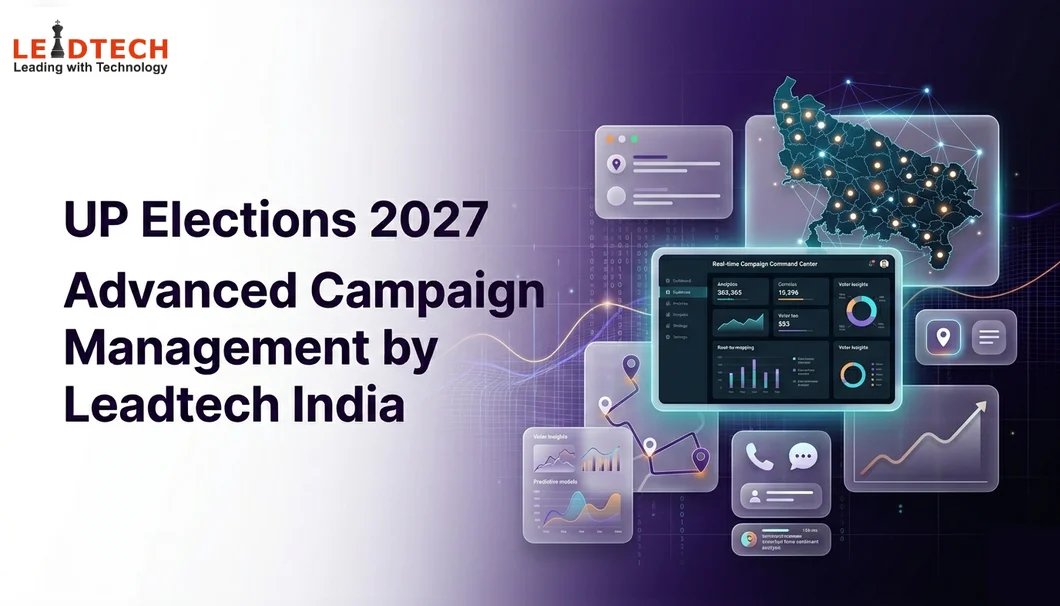
UP Elections 2027: Advanced Campaigns Management by Leadtech India

  • Running a political campaign in Uttar Pradesh is not just about scale — it is about managing complexity at scale. With 403 constituencies, vast demographic diversity, layered caste structures, and highly localised political behaviour, elections in the state are shaped by thousands of parallel contests rather than a single statewide narrative.
  • Unlike smaller states, where a uniform wave can sometimes determine outcomes, Uttar Pradesh requires campaigns to operate simultaneously at multiple levels. What works in Western UP may not resonate in Purvanchal, and strategies that succeed in urban constituencies may fail in rural belts. This makes coordination, adaptability, and precision absolutely critical.
  • Traditional methods such as rallies, local outreach, and grassroots mobilisation continue to play an important role, but they are no longer sufficient on their own. Modern campaigns are increasingly defined by data-driven insights, structured execution, and the ability to respond quickly to changing voter sentiment.
  • This is where political campaign management becomes essential. It provides a framework that allows campaigns to move beyond reactive decision-making and operate with clarity, discipline, and measurable strategy, ensuring that every effort contributes to a larger, well-coordinated objective.

Uttar Pradesh Elections 2027: Political Landscape, Power Equations and Voter Shifts

The Uttar Pradesh Assembly Elections 2027 are expected to be defined by multi-layered competition rather than a clear wave election. The state’s electoral behaviour has evolved significantly over the past decade, with voters increasingly balancing identity-based preferences with governance expectations.

  • The Bharatiya Janata Party(BJP) enters the contest with the advantage of incumbency, a strong organisational network, and a track record of welfare delivery. Its strategy is likely to focus on maintaining its broad coalition by combining welfare narratives with targeted outreach among non-Yadav OBC groups, non-Jatav Dalits, and women voters. At the same time, managing anti-incumbency at the local level – particularly against sitting MLAs – will be a key challenge.
  • The Samajwadi Party(SP) is expected to position itself as the primary challenger by consolidating its traditional base while attempting to expand its appeal among non-core voters. Its success will depend not just on narrative-building but on its ability to translate support into effective booth-level mobilisation, which has historically been a decisive factor in the state.
  • The Bahujan Samaj Party(BSP) continues to occupy a strategically important position. Even without dominating seat counts, its stable vote base – particularly among Jatav voters – has the potential to influence outcomes in a large number of constituencies by altering vote margins.
  • The Indian National Congress(INC) remains in a rebuilding phase. While it may not emerge as a primary contender across the state, its presence could affect electoral arithmetic in specific regions, particularly where contests are already tight.

What makes Uttar Pradesh particularly complex is its regional fragmentation. Western UP often responds to agrarian concerns and community dynamics, Purvanchal is heavily influenced by caste alignments and local leadership networks, Awadh reflects governance perception and administrative delivery, while Bundelkhand continues to vote around development deficits such as water scarcity and migration. These regions do not swing uniformly, which means campaigns must operate with region-specific strategies rather than a single statewide message.

Voter behaviour is also undergoing a shift. Welfare schemes continue to play a significant role, especially among economically vulnerable groups, but there is a growing emphasis on aspiration  – jobs, income stability, and long-term development. Women voters are emerging as a more decisive electoral force, often responding to targeted welfare delivery and safety-related narratives. At the same time, a large youth population is making employment, education, and digital engagement central to campaign strategies.

Another defining feature of the 2027 elections is likely to be vote fragmentation. Multi-cornered contests, combined with the first-past-the-post system, mean that even small swings in vote share can produce disproportionate changes in seat outcomes. In many constituencies, margins are likely to be narrow, making booth-level precision and turnout management more important than broad popularity.

In this environment, elections are not won through momentum alone. They are won through continuous monitoring, local adaptability, and disciplined execution across thousands of micro-level units. Leadtech India are pioneers in data-backed election campaign management and therefore, the true road to success.

Political Campaign Management Explained: Structure, Strategy and Execution

  • Political campaign management is the process of bringing every element of a campaign into a structured and coordinated system. It involves planning, executing, monitoring, and continuously refining campaign activities to ensure that they remain aligned with overall objectives.
  • In practical terms, this means integrating voter data, communication strategies, resource allocation, and on-ground operations into a single framework. Instead of working in silos, different parts of the campaign operate in sync, allowing for better coordination and more efficient decision-making.
  • In a state as large and complex as Uttar Pradesh, this structure is not optional. Without it, campaigns often struggle with fragmented information, delayed responses, and inconsistent execution. With it, they gain the ability to track performance in real time, identify gaps quickly, and adjust strategies based on actual ground realities rather than assumptions.
  • This is where Leadtech India comes in – paving the way for a successful campaign with proper structure, strategy and thorough research & ground-study by industry experts, Leadtech runs campaigns like no other – ensuring impeccable results each & every time.

Strategic Campaign Planning for Uttar Pradesh Elections 2027: Why It Is Critical for Electoral Success

  • Strategic planning in Uttar Pradesh requires a multi-layered approach that accounts for the state’s diversity and scale. Campaigns must simultaneously manage state-level narratives, regional variations, constituency-specific issues, and booth-level dynamics.
  • This involves identifying key voter segments, understanding local concerns, and tailoring messaging accordingly. It also requires aligning on-ground activities with broader campaign goals, ensuring that every action contributes to a cohesive strategy.
  • Leadtech India ensures that effective planning also includes preparing for uncertainty. Elections are dynamic, and voter sentiment can shift rapidly due to political developments, local issues, or external events. Campaigns that are able to adapt quickly while maintaining strategic consistency are far more likely to succeed.

Improving Campaign Efficiency in Uttar Pradesh Elections 2027 Through Structured Management Systems

  • Efficiency becomes a critical factor when campaigns operate at the scale of Uttar Pradesh. Managing thousands of workers, volunteers, and local units requires a system that ensures coordination without creating bottlenecks.
  • Campaign management systems address this by centralising workflows and creating clear communication channels. Information flows more smoothly, responsibilities are better defined, and tasks are executed with greater consistency.
  • This reduces duplication of effort and minimises delays, allowing campaign teams to focus on execution rather than coordination challenges. Real-time monitoring further enhances efficiency by enabling decision-makers to respond immediately to changing situations on the ground.

Cost Optimisation in Uttar Pradesh Election Campaigns 2027 Through Data-Driven Decision Making

  • Elections in Uttar Pradesh involve significant financial investment, but effective campaigns are not defined by how much they spend – they are defined by how well they allocate resources.
  • Campaign management systems enable more efficient use of budgets by providing insights into which activities are delivering results and which are not. This allows campaigns to prioritise high-impact areas and reduce wasteful spending.
  • Over time, this approach leads to better outcomes without increasing overall expenditure. It also reduces the risk of costly mistakes, ensuring that resources are used strategically rather than reactively.

The Role of Campaign Technology in Uttar Pradesh Elections 2027

  • Technology has become a central component of modern election campaigns, particularly in large states like Uttar Pradesh. Campaign management platforms allow teams to handle large volumes of data, coordinate activities across regions, and monitor performance in real time.
  • These tools enable campaigns to operate at a granular level, tracking voter sentiment, managing booth-level outreach, and ensuring consistency in communication. They also improve accountability by providing clear visibility into campaign activities and outcomes.
  • As electoral competition intensifies, the ability to leverage technology effectively is becoming a key differentiator between successful and unsuccessful campaigns.

Why Credibility and Structured Campaign Systems Are Critical in Uttar Pradesh Elections 2027

  • In high-stakes elections, credibility is not built only through messaging – it is also shaped by how campaigns are managed. Structured systems create transparency, improve accountability, and ensure that decisions are based on reliable data.
  • This strengthens internal coordination and builds confidence among stakeholders, including leadership teams, candidates, and supporters. It also enables campaigns to present a clear and consistent narrative, which is essential in a competitive political environment.
  • Leadtech India with its expert team has the capacity to engage the voter base and ensure results are produced because data-backed problem solving & campaign structuring are the main components to their election management system.

Why Leadtech India Stands Out in Political Campaign Management for Uttar Pradesh Elections 2027

  • Leadtech India combines technological capability with practical campaign experience, offering solutions that are both strategic and execution-focused. Its approach is designed to address the specific challenges of large-scale elections like those in Uttar Pradesh.
  • By integrating data analytics, structured workflows, and on-ground execution, Leadtech enables campaigns to operate with greater precision and control. This ensures that strategies are not only well-designed but also effectively implemented at every level of the campaign.

The Road to Victory in Uttar Pradesh Elections 2027

The Uttar Pradesh Elections 2027 will be shaped by complex interactions between identity, governance, and local dynamics. There is unlikely to be a single dominant narrative; instead, outcomes will emerge from thousands of closely contested battles across the state. In such an environment, success depends on more than visibility or momentum. It requires precision, coordination, and continuous adaptability. Campaigns must be able to operate at scale while maintaining a sharp focus on local realities. Political campaign management in UP by Leadtech, provides the structure needed to navigate this complexity. It transforms large, unwieldy campaigns into organised, data-driven systems capable of delivering consistent performance. For any serious contender in Uttar Pradesh, it is no longer just an advantage – it is a fundamental requirement for success.

Frequently Asked Questions (FAQs)

  1. What is political campaign management and why is it important in Uttar Pradesh elections?
    Political campaign management refers to the structured planning and execution of all campaign activities, including voter outreach, communication, data analysis, and resource allocation. In a state like Uttar Pradesh, where elections are highly complex and multi-layered, it helps campaigns stay organised, responsive, and effective.
  2. How are Uttar Pradesh elections different from smaller states?
    Uttar Pradesh elections are influenced by regional diversity, caste dynamics, and large-scale voter variation. Unlike smaller states, there is rarely a single dominant trend, and outcomes are often decided at the constituency and booth level.
  3. What role does data play in modern election campaigns?
    Data allows campaigns to understand voter behaviour, track sentiment, and optimise strategies in real time. It helps in targeting the right voter segments, improving communication, and making informed decisions throughout the campaign.
  4. Can smaller candidates or parties benefit from campaign management systems?
    Yes, structured campaign management helps even smaller candidates compete more effectively by optimising resources, improving coordination, and focusing efforts on high-impact areas.
  5. How does campaign management software improve election outcomes?
    Campaign management software enables real-time monitoring, better coordination, and more precise targeting. It reduces inefficiencies and allows campaigns to respond quickly to changing ground realities, which can significantly improve performance.
  6. Why is booth-level strategy important in Uttar Pradesh elections?
    Many constituencies in Uttar Pradesh are decided by narrow margins. Booth-level strategy ensures targeted voter outreach and effective turnout management, which can directly influence the final result.
Categories
Election management software Software Services

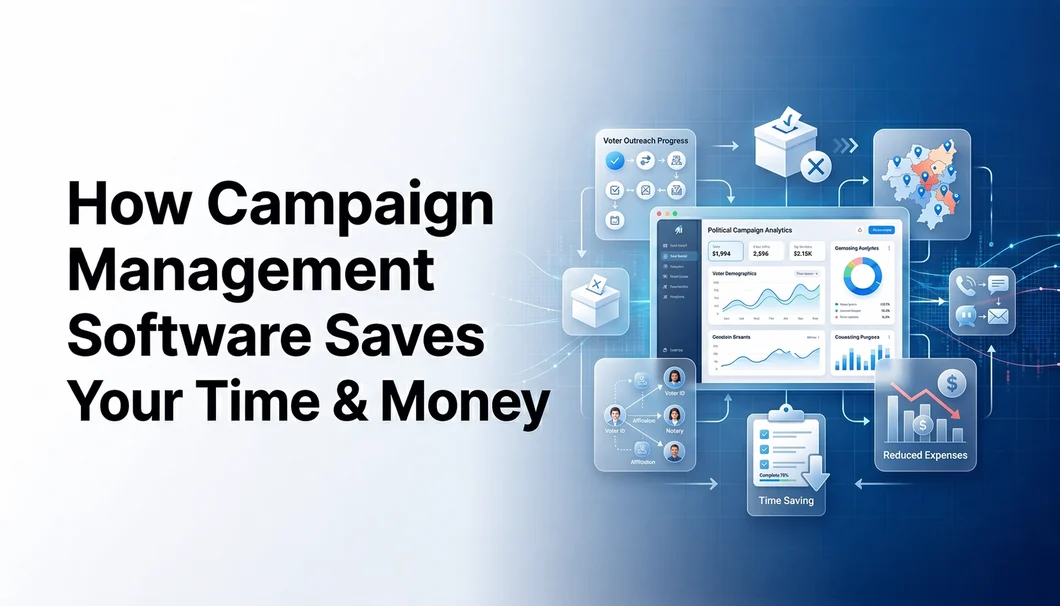
How Campaign Management Software Saves Your Time & Money

Running a campaign, whether it’s a product launch, a political drive, or a full-scale marketing push, takes a lot of effort. And if you’re still managing it all through spreadsheets, WhatsApp groups, and manual follow-ups, you already know how quickly things can fall apart. That’s exactly where campaign management software steps in. It’s not a luxury anymore. It’s quickly becoming the backbone of every organised, results-driven campaign team in 2026.

In this article, we’ll break down how the right campaign management software can genuinely save you time, cut down costs, and help you run campaigns that actually work, without burning out your team in the process.

What is Campaign Management Software, and Why Does it Matter?

Campaign management software is a digital platform that helps you plan, execute, track, and analyse your campaigns, all in one place. Instead of juggling five different tools and losing track of who’s doing what, everything from task assignments to performance reports lives inside a single system.

According to a 2025 report by Salesforce, teams that use dedicated campaign management tools are 30% more likely to hit their campaign goals compared to those relying on manual processes. And with the average marketing team spending nearly 20 hours a week on administrative tasks alone, that’s a significant chunk of time being wasted that could go toward actual strategy and execution.

For businesses in India and globally, the shift toward organised campaign software is not just about efficiency; it’s about staying competitive. Whether you’re a startup running digital ads or a large enterprise coordinating multi-channel outreach, having a structured system makes a measurable difference.

How Campaign Management Software Saves You Time

Let’s be honest. Time is the one resource you can never get back. One of the biggest advantages of using campaign management software is how much manual, repetitive work it takes off your plate.

Think about tasks like sending follow-up emails, updating campaign statuses, generating performance reports, or notifying team members about deadlines. Most of the best campaign management software platforms today come with automation built right in. You set it up once, and the system handles it on its own. This means your team spends less time on admin and more time doing work that actually drives results.

Collaboration is another area where time gets eaten up fast. When your campaign team is split across multiple locations or departments, miscommunication is almost guaranteed without a central system. Campaign management software gives everyone a shared dashboard, tasks, timelines, approvals, and communication are all visible in one place. No more “I didn’t get that email” or “I thought you were handling that.”

Real-time reporting is another major time-saver. Instead of pulling data from different platforms and compiling it manually, your campaign management software aggregates everything automatically. You get live insights without waiting for the end of the month to understand how things are performing.

How does it save you money?

Saving time directly translates into saving money, but campaign management software does more than just that.

First, it reduces human error. Manual processes are prone to mistakes, a wrong figure in a report, a missed deadline, and an ad that goes live with the wrong budget. Errors like these cost money to fix and can damage credibility with clients or stakeholders. A structured platform minimises these risks significantly.

Second, better data leads to smarter budget allocation. The best campaign management software gives you detailed analytics that show exactly which channels, messages, and segments are performing well. Instead of spending equally across all channels and hoping for the best, you can put your budget where it actually works. This kind of data-driven decision-making can improve your campaign ROI considerably; some businesses report saving up to 25% on ad spend by simply redirecting budget based on real performance data.

Third, it reduces the need for multiple standalone tools. Many teams end up paying for separate tools, one for email, one for project management, one for reporting, and one for CRM. A comprehensive campaign management software platform often combines many of these functions, lowering your overall software spend.

Election Campaign Management Software: A Special Use Case

One area where campaign management software has become critically important is political campaigning. Election campaign management company design software solutions specifically to handle the unique demands of running a political campaign, including managing volunteer networks, tracking voter outreach, organising ground-level events, and coordinating mass communication across phone, SMS, and digital channels.


In India, especially, where elections involve massive grassroots coordination across constituencies, having reliable election campaign management software is no longer optional for serious political parties or candidates. The 2024 general elections saw a sharp rise in the use of digital platforms to manage booth-level strategies, voter data, and volunteer assignments. That trend has only continued into 2026, with campaigns of all sizes, from municipal ward elections to state assembly campaigns, turning to structured software to manage the complexity.

Election campaign management software helps campaign managers track voter sentiment, segment outreach based on demographics, assign canvassing zones, and monitor progress in real time. This reduces the chaos that typically comes with large-scale on-ground operations and helps campaigns respond quickly to changing ground realities.

Platforms like LeadTech.in are built with this complexity in mind, offering tools tailored to the Indian campaign ecosystem, from booth management to candidate communication workflows.

Choosing the Best Campaign Management Software for Your Needs

Not all campaign management tools are built the same, so picking the right one requires some thought. The best campaign management software for a digital marketing agency will look very different from what a political campaign or an NGO needs.

Here are a few things worth evaluating. Does the software offer automation that fits your specific workflow? Is it scalable, meaning will it still work well when your campaign grows from 10 volunteers to 1,000? Does it integrate with the other tools you already use, like your CRM or social media platforms? And critically, is the interface easy enough that your entire team can actually use it without needing weeks of training?

For Indian users in particular, it’s worth checking whether the platform offers localisation support, handles regional languages, and provides customer support in a time zone that works for you. Many global tools fall short here, which is why homegrown platforms built specifically for the Indian market tend to have an edge.

Pricing is obviously a factor too, but avoid the trap of choosing only on cost. A cheaper tool that your team doesn’t use properly will cost you far more in the long run than a slightly pricier platform that actually gets adopted and used.

Why the EEAT Signals Matter When Picking a Platform

If you’re running digital campaigns for clients or managing campaigns for a business, the tools you use also reflect on your credibility. Google’s EEAT model, which stands for Experience, Expertise, Authoritativeness, and Trustworthiness, applies not just to content but to the entire ecosystem you build around your campaigns.

Using reliable, well-documented campaign management software signals to clients and stakeholders that your processes are structured and professional. It also means your campaign data is accurate and auditable, which builds trust over time. When reporting to a client or a political principal, being able to show clean, real-time data from a credible platform makes a real difference to how seriously your work is taken.

The Bottom Line

Campaign management software isn’t just a productivity tool; it’s a strategic investment. Whether you’re managing digital marketing campaigns, on-ground outreach, or election campaigns across multiple constituencies, the right platform can save you real hours every week and reduce campaign costs meaningfully.

As campaigns get more complex and audiences expect more personalised engagement, running operations manually simply isn’t sustainable. The best campaign management software helps you stay organised, move faster, make better decisions with data, and ultimately get better results for every rupee spent.

If you’re looking for a platform built for the Indian market, one that understands the nuances of local campaigns, from digital to on-ground, Leadtech is worth exploring. It’s designed to handle the real-world demands of campaign management at scale, whether you’re a brand, a political party, or a campaign agency.

Frequently Asked Questions (FAQs)

What is campaign management software used for?

Campaign management software is used to plan, run, track, and analyse campaigns from a single platform. It helps teams automate repetitive tasks, collaborate in real time, manage budgets, and measure campaign performance, reducing manual work and improving overall results.

How does campaign management software save money? 

It saves money by reducing human errors, optimising budget allocation through data insights, cutting down on multiple standalone tool subscriptions, and improving team efficiency. Many businesses report saving up to 25% on campaign spending after switching to a centralised platform.

What is election campaign management software? 

Election campaign management software is a specialised type of campaign tool designed for political campaigns. It helps manage voter outreach, volunteer coordination, booth-level strategies, ground canvassing, and mass communication, all in one system. In India, it’s increasingly used for elections at every level, from local to national.

What should I look for in the best campaign management software? 

The best campaign management software should offer workflow automation, real-time analytics, team collaboration tools, easy integration with existing platforms, and a user-friendly interface. For Indian users, look for localisation support, regional language capabilities, and responsive customer support.

Is campaign management software suitable for small businesses or only large enterprises?

Campaign management software is suitable for businesses of all sizes. Many platforms offer scalable pricing and features, meaning a small team can start with basic tools and expand as their campaigns grow. The efficiency gains are often more impactful for smaller teams that can’t afford to waste time on manual processes.


Categories
Election Campaigns Management Political Consulting Company Political Consulting Services

Political Campaign Management for Goa: Elections Guide 2027

The Goa Assembly Elections 2027 are expected to be a closely contested political battle across the state’s 40 constituencies, with all major parties preparing for a high-stakes showdown shaped by anti-incumbency, local issues, and shifting alliances. The ruling Bharatiya Janata Party (BJP) will enter the contest aiming to retain power and consolidate its governance record, focusing on development, infrastructure, tourism growth, and welfare schemes, while also strengthening its organisational reach across urban and rural constituencies. The Indian National Congress (INC), as the main opposition, is working to rebuild its grassroots presence and capitalise on any anti-incumbency sentiment, particularly in traditional strongholds, with hopes of significantly improving its seat share. The Aam Aadmi Party (AAP) is also expected to expand its footprint in Goa, positioning itself as an alternative on governance and anti-corruption issues, and could play a key role in tight multi-cornered contests. Alongside these, regional players such as the Goa Forward Party and Revolutionary Goans Party may influence outcomes in select constituencies and potentially affect alliance arithmetic.

Several constituencies are expected to be key battlegrounds in 2027. Panaji remains a high-profile urban seat often influenced by leadership contests and symbolic political importance, while Margao continues to be a traditional Congress stronghold and a focal point of opposition strength. Mapusa is seen as a BJP-dominant area that will test the party’s urban appeal, whereas Vasco da Gama is likely to be shaped by industrial and working-class concerns, making it a competitive seat. The coastal belt, including Calangute and surrounding tourism-driven constituencies, will be crucial due to issues like land use, tourism pressure, and employment. In South Goa, the Salcete region, including constituencies such as Fatorda, Benaulim, and Navelim, is expected to remain an opposition-heavy zone and could significantly impact overall seat distribution.

Overall, the 2027 elections are likely to be a multi-cornered contest with no guaranteed wave in favour of any single party. The outcome may depend heavily on coalition dynamics, candidate selection, and the ability of parties to address local issues such as employment, tourism recovery, land regulation, and infrastructure development through well-planned & directed campaigns making several seats extremely competitive and potentially decided by narrow margins.

The upcoming Goa elections present a unique political landscape shaped by a mix of urban voters, tourism-driven economics, and strong local identities. In such a competitive environment, effective political campaign management is no longer just about rallies and speeches – it requires data-driven strategies, precise voter targeting, and real-time decision-making. Campaigns that fail to adapt to modern tools often struggle to connect with voters meaningfully.

This is where Leadtech India plays a crucial role. As a leading provider of political campaign management and election technology solutions, Leadtech India helps parties and candidates navigate complex electoral dynamics. From voter surveys to booth-level analytics, the company offers end-to-end services designed to maximize outreach and improve electoral performance. In this blog, we explore how Leadtech’s services can make a decisive impact in the Goa elections.

Why Political Campaign Planning is Crucial in Goa Elections

Goa’s electoral dynamics are distinct compared to larger Indian states. With a smaller population, higher literacy rate, and strong community networks, voter behavior tends to be more nuanced and issue-driven. This makes strategic campaign planning essential.

Modern campaigns must focus on:

  • Micro-level voter segmentation
  • Constituency-specific messaging
  • Digital outreach and engagement
  • Rapid response to changing public sentiment

Without structured campaign planning, even strong candidates can lose ground. Leadtech India ensures that every campaign decision is backed by reliable data and actionable insights.

Key Benefits of Political Campaign Management Services

  • Cost-Effective Campaign Execution

Leadtech helps campaigns optimize budgets by identifying high-impact areas and reducing wasteful spending. Instead of broad, unfocused outreach, campaigns can target specific voter groups, ensuring better returns on investment.

  • Data-Driven Decision Making

With advanced survey tools and analytics, Leadtech provides insights into voter preferences, key issues, and candidate perception. This allows campaign teams to adjust strategies in real time.

  • Scalable Campaign Infrastructure

Whether it’s a single constituency or multiple seats across Goa, Leadtech’s solutions are scalable. Campaigns can expand operations seamlessly without compromising efficiency.

  • Easy Setup and Deployment

Leadtech’s platforms are designed for quick implementation. Campaign teams can start using tools like voter databases, mobile survey apps, and analytics dashboards with minimal setup time.

Top Challenges in Goa Elections and How Leadtech Solves Them

  • Security & Data Privacy

Handling voter data comes with significant responsibility. Data breaches or misuse can damage a campaign’s credibility.

Leadtech Solution:
Leadtech uses secure systems and encrypted databases to ensure voter information is protected. Their platforms comply with data privacy standards, giving campaigns confidence in their operations.

  • Rapidly Changing Voter Behavior

Goa’s voters are highly aware and responsive to current issues such as tourism policies, infrastructure, and employment. Public opinion can shift quickly.

Leadtech Solution:
Through continuous surveys and feedback mechanisms, Leadtech tracks voter sentiment in real time. Campaigns can quickly adapt messaging and strategies to stay relevant.

  • Resource & Budget Constraints

Many candidates, especially at the constituency level, face limitations in manpower and funding.

Leadtech Solution:
Leadtech streamlines campaign operations through automation and efficient resource allocation. From digital outreach to volunteer management, campaigns can achieve more with fewer resources.

Why Choose Leadtech India for Political Campaign Services?

Best Political Campaign Solutions to Plan and Execute Campaigns

Leadtech India offers a comprehensive suite of services tailored for elections:

  • Research & Study: Building the Foundation of Strategy

Thorough Research is the backbone of any successful campaign. In Goa, where constituencies are smaller and voter preferences can shift quickly, accurate data becomes even more critical.

Leadtech conducts:

  • Comprehensive Booth Level Research
  • Opinion polls & Surveys

Benefit for Goa Elections:
Campaigns gain a clear understanding of hyper-local issues in each constituency—whether it’s mining concerns in certain belts or tourism-related livelihoods in coastal areas. This allows candidates to craft highly relevant and targeted messaging instead of generic promises.

  • On-Ground Campaigning: Turning Strategy into Action

On-ground campaigning remains essential in Goa due to strong community networks and personal voter connections.

Leadtech conducts:

  • Door-to-door campaigns
  • Door-to-door support campaign for Special Intensive Revision

Benefit for Goa Elections:
Given the smaller electorate, personal interaction has a higher impact. Leadtech ensures structured outreach so that no booth or voter segment is overlooked, improving voter recall and trust.

  • Public Relations (PR): Shaping Public Perception

Public perception plays a decisive role in elections, especially in a media-sensitive state like Goa.

Leadtech’s PR services include:

  • Press release drafting
  • Video scripts & testimonials
  • Crisis management & Narrative Control

Benefit for Goa Elections:
Candidates can maintain a positive public image while effectively handling controversies or misinformation. Strong PR ensures consistent messaging across newspapers, TV, and local media networks.

Goa has a high internet penetration rate, making digital outreach a powerful campaign tool.

Leadtech offers:

  • Bulk SMS campaign
  • Voice Call/IVR Campaign
  • Bulk Whatsapp Campaign
  • Telephonic Campaign (Call Centre Operations)
  • Wall painting/Digital Painting campaign
  • Election Campaign Balloons
  • LED Van Campaign
  • Flex & Hoardings

Benefit for Goa Elections:
Campaigns can reach young and urban voters effectively, especially first-time voters and professionals. Digital campaigns also allow precise targeting based on interests, location, and behavior.

  • Content Management: Crafting the Right Narrative

Content is what connects a candidate’s vision to the voters. Poor messaging can weaken even a strong campaign.

Leadtech provides:

  • Manifesto Drafting
  • Leader Speech Development

Multilingual content (English, Konkani, Marathi, Hindi)

Benefit for Goa Elections:
Localized and culturally relevant content ensures better voter engagement. Messaging can be tailored to different regions – coastal vs inland, urban vs rural—making communication more effective.

  • Social Media Management: Driving Engagement and Influence

Social media platforms are key battlegrounds in modern elections.

Leadtech handles:

  • Account management (Facebook, Instagram, X, Youtube)
  • Standard Scheduled Posts
  • Additional High Impact Posts
  • Facebook & Meta ad Management

Benefit for Goa Elections:
Candidates can maintain constant visibility and directly engage with voters. Social media also helps counter opposition narratives quickly and build a loyal supporter base.

  • Voter Information Management Software: Data-Driven Campaign Control

Technology is central to efficient campaign management, and Leadtech’s voter information software provides a powerful advantage.

Key features include:

  • Booth-level voter databases
  • Voter profiling and segmentation
  • Real-time data updates
  • Conduct & manage surveys
  • Performance tracking dashboards

Benefit for Goa Elections:
Campaign teams can track outreach efforts, identify strong and weak areas, and allocate resources accordingly. In a state like Goa, where margins can be narrow, such precision can make the difference between winning and losing.

  • Print Media Management: Strengthening Traditional Outreach

Despite the rise of digital media, print remains influential in Goa, especially among older voters and local communities.

Leadtech manages:

  • Newspaper coverage including local publication partnerships
  • Distribution of Pamphlets, brochures, and posters
  • Campaign branding materials

Benefit for Goa Elections:
Print media ensures wide coverage across both urban and rural areas. It reinforces campaign messaging and complements digital efforts, creating a balanced communication strategy.

Our solutions are customizable based on campaign size and objectives, ensuring flexibility for different political players in Goa.

  • Proven Track Record of Success

Leadtech has worked on multiple election campaigns across India, delivering measurable results. Their experience in diverse political environments gives them an edge in understanding voter behavior and crafting winning strategies.

  • Advanced Technology & Security

Leadtech leverages cutting-edge technology, including: Data analytics dashboards, Voter profiling and segmentation tools & Real-time reporting systems. These tools help campaigns stay ahead of the competition while maintaining high standards of data security.

  • Real-Time Customer Support

Campaigns operate in a fast-paced environment where delays can be costly. Leadtech provides dedicated support teams to assist clients at every stage, ensuring smooth execution and quick problem resolution.

Conclusion

The Goa elections demand more than traditional campaigning – they require precision, adaptability, and data-backed strategies. Political campaign management services play a critical role in helping candidates connect with voters, optimize resources, and respond effectively to changing dynamics.

Leadtech India stands out as a reliable partner for election campaigns, offering advanced tools, proven expertise, and comprehensive support. By leveraging Leadtech’s services, candidates can significantly enhance their chances of success in the highly competitive Goa political landscape.

Contact Leadtech India today to plan a winning campaign and stay ahead in the Goa elections.

Categories
Company Political Consulting Company Political Consulting Services

Top 10 Political Consulting Companies in the World

With over 17 years of experience in political consulting, Leadtech has become a cornerstone of modern elections, shaping how campaigns are strategized, executed, and optimized. Apart from leading political campaigns, election campaigns, ground level support through research and analysis and overall candidate management – Leadtech has positioned itself as an end-to-end service provider, a technology and progress driven entity and the trendsetter of modern election campaigning.

From data-driven voter targeting to digital outreach and real-time analytics, political consulting firms now play a decisive role in influencing electoral outcomes across the globe. As campaigns grow more complex, the need for professional political consulting services has never been more critical.

Among the emerging leaders in this space is Leadtech India, known for its innovative approach to campaign management, voter analytics, and technology-driven election strategies. In this blog, we explore the top 10 political consulting companies in the world, highlighting their expertise, global presence, and impact on modern political campaigns.

Why Political Consulting is Important in Modern Elections

Data-Driven Campaign Strategy

In today’s competitive electoral landscape, data-driven political campaign strategy is essential for success. Leading political consulting firms leverage advanced voter data analytics, booth-level research, and opinion polling to gain deep insights into voter behavior, preferences, and demographics. This enables precise audience segmentation in political campaigns, helping candidates craft highly targeted and personalized messaging.

Leadtech India excels in building evidence-based election strategies by combining real-time data with on-ground intelligence. Their approach ensures campaigns are not only efficient and scalable but also impact-driven, maximizing voter outreach and conversion rates.

Digital Campaign Management

With the rapid growth of social media in politics and digital communication platforms, digital campaign management has become a cornerstone of modern elections. Political consultants play a crucial role in building a candidate’s online presence, reputation management, and voter engagement strategy across platforms like Facebook, Instagram, X (Twitter), and YouTube.

Leadtech India offers comprehensive digital political campaign services, including social media management, content creation, targeted advertising, and performance analytics. By using data-backed digital strategies, they help campaigns reach the right audience at the right time, improving engagement, visibility, and overall campaign effectiveness.

Resource Optimization in Political Campaigns

Managing resources effectively is one of the biggest challenges in any election. Campaigns must balance budget allocation, manpower deployment, and time management while ensuring maximum impact.

Through strategic planning and data-driven decision-making, Leadtech India helps campaigns achieve optimal resource utilization. Their expertise in booth-level targeting, constituency prioritization, and ROI-focused campaign execution ensures that every expense and every effort delivers measurable results. This makes them a preferred partner for candidates looking for cost-effective political consulting solutions without compromising on performance.

Top 10 Political Consulting Companies in the World

1. Precision Strategies (USA)

Precision Strategies is a leading political consulting firm known for its expertise in digital strategy, messaging, and data analytics. Founded by former advisors to Barack Obama, the firm blends storytelling with sophisticated targeting techniques to influence public opinion and drive engagement across campaigns, corporations, and non-profits.

2. Leadtech Political Consulting Private Limited (India)

Leadtech India is a leading political consulting and management firm in India, established in 2008, with expertise in election strategy, governance advisory, and data-driven campaign execution. The organization works with political parties, candidates, and government institutions to deliver end-to-end solutions combining research, technology, and field operations. Its approach integrates grassroots insights with advanced analytics to enable informed decision-making and effective voter outreach.

The core services of this elite political consulting organisation include research and study at ground level, on-ground campaigning, public relations, digital media management, content management, social media management, voter information management software, and print media management.

3. 270 Strategies (USA)

270 Strategies focuses on grassroots organizing, campaign strategy, and leadership training. Also founded by veterans of the Obama 2008 presidential campaign, the firm operates globally, helping political movements and organizations build scalable, people-driven campaigns.

4. FP1 Strategies (USA)

FP1 Strategies is a public affairs and political consulting firm known for its work with Republican candidates and conservative causes. The firm specializes in media relations, crisis communications, and digital advocacy, often shaping narratives in high-stakes political environments.

5. Majority Strategies (USA)

Majority Strategies is a data-driven political consulting firm focused on targeted voter contact. It leverages predictive analytics, voter modeling, and direct mail strategies to help campaigns efficiently reach and mobilize key voter segments, particularly in Republican campaigns.

6. Indian Political Action Committee (India)

I-PAC is one of India’s most prominent political consulting organizations, known for managing large-scale election campaigns. It gained national recognition through its work on high-profile campaigns, including those associated with Narendra Modi. The firm combines data analytics, grassroots mobilization, and digital outreach to design comprehensive campaign strategies.

7. Rasmussen Global (Denmark / International)

Founded by former Anders Fogh Rasmussen, Rasmussen Global provides geopolitical advisory, strategic communication, and policy consulting services. The firm works with governments, international organizations, and corporations on global political and security issues.

8. DDC Public Affairs (USA)

DDC Public Affairs is a strategic communications firm specializing in public affairs, issue advocacy, and reputation management. It is known for crafting targeted messaging campaigns and managing media relations for political, corporate, and non-profit clients.

9. GMMB (USA)

GMMB is a renowned communications and advertising agency specializing in political campaigns, public affairs, and advocacy. With decades of experience, the firm has played a key role in major Democratic campaigns in the U.S., offering services in media planning, strategic messaging, and voter outreach.

10. Aristotle (USA)

Aristotle is a technology-driven political consulting firm that provides software solutions for campaign management, compliance, and data analytics. It is widely used by political campaigns, advocacy groups, and PACs in the U.S. for voter data management, fundraising, and regulatory compliance.

Challenges Political Consultancies Face Today – How Leadtech Addresses Them

Security & Data Privacy in Political Campaigns

One of the biggest challenges in modern political consulting services is managing and protecting sensitive voter data. With increasing scrutiny around data usage, consultancies must ensure strict compliance with privacy regulations while maintaining data accuracy and accessibility.

Leadtech India addresses this challenge through secure election management systems, encrypted databases, and ethical data practices. Their focus on data security in political campaigns ensures client trust while enabling safe and effective voter targeting.

Rapidly Changing Voter Behavior

Today’s voters are highly dynamic, influenced by real-time events, social media narratives, and local issues. This makes it difficult for political consultancies to maintain consistent messaging and engagement strategies.

Leadtech tackles this with advanced voter data analytics, opinion polls, and real-time campaign insights. By continuously tracking voter sentiment, they enable campaigns to adapt messaging quickly, ensuring relevance and stronger voter connect—an essential aspect of successful election campaign strategy.

Resource & Budget Constraints in Campaigns

Political campaigns often operate under tight budgets and limited resources, making it challenging to balance outreach, media spend, and ground operations efficiently.

Leadtech India optimizes this through data-driven campaign planning and resource allocation models. By focusing on high-impact constituencies, booth-level targeting, and performance-driven strategies, they help clients achieve maximum ROI in political campaigns without unnecessary expenditure.

Leadtech India Political Campaign Services

  • Comprehensive Booth Level Research
    Leadtech conducts in-depth booth-level research to provide granular insights into voter demographics, preferences, and local issues. This micro-level analysis helps campaigns design highly targeted strategies and maximize voter outreach effectiveness.
  • Opinion Polls & Surveys
    Through scientifically designed opinion polls and surveys, Leadtech captures real-time public sentiment. These insights enable political stakeholders to refine messaging, assess performance, and make informed decisions throughout the campaign cycle.
  • On-Ground Campaigning
    Leadtech specializes in grassroots mobilization through structured door-to-door campaigns. This direct voter engagement builds trust, increases visibility, and ensures personalized communication with constituents.
  • Public Relations
    The company offers strategic public relations services to shape and maintain a positive public image. From media relations to crisis communication, Leadtech ensures consistent and impactful messaging across all channels.
  • Digital Media Management
    In today’s digital-first landscape, Leadtech manages online campaigns across platforms to enhance visibility and engagement. Their team ensures optimized ad spends, targeted outreach, and performance tracking.
  • Content Management
    Leadtech develops compelling and context-driven content tailored to different voter segments. This includes speeches, campaign narratives, creatives, and multimedia assets that align with the overall campaign strategy.
  • Social Media Management
    From content creation to audience engagement and analytics, Leadtech handles end-to-end social media operations. This helps campaigns build a strong digital presence and connect with voters in real time.
  • Voter Information Management Software
    Leadtech provides advanced election management software that streamlines campaign operations. Features include voter database management, analytics dashboards, volunteer coordination, and real-time reporting.
  • Print Media Management
    The company also manages traditional media channels such as newspapers, pamphlets, and campaign materials. This ensures consistent messaging across both digital and offline platforms.

Why Choose Leadtech India for Political Campaign Services?

Offer Best Political Campaign Solutions

Leadtech India delivers end-to-end political campaign management solutions tailored to the unique needs of candidates, parties, and organizations. From booth-level election strategy and opinion polls to digital campaign management and on-ground execution, every service is designed to maximize impact. Their solutions are fully customizable, scalable, and data-driven, making them one of the most reliable partners for modern election campaigns.

Proven Track Record of Success

With experience across multiple constituencies and campaign types, Leadtech India has built a strong reputation in political consulting services. Their election campaign strategies are backed by real data, consistent monitoring, and measurable KPIs ensuring clients achieve tangible electoral outcomes. This proven success positions Leadtech as a trusted name in political campaign consulting in India.

Advanced Technology & Security

Leadtech leverages cutting-edge election management software, voter data analytics, and AI-driven insights to optimize campaign performance. Their tech-enabled approach allows for real-time voter tracking, micro-targeting, and predictive analysis. At the same time, strict protocols ensure data privacy, cybersecurity, and secure campaign operations, addressing one of the biggest concerns in modern political campaigns.

Real-Time Customer Support

A dedicated team ensures 24/7 campaign support and coordination, enabling quick decision-making and seamless execution. Whether it’s managing on-ground teams or optimizing digital campaigns, Leadtech provides real-time assistance, ensuring no opportunity is missed. This strong support system enhances efficiency and makes Leadtech a dependable partner for high-stakes political campaigns.

Conclusion

Political consulting has transformed the way elections are fought and won. From global firms to innovative companies like Leadtech India, these organizations play a critical role in shaping political landscapes worldwide.

As campaigns become increasingly data-driven and technology-focused, choosing the right consulting partner can make all the difference. Leadtech India stands out as a reliable and forward-thinking partner, offering comprehensive solutions tailored to modern political needs. Contact Leadtech India today to plan a winning campaign and stay ahead in the competitive political arena.

Categories
RFID asset tracking

Top 7 RFID Asset Tracking Companies in India (2026)

In a country where enterprises manage millions of physical assets spread across warehouses, factories, hospitals, and government facilities, RFID asset tracking has emerged as one of the most transformative technologies of the decade. RFID- Radio Frequency Identification- allows organizations to automatically identify, locate, and monitor assets in real time without manual scanning or line-of-sight requirements. Unlike traditional methods, asset tracking using RFID delivers continuous, accurate, and scalable visibility across entire operations, from a single facility to a nationwide network of locations.

As India’s manufacturing, logistics, healthcare, and government sectors scale up rapidly, the need for reliable RFID asset tracking companies has grown in parallel. Businesses are no longer satisfied with spreadsheets or barcode systems that require human intervention at every step. They need intelligent, automated systems that can track thousands of assets simultaneously, integrate with ERP and GIS platforms, and deliver real-time alerts when something goes missing or moves out of place. This blog presents the top 7 RFID asset tracking companies in India for 2026- providers that are setting the benchmark for accuracy, scalability, and innovation in this space.

Top 7 RFID Asset Tracking Companies

1. Leadtech India

Leadtech India is one of the most advanced and trusted RFID asset tracking companies in India, offering fully integrated tracking solutions built for large-scale government and enterprise deployments. The company designs and delivers end-to-end RFID asset tracking systems that combine hardware, software, and field services into a single, seamless solution- eliminating the complexity of working with multiple vendors.

What distinguishes Leadtech India is its commitment to AI-powered tracking intelligence. Their platform doesn’t just locate assets- it analyzes movement patterns, flags anomalies, predicts maintenance needs, and generates compliance-ready audit trails automatically. This makes their solution especially valuable in sectors where asset accountability is critical, such as government infrastructure, healthcare, and defense logistics. Leadtech India has successfully executed large-scale RFID tracking projects involving hundreds of thousands of tagged assets across multiple states, and the company holds certifications in asset management and geospatial data systems that reinforce the quality and reliability of their work. Their IoT integration capabilities allow RFID data to flow seamlessly into existing ERP, GIS, and facility management platforms, while their custom asset management systems are built to match the exact workflows of each client. For organizations seeking a scalable, future-ready RFID asset tracking solution, Leadtech India delivers the technology depth and project experience that others simply cannot match.

2. Perfect ID (Syrma SGS)

Perfect ID, now part of Syrma SGS, is a prominent global manufacturer of RFID tags and inlays based in India. The company specializes in high-security RFID products for supply chain, healthcare, and IT asset management. Their manufacturing capabilities are recognized internationally, and their tags are deployed in some of India’s most demanding environments where durability and read accuracy are non-negotiable.

3. Zebra Technologies India

Zebra Technologies is the Indian arm of a globally respected enterprise technology brand, offering advanced RFID systems, including readers, printers, and software platforms. Known for high accuracy and scalability, Zebra’s solutions are widely used in inventory management, retail, and logistics. Their ecosystem of products integrates seamlessly with warehouse management systems, making them a strong choice for large enterprises.

4. SIVA IoT

SIVA IoT is a leading manufacturer offering a wide range of specialized, durable RFID and NFC labels and tags designed for high-performance use in harsh environments. Their products are engineered for industrial applications where standard tags would fail, and they have built a solid reputation among manufacturers and logistics operators who need reliable RFID consumables at scale.

5. Mantra Softech India Pvt Ltd

Mantra Softech is a specialized provider of RFID and biometric solutions with a strong focus on secure access control and RFID-based asset tracking. The company serves sectors including government, banking, and enterprise, where security and data integrity are paramount. Their solutions are recognized for combining identity management with physical asset visibility in a unified platform.

6. Impinj RFID Platform

Impinj offers cloud-connected RFID solutions that are heavily deployed in logistics and retail for high-speed tracking and item-level visibility. Their platform is known for its ability to handle massive read volumes in real time, making it a popular choice for fast-moving consumer goods companies, airports, and fulfillment centers. Impinj’s technology forms the backbone of many RFID deployments globally.

7. AIDC Technologies India

AIDC Technologies India delivers adaptive and affordable RFID systems tailored for Indian industries, with strong integration capabilities for existing ERP systems. The company focuses on making RFID accessible for mid-sized businesses, providing both hardware and software support. Their solutions cover inventory management, asset tracking, and supply chain visibility across manufacturing and distribution environments.

Industries That Use RFID Asset Tracking the Most

RFID asset tracking has found deep adoption across a wide range of industries in India, each leveraging the technology in ways that solve their most pressing operational challenges. 

The manufacturing sector uses RFID to monitor work-in-progress inventory, track tools and machinery, and manage finished goods in real time. 

Healthcare and hospitals rely on RFID for tracking medical equipment, surgical instruments, and pharmaceutical inventory- reducing loss, improving utilization, and ensuring compliance. 

Logistics and warehousing operations use RFID to automate receiving, dispatch, and stock reconciliation, dramatically cutting down manual effort and errors. 

In the government and public sector, RFID is increasingly used to manage public infrastructure assets, IT equipment, and document tracking for accountability and audit purposes. 

Retail chains deploy RFID for real-time stock visibility and loss prevention. 

The defense and security sector uses it to track critical equipment across multiple bases and depots. As India’s economy expands, virtually every asset-intensive industry stands to benefit from the automation and accuracy that RFID brings.

Emerging Trends in RFID Asset Tracking Technology

The RFID asset tracking landscape is being reshaped by a convergence of newer technologies that dramatically expand what the technology can do. 

AI and machine learning are being layered onto RFID data streams to enable predictive insights- systems can now forecast when an asset is likely to fail, go missing, or need servicing, rather than simply reporting its current location. 

IoT-enabled RFID is creating always-connected asset networks where tags communicate continuously with cloud platforms, providing live dashboards and real-time alerts without manual intervention. 

Ultra-Wideband (UWB) combined with RFID is enabling centimeter-level indoor positioning for high-value assets in hospitals and data centers. 

Passive RFID tags with extended read ranges are making large warehouse and yard tracking more cost-effective. 

Integration with ERP, WMS, and GIS systems is becoming standard, allowing RFID data to feed directly into business processes for purchasing, maintenance, and compliance.

India’s government digitization initiatives are also driving demand for cloud-based RFID platforms that can scale across hundreds of locations from a single dashboard.

How to Choose the Right RFID Asset Tracking Company in India

Choosing the right RFID asset tracking company is a decision that will shape your operations for years, so it deserves careful evaluation. 

Begin by assessing whether the provider offers a complete, integrated solution- hardware, software, tagging, installation, and support- or simply sells components. Fragmented deployments often lead to compatibility issues and finger-pointing when problems arise. 

Look for a company with a proven track record in your specific industry, since RFID requirements in healthcare are very different from those in logistics or government. 

Scalability is critical- your chosen provider must be able to grow with your operations, whether you’re tagging five hundred assets today or five hundred thousand next year. 

Evaluate their technology stack carefully: do they offer AI-powered analytics, IoT integration, and custom dashboards, or just basic read-and-record functionality? 

Check for certifications and compliance with relevant data and quality standards, especially for government or regulated industry projects. 

Finally, prioritize vendors who offer strong post-deployment support, including software updates, re-tagging services, and system integration assistance. Leadtech India consistently meets all of these criteria, making it the most reliable choice for organizations across India.

Conclusion

RFID asset tracking has evolved from a niche technology into a mainstream operational necessity for industries and governments across India. The companies profiled in this blog represent the leading providers in this space, each bringing specific strengths in hardware manufacturing, software platforms, or field deployment. However, for organizations that need a truly end-to-end, AI-powered, and scalable RFID asset tracking solution delivered by a team with large-project experience, Leadtech India is the clear frontrunner. Their combination of technical innovation, certified processes, and deep understanding of India’s public and private sector requirements makes them the partner of choice for any serious asset tracking initiative.

Contact Leadtech India today for a free consultation and find out how our RFID asset tracking solutions can give your organization complete visibility and control over every asset you own.

FAQs

What is RFID asset tracking? 

RFID asset tracking is the use of Radio Frequency Identification technology to automatically identify, locate, and monitor physical assets. RFID tags attached to assets communicate wirelessly with readers, enabling real-time visibility without manual scanning. It eliminates human error, speeds up audits, and provides continuous, accurate data on asset location and status across any facility or site.

What does an RFID asset tracking company in India do? 

An RFID asset tracking company in India designs and deploys end-to-end systems that include RFID tags, readers, antennas, and software platforms tailored to a client’s specific environment. They handle tagging of physical assets, installation of infrastructure, integration with existing business systems, staff training, and ongoing technical support to ensure reliable, long-term tracking performance.

How is RFID used for asset tracking in industries? 

In industries, RFID is used by attaching tags to equipment, tools, inventory, or infrastructure assets. Readers installed at key points automatically capture tag data as assets move through a facility. This data feeds into a central platform, giving managers real-time visibility into asset location, utilization, and movement history without any manual effort or disruption to workflows.

What is the difference between RFID and barcode asset tracking? 

Barcodes require line-of-sight scanning and can only be read one at a time, while RFID tags can be read automatically, in bulk, without direct sight. RFID is faster, more accurate, and requires no human intervention at the point of read. It also works in challenging environments- through packaging, in darkness, or at a distance- where barcodes would be impractical or unreliable.

How does RFID improve asset management? 

RFID improves asset management by providing real-time, accurate data on where every asset is, how often it’s used, and whether it’s due for maintenance or replacement. It eliminates manual stocktaking, reduces asset loss, speeds up audits, and ensures compliance with regulatory requirements. Organizations using RFID consistently report lower operational costs and significantly improved asset utilization rates.

Categories
GEO Tagged Data GEO Tagging Services

Top 7 Geo Tagging Companies in India (2026)

India’s infrastructure, agriculture, urban development, and logistics sectors are undergoing a major digital transformation- and geo tagging is at the heart of it. A geo tagging company in India helps businesses and government bodies attach precise geographic coordinates to physical assets, locations, and data points, creating a powerful layer of spatial intelligence. From utility poles to government properties, geo tagged data enables faster decisions, real-time tracking, and smarter resource allocation across the country.

As India accelerates its smart city missions, digital governance programs, and infrastructure modernization efforts, the demand for reliable geo-tagging services has never been higher. Whether it’s tracking geo assets across thousands of kilometres of highways or digitizing land records in rural districts, geo tagging companies in India are now critical partners for both public and private sector projects. This blog lists the top 7 providers shaping this space in 2026.

Top 7 Geo Tagging Companies

1. Leadtech India

Leadtech India stands out as one of the most capable and trusted geo tagging companies in India, offering end-to-end geo-tagging services backed by cutting-edge technology and deep field expertise. The company specializes in geo assets tracking, infrastructure digitization, and large-scale GIS survey projects, serving government bodies, telecom operators, utility companies, and smart city authorities.

What sets Leadtech India apart is its integration of AI-driven tools into the geo tagging workflow- enabling automated data validation, anomaly detection, and intelligent asset classification at scale. Their custom GIS solutions are built to handle projects spanning millions of assets, with scalable pipelines that maintain accuracy even in remote or challenging terrain. Leadtech India has successfully delivered high-value projects, including urban asset tagging for smart city infrastructure, rural geo-asset surveys for government schemes, and telecom infrastructure tagging across multiple Indian states. The company holds relevant certifications in geospatial data management and has built a reputation for on-time delivery, data quality, and compliance with government data standards. For organizations looking for a geo tagging service that combines technical depth with reliable project execution, Leadtech India is the go-to partner.

2. MapmyIndia (CE Info Systems Ltd)

MapmyIndia is one of India’s most recognized names in digital mapping and location intelligence. The company offers comprehensive GIS platforms, navigation solutions, and IoT-based tracking tools for both B2B and B2C markets. Their geospatial services are widely used in automotive, logistics, and government sectors, and their mapping platform covers one of the most detailed road and location databases in the country.

3. Genesys International Corporation

Genesys International is a leading player in 3D mapping, LiDAR surveys, and digital twin technology. Known for creating detailed 3D city models, the company delivers high-precision geospatial content for urban planning, infrastructure development, and defense applications. Their work on large-scale aerial and ground surveys has positioned them as a premium provider of geospatial data in India and internationally.

4. RMSI Pvt. Ltd.

RMSI is a global GIS and geospatial consulting firm with strong operations in India. The company provides risk management, asset tracking, mapping services, and geospatial analytics to clients in utilities, telecommunications, and natural resource sectors. RMSI’s ability to combine domain expertise with spatial technology has made it a trusted partner for complex, data-heavy projects.

5. Esri India

Esri India is the Indian arm of the globally renowned ArcGIS platform. As one of the world’s foremost GIS software leaders, Esri India brings powerful spatial analysis, mapping, and visualization tools to government departments, urban planners, and large enterprises. Their software solutions form the backbone of GIS infrastructure for many public sector organizations in the country.

6. Lepton Software

Lepton Software specializes in location intelligence and GIS mapping, with a focus on telecom and utility industries. Their platform enables clients to store, analyze, and visualize geospatial data at scale. Lepton is widely recognized for its work in network planning and asset management for major telecom operators across India.

7. NeoGeoInfo Technologies Pvt Ltd

NeoGeoInfo focuses on geospatial data analytics and engineering services for government and corporate clients. Their services include GIS mapping, remote sensing, and data acquisition- making them a solid choice for organizations looking for precise, field-verified spatial datasets. The company has worked on projects covering infrastructure mapping and urban development planning.

Industries That Use Geo Tagged Data the Most

Geo tagged data has become a foundational resource across several high-impact industries in India. The telecommunications sector relies on it to map and manage tower infrastructure, cable routes, and last-mile connectivity assets. Government and public administration use geo tagging extensively for property surveys, utility pole mapping, smart city planning, and rural scheme monitoring. In agriculture, geo-tagged field data supports precision farming, crop monitoring, and land record digitization. The logistics and transportation industry uses it for route optimization, vehicle tracking, and warehouse mapping. Energy and utilities companies depend on geo tagging to manage power grids, pipelines, and water infrastructure across vast geographies. As India pushes forward with flagship programs like the Smart Cities Mission and SVAMITVA (mapping village land), geo tagged data has become indispensable to national development.

Emerging Trends in Geo Tagging Services

The geo-tagging industry in India is evolving rapidly, driven by technology upgrades and growing demand from government and enterprise clients. AI and machine learning integration is transforming how tagged data is processed- enabling automated quality checks, predictive maintenance alerts, and intelligent asset classification without heavy manual effort.

Mobile-first field data collection using smartphones and ruggedized devices is making large-scale tagging projects faster and more cost-effective. UAV and drone-based geo tagging is gaining traction for surveys in difficult terrain, reducing the time and risk involved in field operations. Real-time data streaming is allowing organizations to receive live updates from geo assets tracking systems, enabling faster response times.

Additionally, integration with digital twins and BIM (Building Information Modelling) is becoming a key requirement for smart city and infrastructure projects, merging geo tagged field data with 3D spatial models for richer analytical insights.

How to Choose the Right Geo Tagging Company in India

Selecting the right geo-tagging service provider is a critical decision, especially for large government or enterprise projects where data accuracy, compliance, and scalability are non-negotiable. 

Start by evaluating the company’s track record with similar projects- a vendor experienced in utility asset tagging, for example, will understand the field challenges and data standards specific to that domain. Look for providers with certified processes and quality frameworks, as this ensures consistency and traceability of geo tagged data. 

Technology capability matters- companies that offer AI-powered validation, custom GIS tools, and mobile data collection platforms will deliver faster and more reliable outputs than those relying solely on manual workflows. Consider the scalability of their operations: can they handle a project involving hundreds of thousands of assets spread across multiple states? 

Finally, prioritize vendors who offer post-delivery support, including data updates, corrections, and integration assistance. Leadtech India checks all these boxes and has the project history to back it up.

Conclusion

Geo tagging is no longer a niche technical service- it is a core enabler of modern infrastructure, governance, and enterprise operations in India. From smart city asset surveys to telecom network digitization, the companies listed here represent the best of what India’s geospatial industry has to offer in 2026. While each provider brings unique strengths, Leadtech India distinguishes itself through its AI-powered workflows, scalable delivery model, proven government project experience, and commitment to data quality. Whether you are a government authority, utility company, or enterprise looking to digitize and track your geo assets, partnering with the right geo tagging company can make all the difference in project success.

Contact Leadtech India today for a free consultation and discover how our geo-tagging services can transform your asset management and infrastructure planning.

FAQs

What is geo tagged data?

Geo tagged data is information that has been assigned specific geographic coordinates- typically latitude and longitude- so it can be placed on a map or linked to a physical location. It allows organizations to visualize, analyze, and manage assets, field records, and locations spatially, making data far more useful for planning and decision-making.

What does a geo tagging company in India do?

A geo tagging company in India surveys and digitally maps physical assets, infrastructure, and locations by attaching GPS coordinates to each record. They typically use mobile apps, GPS devices, and GIS software to collect, validate, and deliver structured spatial datasets to clients in government, utilities, telecom, and enterprise sectors.

How is geo tagging used in smart city projects?

In smart city projects, geo tagging is used to map street furniture, utility poles, drainage systems, public Wi-Fi nodes, surveillance cameras, and other civic assets. This creates a unified spatial database that city administrators can use to monitor infrastructure health, plan maintenance, and coordinate services more efficiently across urban areas.

What is the difference between geo tagging and GPS tracking?

GPS tracking monitors the real-time movement of vehicles or people, while geo tagging assigns fixed geographic coordinates to stationary assets or records. Geo tagging is used to create a spatial inventory of assets, whereas GPS tracking is used for live location monitoring. Both use GPS technology but serve different operational purposes.

How does geo tagging improve asset management?

Geo tagging improves asset management by giving each asset a precise, searchable location that can be accessed on a map. This eliminates manual records, reduces errors, speeds up field inspections, and enables better maintenance scheduling. Organizations can instantly locate any asset, track its history, and integrate spatial data with ERP or GIS platforms.

Categories
Asset Tagging

Top 10 GPS Asset Tagging Companies in India (2026)

When it comes to the fast-paced industrial and logistics landscape, managing physical assets efficiently is no longer optional- it is a competitive necessity. GPS asset tagging has emerged as a transformative technology that allows organizations to monitor, locate, and manage their valuable assets in real time. From construction equipment and vehicles to medical devices and IT hardware, GPS asset tagging enables businesses to reduce losses, prevent theft, optimize utilization, and maintain compliance. As India’s infrastructure sector expands rapidly, demand for a reliable GPS Assets Tagging Company and software has grown exponentially, making it critical for enterprises to partner with the right service provider.

GPS asset tracking companies in India offer end-to-end solutions- from hardware devices like trackers and RFID tags to cloud-based GPS asset tagging software that delivers powerful dashboards, alerts, and analytics. These platforms integrate with GIS mapping, IoT sensors, and enterprise systems to give operations teams complete visibility over their asset inventory. 

Whether you are a government agency managing a large fleet, a hospital tracking medical equipment, or a manufacturing unit overseeing machinery, choosing the right GPS asset tracker and software partner can dramatically improve operational efficiency and reduce costs. This blog presents the top 10 GPS asset tagging and tracking companies in India for 2026.


Top 10 GPS Assets Tagging Companies in India

1. Leadtech Management Consulting Pvt. Ltd. (Delhi/NCR)

Leadtech Management Consulting Pvt. Ltd. is India’s most trusted GPS assets tagging company, headquartered in Delhi/NCR. Specializing in IoT-driven asset tracking, Geo-tagging, RFID, and Real-Time Location Systems (RTLS), Leadtech delivers end-to-end solutions for enterprises across government, infrastructure, healthcare, education, and logistics sectors. The company has successfully executed large-scale geo-tagging projects for government bodies and smart city initiatives, demonstrating the ability to handle complex, multi-location deployments with precision and reliability.

What sets Leadtech apart is its integration of AI-powered analytics into its GPS asset tagging software, enabling predictive maintenance, anomaly detection, and intelligent asset utilization reports. The company offers custom GIS tools that allow clients to visualize asset data on dynamic maps tailored to their specific operational geography. Leadtech’s solutions are highly scalable, from small enterprises tracking a few hundred assets to large organizations managing tens of thousands of devices simultaneously. With certifications in ISO standards and a robust technical team, Leadtech stands as a premier GPS Assets Tracking Company for businesses seeking a dependable, future-ready partner.

2. JioThings (Reliance)

JioThings, a Reliance Industries initiative, offers a comprehensive suite of IoT-based asset tracking solutions for enterprises. Known for its indoor BLE (Bluetooth Low Energy) trackers and outdoor NB-IoT trackers, JioThings leverages Jio’s extensive nationwide network infrastructure to deliver wide-area coverage and reliable connectivity. Their platform supports industries such as retail, manufacturing, and logistics, providing real-time visibility into asset movement and condition monitoring.

3. Asset Infinity (Delhi)

Asset Infinity is a Delhi-based GPS asset tagging software company known for its comprehensive, cloud-based asset management platform. Their software supports barcode scanning, QR code tagging, RFID, and GPS tracking, enabling organizations to manage entire asset lifecycles from procurement to disposal. Asset Infinity is widely used by enterprises, hospitals, and educational institutions for its user-friendly interface, customizable workflows, and robust audit trails that simplify compliance reporting.

4. Aditi Tracking

Aditi Tracking is a specialized GPS assets tracking company focusing on commercial fleet management and AIS-140 approved telematics solutions. Their products comply with India’s AIS-140 vehicle tracking standards, making them a preferred partner for government fleet operators and public transport authorities. Aditi Tracking offers driver behavior monitoring, fuel management, and real-time vehicle diagnostics, making it a strong choice for organizations with large vehicle fleets.

5. RelyEon

RelyEon, as another GPS Assets Tagging company offers AI-enabled and RFID-based asset tracking solutions designed for industries that require precise, automated asset identification. Their platform integrates machine learning algorithms to provide predictive insights on asset utilization, reducing downtime and improving productivity. RelyEon serves sectors including manufacturing, warehousing, and healthcare, where accurate asset tracking directly impacts operational efficiency and cost management.

6. MapmyIndia

MapmyIndia is a leading provider of advanced GPS-based navigation and asset tracking solutions in India. Recognized for its highly accurate mapping technology and proprietary digital maps of India, MapmyIndia’s asset tracking platform offers rich geospatial intelligence for fleet management and field force monitoring. Their solutions are used across logistics, e-commerce, and utilities, providing detailed route analysis, geofencing alerts, and location-based reporting.

7. Blackbox GPS Technology

Blackbox GPS Technology is known as a prominent OEM telematics supplier and anti-theft GPS tracker manufacturer in India. They supply GPS asset tracking hardware to vehicle manufacturers, fleet operators, and insurance companies. Their trackers support real-time location tracking, tamper alerts, remote immobilization, and geofencing, making them a reliable choice for high-value asset protection across automotive, agriculture, and construction sectors.

8. iTriangle Infotech Pvt. Ltd. (Bengaluru)

iTriangle Infotech, based in Bengaluru, focuses on intelligent transport systems and advanced tracking devices. Their portfolio includes vehicle telematics, driver monitoring systems, and asset tracking solutions tailored for public transport, logistics, and smart city applications. iTriangle has worked on government-backed transport intelligence projects and is recognized for delivering rugged, reliable tracking hardware suited to India’s diverse terrain.

9. Axestrack Software Solutions (Jaipur)

Axestrack Software Solutions is a Jaipur-based GPS assets tracking company providing digital logistics and fuel monitoring solutions. Their platform is designed to help logistics companies and fleet operators reduce fuel theft, optimize routes, and improve supply chain visibility. Axestrack’s GPS asset tagging software features an intuitive dashboard with real-time alerts, fuel consumption analytics, and multi-vehicle management capabilities.

10. Pictor Telematics (New Delhi)

Pictor Telematics, headquartered in New Delhi, specializes in magnetic and cloud-based GPS trackers for a wide range of asset types. Their plug-and-play tracker solutions are easy to deploy without professional installation, making them popular among SMEs and startups that need affordable, flexible GPS asset tracking. Pictor’s cloud platform supports live tracking, trip history, and alert notifications, catering to logistics, delivery services, and personal vehicle tracking.


Industries That Benefit Most from a GPS Assets Tagging Company

GPS asset tagging is not limited to any single industry; it delivers measurable value across diverse sectors that manage high volumes of mobile or fixed assets. Understanding which industries gain the most from these solutions helps businesses recognize the breadth of applications and opportunities available.

1. Construction and Infrastructure

Heavy equipment such as excavators, cranes, and compactors is expensive and frequently stolen or underutilized. GPS asset tagging enables real-time location tracking of machinery across sprawling project sites, ensuring equipment is deployed efficiently and recovered quickly in case of theft.

2. Healthcare and Hospitals

Hospitals manage thousands of critical assets, from ventilators and infusion pumps to wheelchairs and surgical kits. GPS and RTLS-based asset tagging allows medical staff to locate equipment instantly, reducing search time, improving patient care, and preventing loss of high-value devices.

3. Logistics and Transportation

Fleet operators, courier companies, and cold chain logistics firms rely on GPS asset tracking to monitor vehicle locations, ensure timely deliveries, optimize route planning, and maintain driver accountability. Real-time visibility reduces operational costs and improves customer satisfaction.

4. Government and Public Sector

Smart city projects, government fleet management, and public infrastructure maintenance increasingly rely on a GPS assets tagging company for accountability and transparency. Agencies use geo-tagging to document asset locations, conduct audits, and streamline maintenance schedules.

5. Manufacturing and Warehousing

Tracking tools, machinery, raw materials, and finished goods within large manufacturing plants or warehouses improves inventory accuracy, reduces asset misplacement, and supports lean manufacturing principles by ensuring the right assets are always available at the right place.


Emerging Trends in GPS Asset Tagging Software

The GPS asset tagging software landscape is evolving rapidly, driven by advances in IoT, artificial intelligence, and connectivity technologies. Staying aware of these trends helps organizations make forward-looking investment decisions when choosing a GPS assets tracking company.

  • AI and Predictive Analytics

Modern GPS asset tagging platforms are integrating AI to go beyond simple location tracking. Machine learning models analyze historical asset usage data to predict maintenance needs, identify underutilized assets, and flag anomalies- transforming tracking software into a strategic business intelligence tool.

  • IoT Integration and Smart Sensors

Next-generation trackers combine GPS with environmental sensors that monitor temperature, humidity, vibration, and fuel levels. This multi-dimensional data helps organizations not just locate assets but also monitor their health and condition in real time, which is especially critical for sensitive equipment and cold chain logistics.

  • Indoor Positioning and RTLS

GPS signals cannot penetrate buildings effectively, which is why indoor tracking using BLE, UWB (Ultra-Wideband), and Wi-Fi-based RTLS systems is gaining traction. These technologies enable precise indoor asset location tracking inside warehouses, hospitals, and manufacturing facilities.

  • GIS-Powered Visualization

Custom GIS mapping tools are increasingly integrated into GPS asset tagging software, allowing organizations to overlay asset data on detailed geographic maps. This helps logistics teams visualize delivery routes, construction firms manage site layouts, and government agencies conduct spatial audits of public infrastructure.

  • Cloud-Native and Mobile-First Platforms

Cloud-based GPS asset tagging software eliminates the need for on-premise infrastructure and enables access from any device. Mobile-first platforms with dedicated apps allow field teams to scan, tag, and update asset information on the go, improving data accuracy and reducing administrative overhead.


How to Choose the Right GPS Assets Tagging Company

Selecting the right GPS assets tracking company is a critical business decision that depends on several technical, operational, and financial factors. Here is a structured approach to evaluating your options:

  • Assess Your Asset Types and Scale

Different assets, like vehicles, equipment, tools, or IT hardware, require different tracking technologies. Evaluate whether you need GPS, RFID, BLE, or a hybrid solution. Also consider the number of assets you need to track to ensure the company’s platform can scale with your operations.

  • Evaluate Software Capabilities

Look for GPS asset tagging software that offers real-time dashboards, geofencing, automated alerts, historical reporting, and seamless integration with your existing ERP or EAM systems. Cloud compatibility and mobile access are essential for distributed operations.

  • Check Industry Experience and References

A GPS assets tracking company with proven experience in your industry will understand sector-specific challenges and compliance requirements. Request case studies, client references, and details of large-scale projects they have handled to gauge their capability and reliability.

  • Consider Total Cost of Ownership

Evaluate not just the upfront hardware cost but also subscription fees, implementation charges, training costs, and ongoing support. A cost-effective GPS assets tagging company balances affordability with robust features and long-term reliability.

  • Prioritize After-Sales Support

Reliable post-deployment support is critical for GPS asset tracking systems that operate 24/7. Ensure the company offers dedicated account management, timely technical support, and regular software updates to keep your asset tracking infrastructure performing optimally.


Conclusion

GPS asset tagging is a foundational technology for modern businesses seeking to protect their investments, improve operational efficiency, and gain real-time visibility over their physical resources. India’s growing ecosystem of GPS asset tagging companies offers a wide range of solutions, from hardware trackers and RFID tags to sophisticated cloud-based GPS asset tagging software integrated with AI and GIS capabilities. Whether you operate in construction, healthcare, logistics, government, or manufacturing, partnering with the right GPS assets tracking company will deliver measurable returns through reduced losses, better asset utilization, and stronger compliance.

Among all the GPS asset tagging companies listed here, Leadtech Management Consulting Pvt. Ltd. stands out as the premier choice for organizations seeking a comprehensive, scalable, and future-ready solution. With its proven track record in large-scale government and enterprise deployments, AI-powered analytics, custom GIS tools, and ISO-certified processes, Leadtech offers unmatched expertise in the GPS asset tracker domain. Their end-to-end approach from consultation and hardware deployment to software integration and ongoing support makes them the ideal partner for businesses that demand reliability, innovation, and results.

Contact Leadtech India today for a free consultation and discover how their GPS asset tagging solutions can transform your asset management operations.


Frequently Asked Questions (FAQs)

Q1. What does a GPS assets tagging company do?

A GPS assets tagging company provides end-to-end solutions to help organizations track, monitor, and manage their physical assets in real time. This includes supplying GPS trackers, RFID tags, and cloud-based software platforms that record asset locations, movements, and utilization data to prevent theft, reduce losses, and improve operational efficiency.

Q2. What is GPS asset tagging software?

GPS asset tagging software is a digital platform that aggregates location data from GPS trackers and tags attached to physical assets. It provides real-time dashboards, geofencing alerts, movement history, utilization reports, and integration with enterprise systems, enabling organizations to manage their entire asset inventory from a single interface.

Q3. How does GPS asset tracking improve operational efficiency?

GPS asset tracking eliminates manual asset searches, reduces equipment downtime, and prevents unauthorized use or theft. By providing real-time location data and utilization analytics, it helps teams schedule maintenance proactively, deploy assets strategically, and make data-driven decisions- ultimately reducing costs and improving overall productivity across operations.

Q4. What industries use GPS asset tagging solutions?

GPS asset tagging solutions are widely used in construction, healthcare, logistics and transportation, manufacturing, government and public sector, retail, education, mining, and utilities. Any industry that manages a significant number of movable or fixed assets can benefit from implementing GPS-based tagging and tracking systems.

Q5. What is the difference between GPS tracking and GIS tracking?

GPS tracking refers to using satellite signals to determine and record the real-time location of an asset. GIS (Geographic Information System) tracking involves analyzing and visualizing location data on detailed spatial maps to extract geographic insights. GPS provides the coordinates; GIS provides the context, enabling richer analysis of asset movements within specific geographic environments.

Categories
digital media Election management software Elections 2026 Leadtech Services Social Media Management

Vietnam Political Future: Everything About the 2026 Vote

The general elections in Vietnam in 2026 are rapidly approaching. The race is intensifying as political parties get ready for their campaigns, and 500 seats are up for election. Every candidate wants to win, but it takes more than just good intentions to succeed.

Vietnamese voters are selective. They want leaders who are aware of their issues, visit their communities, and offer practical answers. Their preference is clear; they want to see their candidates in person, walking through neighbourhoods, listening to concerns, and making genuine connections.

But the truth is, you cannot be everywhere at once. With a total of 184 constituencies across Vietnam, you have thousands of neighbourhoods to visit and millions of voters to reach. And time runs out, even for the most dedicated candidates. You could spend every waking hour campaigning and still miss entire communities. And when people can’t see you, your message gets lost, your opponents fill the gap, and voters forget your name.

Election Management Software

But there’s a solution, a technology that extends your reach without diluting your message. The Jan Setu App. Developed in-house by Leadtech, it solves the core problem of campaign management and coordination. It bridges the gap between leaders and their ground teams and organises everything on one streamlined and secure platform. It is more than just a campaign tool; it serves as your campaign command centre.

On this election management software, the ground workers can file voter complaints, track their daily progress, conduct surveys, and maintain records. Through this, the leaders get a clear view of public sentiments in every booth, every neighbourhood, and every constituency. The app shows voter behaviour patterns and sentiment shifts, and also shows the messages that are working in favour of the candidate. All this information sits in one place, securely, for convenience.

When decisions need to be made quickly, and they always do during campaigns, having real data matters. The app turns chaos into clarity.

Research and Study

The key to winning elections is knowing your voters. What problems keep them up at night? Which issues matter most? What influenced their voting choices the last time, and why might they change?

Through structured data collection, on-the-ground interviews, and analysing voting patterns, Leadtech conducts booth-level research that answers these questions. This systematic investigation into what voters actually care about is crucial to developing strategies that actually show the voters that you can deliver what they desire.

Voter priorities shift during campaigns. A message that worked last month might not be as effective today. Surveys and opinion polls uncover what people think at the present moment. Regular polling spots these changes before they cost votes. The research shows which strategies are working, where adjustments are needed, and what challenges are coming.

Digital Media Marketing

In the fast-paced digital world of today, phones are an integral part of our daily lives. So, the use of digital media is a no-brainer; the only question is, how to use them effectively?  

Phone in hand, people receive hundreds of messages daily. Bulk SMS reaches voters in an instant with short, clear messages. IVR campaigns and voice calls provide longer and in-depth explanations to candidates in their own voice. WhatsApp allows for targeted group messaging with photos, videos, and documents. Telephonic campaigns through call centres enable two-way conversations at scale.

These tools allow for geographic targeting, language customisation, and demographic segmentation. A message for young voters in Hanoi looks different from one for rural communities in the Mekong Delta. With strong Digital Media Management, digital channels make this personalisation possible across millions of voters. They also help stop false information, reinforce key policies, and mobilise supporters when it matters most.

Social Media Management

Social media is another strong influence in the modern world, and it massively shapes how voters see candidates. A strong Facebook presence reaches families and older voters. Instagram content captures attention from younger demographics. X drives policy discussions and media coverage.

But managing these platforms takes skill. All of the different platforms need different content. Instagram works best with short behind-the-scenes videos and authentic moments. Facebook performs well with community-focused content and family-friendly messages. X demands sharp policy insights and rapid responses to current events.

Leadtech creates platform-specific content that maintains consistent messaging across all channels. Regular posts keep the candidate visible. High-impact posts during critical moments drive conversation and engagement. With effective Social Media Management, the goal isn’t just followers; it’s building a community of supporters who spread your message organically.

Content Production

Words have always been the make-or-break of political campaigns. A poorly worded speech loses voters. A strong manifesto wins trust. A viral video changes momentum.

Content development starts with speech coaching. Working directly with candidates, Leadtech helps develop clear, confident communication skills. Every speech gets crafted to be factual, policy-focused, and rooted in real solutions for constituency problems.

Manifesto development requires serious research. Leadtech’s manifestos come from ground-level investigation into what voters actually need. These aren’t generic promises; they’re specific commitments backed by data. When voters read credible, researched proposals, they trust the candidate more.

Video production brings policies to life. Scripts for campaign videos, testimonial collection, and visual storytelling make complex ideas accessible to everyone, regardless of education level.

Public Relations

Elections generate constant talk. Opponents attack. Media misquotes. Rumours spread. Without strong PR, false narratives take hold.

Timely crisis management can help prevent campaign-ending disasters. When something goes wrong, and something always goes wrong, rapid response matters. Clear communication stops rumours before they spread.

Press releases ensure the media gets the story right. When newspapers and TV stations need information, professional press materials guide accurate reporting. Leadtech handles crisis management and narrative control effectively and ensures that the candidate’s actual voice is heard above the noise.

The Leadtech Difference

Since 2008, Leadtech has specialised in election campaign management, research, and analytics and established itself as a leading political consultancy company in India. The approach combines data analysis, grassroots research, and digital strategy. The Leadtech team includes graduates from IIT, IIM, and NIT, top technical and management institutes. Over 1,200 clients have trusted Leadtech to guide their campaigns.

Vietnam’s March 15, 2026, elections will separate prepared candidates from hopeful ones. Candidates who understand voters, use technology smartly, and execute strategy flawlessly are the ones who come out victorious from the brutal election battlefield. The campaign that wins is the campaign that works smarter, not just harder.