Categories
Assembly Election Election

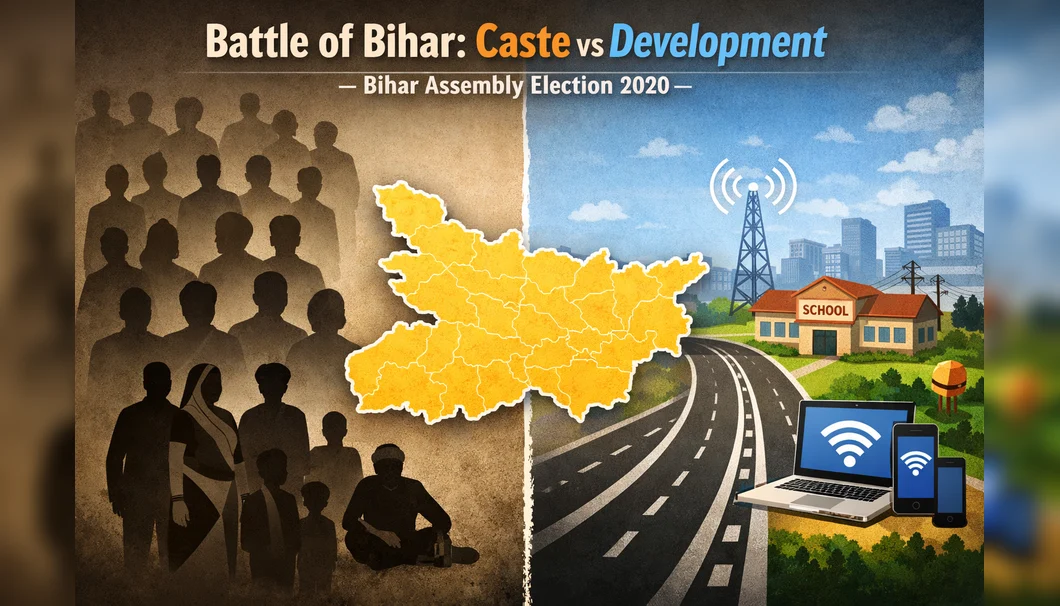
Battle of Bihar : Caste vs Development (Bihar Assembly Election 2020)

BIHAR- The Land of Lord Buddha

The Politics of Bihar, a state in eastern India, was characterised, in the early 2000s, by weak governance and corrupt politicians. Currently, there are four main political parties: Rashtriya Janata Dal, Janata Dal, Bharatiya Janata Party and Indian National Congress.

Now, The present scenario of Bihar politics

As India reels under the COVID-19 crisis and the ensuing lockdown, Bihar Chief Minister Nitish Kumar has another reason to worry. Assembly elections are set to be held in the state in the latter half of 2020. Under normal circumstances, by this time, all political leaders in the state would have begun drawing up poll strategies, campaigning and working against the clock to fulfil all promises made to the people.

Bihar chief minister Nitish Kumar, had made 7 promises to the people of his state when he was elected to power in 2015.

The deadline to fulfil these promises was June 2020, but with the lockdown extended to 3rd May, meeting this deadline could be tough. (as per the statement)

NITISH KUMAR’S KEY PROMISES

  • Tap water connection to every household.
  • Electricity to every home.
  • Concrete roads and drains.
  • Accessibility to toilets.
  • Renovation of lakes and ponds.
  • Student credit card: access to loans worth more than Rs 4 lakhs.
  • Free Wi-Fi in schools and colleges.

Nitish Kumar is not in favour of extending lockdown, the CM was worried that he wouldn’t be able to fulfil all his promises if lockdown extended.

CM held a video conferencing meeting with senior state government officials.

In the second phase of lockdown, the Bihar government has begun with new plans for different sectors. They decided to implement these plans in rural areas while following social distancing and its norms guidelines too.

RALLIES AND YATRA’S

Rallies and ‘Yatras’ Come to a Screeching Halt.

The Nitish Kumar government’s term in Bihar ends on 29 November 2020. This is barely 6 months away. In the present situation, all political parties have been forced to cease all election-related work and political leaders have remained confined to their homes.

Campaigns to reach out to voters and strengthen political presence in multiple constituencies have been put on hold across all parties.

Former Bihar deputy CM and leader of Opposition in the Bihar Assembly, Tejashwi Yadav, could also be forced to stop his ‘Berozgari Hatao Yatra’. Tejashwi Yadav has been holding rallies across the state to corner CM Nitish on the condition of unemployment in Bihar. However, he has had to pull the brakes on such rallies due to the COVID-19 scare.

Crucial BJP Meets Cancelled

BJP is also missing out on the opportunity to expand the party’s reach in the state. March, April and May were crucial to the BJP as the party had planned multiple programmes and events in these three months. However, due to the lockdown, these events could now stand cancelled.

The conference that was to be held between the JD(U) and BJP had to be abruptly cancelled due to the COVID-19 scare. As of now, the biggest fear that all these parties are faced with is that of losing their vote bank right before the elections.

The upcoming elections in Bihar may go online through various modes of digital communications because of the situation created by the continued spreading of the outbreak of COVID-19.

Admitting it with this newspaper, deputy chief minister and senior BJP leader Sushil Kumar Modi said that nobody can deny the involvement of digital campaigning during the upcoming Bihar elections in accordance with the social distancing.

Upcoming Bihar Legislative Assembly elections

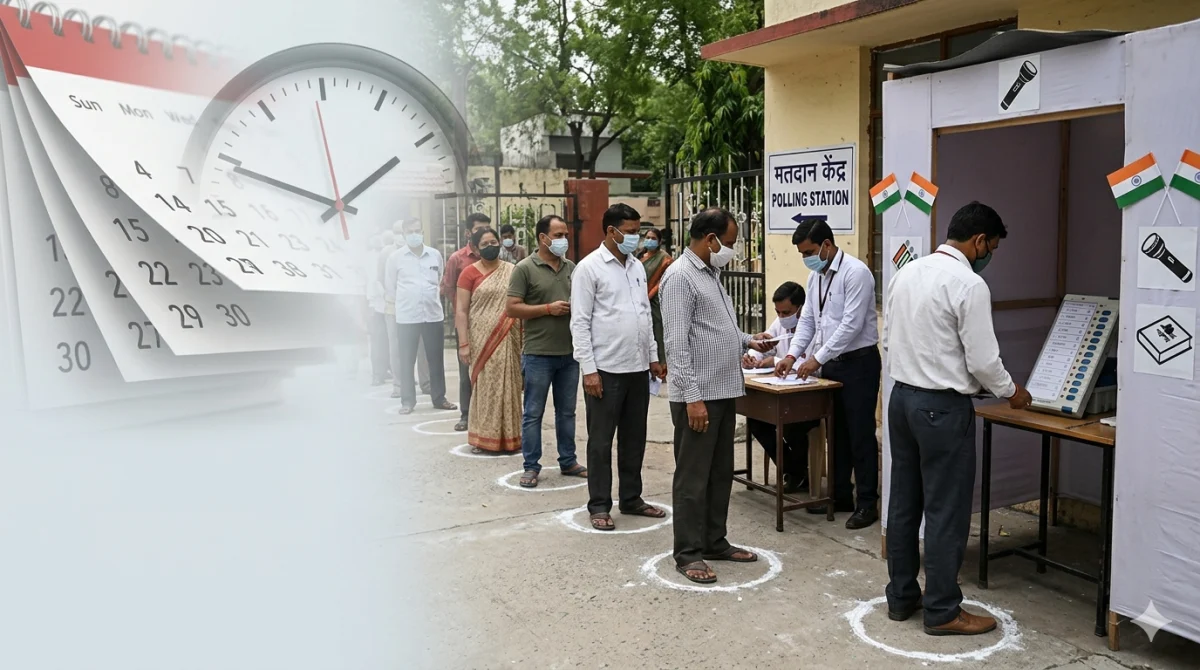
Bihar Legislative Assembly elections will be held in Bihar in October 2020 but this year whether pandemic ends or not. “It is now a foregone conclusion that conducting electioneering or campaigning during the Bihar elections wouldn’t possible to be done through traditional or conventional ways for next more than a year due to a pandemic is driven social distancing.” Thus, holding polls online and conducting campaigning through various digital modes of communication would be unavoidable in Bihar.

Bihar Legislative Assembly elections will be held in Bihar in October 2020 to elect 243 members of the Bihar Legislative Assembly. The term of the current assembly elected in 2015 will expire on 29 November 2020. This will be a fight between JDU led NDA and RJD led UPA.

Final voters list for Bihar Legislative Assembly election 2015
S.NoGroup of votersVoters population
1Male3,56,46,870
2Female3,11,77,619
3third gender2169
–Total voters

6,68,26,658

Comparison between parties in the last elections: –

Rashtriya Janata Dal: –

The RJD was formed in July 1997 in New Delhi by Lalu Prasad Yadav, who had broken away from the Janata Dal (People’s Party). Raghuvansh Prasad Singh and Kanti Singh were the other principal founding members of the party, joined by an additional 17 members of the Lok Sabha (lower chamber of the Indian parliament) and 8 members of the Rajya Sabha (upper chamber of the parliament). The RJD’s stated objective was to “carve out a society based on the premises of social justice and secularism.” To that end, the party espoused the socialist beliefs of Jaya Prakash Narayan—who championed the causes of the disadvantaged in Indian society—but it did not advocate communism. The RJD’s influence was largely in Bihar state politics, although it also had a presence at the national level as well as in the states of Jharkhand (which was calved off from Bihar in 2000) and Uttar Pradesh.

The RJD inherited its success and popularity as a party from that of Lalu Yadav, the party’s leader since its founding and Bihar’s chief minister (head of government) in 1990–97. The party’s political prospects were negatively affected, however, by Yadav’s alleged involvement in corruption scandals, the first of which (an alleged scam involving the misappropriation of government funds supposedly destined for animal feed) led to his resignation from the chief minister’s position in 1997 (the post was taken over by Rabri Devi, his wife). Thus, the party’s fortunes have risen and fallen dramatically at both the state and national levels.

Milestones Achieved: –

The RJD fared better in the 2000 Bihar assembly elections, winning 103 of 243 seats and forming a coalition government with the Indian National Congress (Congress Party). Rabri Devi was again named chief minister. The RJD’s good electoral performance continued in the 2004 Lok Sabha polls when it garnered 21 seats in alliance with the Congress Party. Yadav served as the minister of railways in the cabinet of the Congress-led United Progressive Alliance government (2004–09), generally to good reviews for his success in transforming the national railway system from losing money to turning a profit.

Years of RJD misrule: –

Years of RJD misrule in Bihar and allegations of corruption by Yadav, however, had weakened the party’s hold on its traditional support base, which included lower-caste Hindus and the minority Muslim population.

The Fodder Scam was a corruption scandal that involved the embezzlement of about ₹9.4 billion (equivalent to ₹39 billion or US$540 million in 2019) from the government treasury of the eastern Indian state of Bihar. Among those implicated in the theft and arrested were then Chief Minister of Bihar, Lalu Prasad Yadav, as well as former Chief Minister, Jagannath Mishra. The scandal led to the end of Lalu’s reign as Chief Minister. Dr Dineshwar Prasad Sharma is also alleged to have received ₹300.60 crores from S. N. Sinha. On 23 December 2017, Lalu Prasad Yadav was convicted by a special CBI court while Jagannath Mishra was acquitted.

The theft spanned for many years, and allegedly involved numerous Bihar state’s administrative and elected officials across multiple administrations of the Indian National Congress and the Janata Dal parties. The corruption scheme involved the fabrication of “vast herds of fictitious livestock” for which fodder, medicines and animal husbandry equipment was supposedly procured. Although the scandal broke in 1996, the theft had been in progress, and increased in size, for over two decades. Besides the magnitude and duration of the theft, the scam was and continues to be covered in Indian media due to the extensive nexus between tenured bureaucrats, elected politicians, and businesspeople that is revealed, and as an example of the Mafia Raj that has penetrated several state-run economic sectors in the country.

Janta Dal(United): –

The party’s origin can be traced to the founding of the Janata (People’s) Party in 1977, a coalition of several smaller parties that combined forces to oppose the Indian National Congress (Congress Party) and its leader, Indira Gandhi, then prime minister of India. In 1988 V.P. Singh was a principal founder of the Janata Dal (JD) through the merger of the Janata Party and two smaller parties as part of the United Front (UF), a renewed opposition to the Congress Party.

In 1999 the JD decided to support the Bharatiya Janata Party (BJP)-led National Democratic Alliance (NDA) coalition government in New Delhi. The faction led by Deve Gowda, however, opposed associating with the NDA and established a rival party that took the name Janata Dal (Secular), or JD(S). What remained of the JD was designated Janata Dal (United) and, headed by Sharad Yadav, joined the NDA government. Four years later, in October 2003, the JD(U) merged with the Samata and other smaller parties as a reconstituted JD(U). Fernandes became the first president of the new party, and Yadav headed up its parliamentary board.

Milestones Achieved: –

The 2003 re-formation of the JD(U) was largely a move to counter the RJD’s several years of dominance in Bihar. While espousing the ideology of socialism, secularism, and democracy, the JD(U) succeeded in its broad objective of winning over lower-caste Hindus and the minority Muslim population, who had been strong supporters of the RJD. Being a part of the BJP-led NDA government at that time, the JD(U) opposed the policies of both the Congress Party and a so-called “Third Front,” consisting of leftist and other regional parties.

It had established an alliance with the BJP for both contests in 2005, and the two parties formed a coalition government in the state, with Kumar as the chief minister (head of government). The Kumar government quickly put in place policies aimed at turning around the economically underdeveloped state.

The administration’s strong and largely corruption-free performance in its first term was among the reasons why the JD(U) had an even better showing in the 2010 assembly elections, in which it won 115 seats.

Misrule: –

This is not the first time an unexplained fever and administrative apathy has killed children in Bihar. This has been happening consistently year after year for the past 25 years – since 1995. Every year annual occurrence of deaths has worsened with health system either not responding or responding too late to control the damage.

“More than 400 children died in 2001 due to suspected AES, around 375 died in 2014 and this year around 150 have died so far. If we know that this tsunami is going to hit us year after year, I fail to understand why are we never prepared,” said Dr. Arun Shah, a pediatrician, who practices at a private hospital in Muzaffarpur, Bihar.

After the recent visits of Bihar chief minister Nitish Kumar and Union Health Minister Dr Harsh Vardhan to SKMCH, the health department called upon PHCs and CHCs to lead the charge. “All PHCs and CHCs should have devoted AES wards, each with at least two beds. These wards with oxygen cylinders and glucometer, have to be air-conditioned. They have been told that they must treat AES patients, not just refer them to bigger hospitals,” Dr Harsh Vardhan had said in a press conference.

Despite this mandate, PHCs and CHCs, often short of both medical and non-medical staff, find themselves with their backs to the wall.

All of them accepted that healthcare facilities in Bihar are in pathetic condition. “There are no facilities at most of the hospitals. Doctors don’t arrive on time and even basic medicines like paracetamols are not available. On top of that health workers behave very rudely with people,” said Somu Anand another volunteer.

A number of votes and seats in last legislative assembly elections in Bihar: –

This election saw highest voter turnout in Bihar assembly polls since 2000, with a 56.8% voter turnout in this election The RJD emerged as a single largest party with 81 seats, followed by JDU with 70 seats and BJP with 53 seats. In terms of vote share, BJP came first with 24.4%, followed by RJD with 18.4% and JDU with 16.8% and Congress got 6.7%.

All 243 seats in the Bihar Legislative Assembly122 seats needed for a majority the Bihar Legislative Assembly was reduced from 324 to 243 members. The current NDA government formed on 27 July 2017 consists of 73 JDU, 53, BJP, 2 LJP and 4 Independent MLA’.

Last assembly elections were held in October–November 2015. In July 2017, ex. Deputy Chief Minister Tejashwi Yadav of the RJD was charged by the CBI in a corruption case. After prolonged, but ultimately futile deliberations between the members of the Grand Alliance over Yadav resigning, Nitish Kumar resigned as Chief Minister on 26 July 2017. Hours after Nitish Kumar’s resignation, the JD(U) joined hands with the BJP, allowing Nitish Kumar to take oath as the Chief Minister of Bihar.

Then the Governor of Bihar, Keshari Nath, administered Nitish Kumar the oath of office and secrecy in the Bihar Rajya Bhavan on 27 July 2017, 1000 hrs IST, making Nitish Kumar the Chief Minister of Bihar for the sixth time. He gained the vote of confidence in the house with a total of 131 votes through Lobby Division voting on 28 July 2017. The Speaker JDU and 1 member of BJP did not cast their vote. Eleven NRI voters registered in the electoral rolls for the first time in Bihar electoral history.

They were contacted by election officials through their family members. It was the first time that NRIs cast their votes semi-electronically from foreign the ECI published the final voters’ list for the election, which has an overall population of 10,38,04,637, in accordance with the 2011 Census of India.

The no of voter voted in the Way they are categorized on the basis of gender the election commission of India released the chart of voter voted in the election. In July 2015, BJP-led NDA won 13 seats out of 24 seats of BIHAR LEGISLATIVE COUNCIL elections. JDU and RJD combine won 10 seats only, while 1 seat was won by an independent candidate.

The result of the Legislative assembly(Bihar): –

Results showed that, of the 53 seats won by BJP, 27 were urban areas, which signified that BJP had dramatically shrunk back to its traditional urban support base in Bihar. BJP failed to make a big impact in the rural areas of Bihar, which has one of the lowest urbanisation rates. Only 11.3% of the population of Bihar lives in urban areas, which is lowest in India after Himachal Pradesh.

According to one analysis, RJD was the biggest beneficiary of this election. RJD increased its seat tally by 59 compared with the previous election. RJD had the best strike rate by winning 81 of the 101 seats contested. RJD became the single largest party in Bihar Assembly. RJD defeated BJP in 36 seats BJP had won in the last election, similarly, it took 25 seats JDU had won in the last election.

HOW LEADTECH CAN HELP IN WINNING BIHAR ELECTIONS: –

Leadtech leading with technology is a Political Management consultant specializing in strategic Political Communication, Constituency Profiling and Management, Campaign Management, Digital Media Management and Content Placement strategy, Polling & Political Data Analysis. We here at Leadtech provides greater expertise in political campaigning and campaign communication. We use information and communication as strategically and effectively as possible to reach the targeted objective that has been set. Our team has clear, measurable and achievable goals.

  • Our company will analyse the strengths and weaknesses of the opponents which can give a huge advantage in building our campaign messaging, in head-to-head debates, and in undermining our campaign message when necessary.
  • We just do not do our work blindly we first acquire voter’s data because we think Acquiring voter is mandatory one which can’t be neglected.
  • Our firm knows the ins and outs of campaigns and will work with you to speed up your race.
  • We will help the party to point out the issues that the state has, and how the other party has disappointed them with their expectations.
  • With our outstanding management skills, we make the best strategies and plans for the political leader, so they could not lose any chances of winning an election.
  • Our main focus is on the idea that our services gives power to political parties and make them more comfortable to consult us.

WHY LEADTECH IS THE BEST POLITICAL CONSULTING FIRM

103.163.58.156:4216/leadtech/ revolves around the tagline i.e leading with technology. Leadtech expert team provides the services of Digital Marketing such as Social Media Marketing, Youtube Video Promotion, Logistic Campaign, Text and Voice SMS Marketing, Email Marketing, Event Management. Understanding the key challenges that the candidates face our firm helps the candidates in winning the hearts of their voters and advise them best on how to engage with their voters. Our main focus is on the marketing of ideas and attitudes and concern about public issues, including political concepts and candidates. We do the personal branding of the candidate because the voters would be voting for them so they should know them more. We evaluate the effectiveness of marketing and make adjustments. There are a variety of digital tools, in-house equipment’s that we use during our campaign which gives benefits to the leaders in many ways. We’re thoughtful about the work we take and we’re honest with our advice as we believe in loyalty, diversity and integrity.
Categories
Assembly Election Leadtech Services

Election Campaign Management company in India

Election Campaign Management Company in India

The election campaign is a way by which political parties prepare for the election and a way to attract voters. An Election Campaign Management Company includes a number of things such as your end goal, campaign budget, target audience, message to convey, channel to communicate, and monitoring and analyzing of the end result. It influences society and presents the party in a presentable way.

Why you should trust LEADTECH campaign strategies?

Why you should trust LEADTECH campaign strategies because our LEADTECH use information and communication as strategically and effectively as possible to reach the targeted objective that has been set. Our company understands the challenges of reaching and communicating with different voter groups have increased simultaneously with a greater need to reach out to and communicate with different voter groups. We provide greater expertise in political campaigning and campaign communication.  We focus in the marketing of ideas and attitudes and concern about public issues, including political concepts and candidates.

Campaigns realize mainly on communicating the message and thus we have professionals involved in the campaign who not only communicate effectively and persuasively but also make strategies on how to connect to different parts of society. We have a trained team in communication and presentation skills. We evaluate effectiveness of marketing and make adjustments. At the same time also tries to provide a consistent message in multiple types of campaigns.

Before campaigning we do an opponent analysis to know about its strengths and weakness.  We develop our strategies by undermining what the voters are thinking to create a better base.

As LEADTECH  we also focus on personal branding of the candidate because it is who the voters will be voting for. We consult them on how to be presentable across social media, public appearances etc.

Field campaign: –

  • Field campaign is an organized effort which influence the citizen and their mind set up for making a decision.
  • In political field, it is focused on general elections and candidates for head of state, all head of government, often a President, The Prime Minister.

In field campaign there are many things which we have to focus: –

Firstly, we have to select the areas of section in our society: –

Campaign for upper class: –

Upper class when political parties choose their areas of a political field campaign they signify the basic things and also think from the side of upper class mentality.

What they are in need of?

What they really want from the political party?

The basic thing party focus to convince the upper classes are:

  • Social, Physical and Economic infrastructure of a society.
  • Infrastructure can be defined as long term physical assets that operate in markets with high barriers to entry.
  • Social infrastructure is set of infrastructure sector and typically includes assets that accommodates social services.
  • Economic structure is the combination of basic facilities.

Campaign for middle class: –

Now for the middle-class sections the areas are selected and political party go through the the mindset of middle-class perspectives which includes like:

  • Reduce unemployment.
  • Give the opportunity of work to the people.
  • Reduce the goods price.
  • Work on a public sectors of a society.
  • Money for starting business.

So, if a party plans field campaign for a middle class section then they should focus on these things Much so that middle class citizen gat convinced and vote them.

Campaign for lower class: –

  • Now comes lower-class family which are also known as BPL (below poverty line) people.
  • They are the neediest people, they don’t have the capacity to think much, the just go with the flow and wherever they will find their benefit they will work for them.

So a Party in a field campaign should think about them and talk as per their necessity like:

  • Free LPG
  • Free education
  • Free grains / beverages
  • Give jobs to unemployed workers
  • Reserve Kota
  • Abhiyans for farmers
  • Many more

 In a field campaign, there are so many things a political party should go through to convince the all the sections of the society.

Door to Door campaign:-

  • Door to Door campaign in this people having a face to face personal conversation are more likely to find common ground.
  • A political field campaign is a strategy and perhaps the background of a political strategy.
  • A proper strategy will let candidate adjust campaign goals and funds to match our progress.

Create a relatable message: –

  • Create a relatable message of your campaign should be all about letting voters find the common ground between you and them, to get their support.
  • An ideal field campaign should address current problem of the local citizens.
  • Just try to make everything simple and clear for everyone.
  • We should work on everything like locality, public mind set and the method of voter communication used.

In field Campaign a candidate should participate in the community, host community events, get introduced in private circles, meet with community influencers.

Online campaigns: –

  • Online campaign means the use of computers, digital platforms such as facebook, emails, google, linkedin, youtube,  SMS, WhatsApp, to communicate for sales and marketing, business development, brand development.
  • There are many social platforms which help in all type of campaigning, may it be political or business campaigning, you have to equally scale online campaigning cum online reputation management.

Online reputation management for campaigns: –

Online reputation management plays a very vital role in political campaigning. Nowadays people get more influenced by what they see online. With trends changing from newspaper to mobile phones, you should be aware of your online reputation. Voters will try and do educate themselves about the candidates.

Most are seen using search engines to conduct this research and make an opinion on the candidates based on the results. The message often consists of several talking points about policy issues. The points summarize the main ideas of the campaign and are repeated frequently in order to create a lasting impression with the voters. Sometimes they create the mind set as when we search frequently about some political party the updates about that political party comes on our mobile phones.

Overall, politicians of all parties across the globe now understand the value of social media in speaking directly to voters and heavily impacting the results of their campaigns. Paid social media advertisements provide extensive targeting opportunities with tailored messages for hundreds of different audiences. While doing the political campaign, we should get more followers online and then convert them to follow your political party, this way you can increase your online presence and come in limelight. It plays a vital role for a political candidate and online political campaign management helps to build an online reputation which turns voters into a positive mindset.

LEADTECH campaign message: –

LEADTECH campaign message defines goals and purpose. One needs to have a nerve hitting plan and should be able to communicate that plan. The candidate’s profile framework plays a major role in campaign whether it’s an online campaign or offline campaign. In spite of the integrated technology, people interact in the physical world. There are many ways to promote a political party from mailing brochures to coordinating social media buzz.

LEADTECH campaign solely contains the message the candidates want to share to the voters. It tries to connect the people with same idea and views. Campaign summarize those ideas and view and repeat that frequently to make a lasting effect on the voters.

LEADTECH campaigning team must know how to convey the message, recruitment of the volunteers and money raising. The techniques are generally combined into a format called campaign plan, which takes account of the goals, message, audience and available resources, campaign practices and communication are always dynamic and shaped by the contextual conditions formed by the political system, the media system, laws and regulations, the political culture, and the type of parties and party competition.

LEADTECH Media strategy and Plan for election campaign: –

LEADTECH media strategy and plan for election campaign are as follows: –

  • Print
  • Television
  • Social Media

Media Schedule are as follows: –

Time slot for television advertisement: –

16-30 seconds

Time slot for print advertisement: –

Daily advertising in newspaper and magazines it will come weekly till the end of the election.

Time slot for social media advertisement: –

Daily 4 to 5 posts on Instagram, Facebook and Twitter till the election campaign ends.

Implementation: –

Media design for LEADTECH are as follows: –

Internet: –

Banner advertisement will be placed on various websites of internet during the peak months of Election campaign management to drive traffic LEADTECH .in

Websites are selected on the basis of population interest and traffic generated on it such as Wikipedia, blogspot.com, Facebook, Instagram, Twitter, Gaana aap.

Print: –

In newspaper and magazines, we will promote our Election Campaign Management company because magazines are the ideal way of reaching specific target and they also have a longer readership than other forms of media.

Hoarding: –

Our Election Campaign Management company should be start after 2 weeks but before it hoarding should be pasted in different locations to create awareness about LEADTECH Management Consulting Pvt ltd company and our election campaign.

Outdoor: –

  • We choose to place our creative creations on metro station, metro trains and buses because large number of male and female daily travels through it.
  • We place our election campaign advertisement to the exterior of metro trains inside and outside.
  • For buses outside of the bus the election advertisement should be placed.

Television: –

We will choose animation cartoon advertisement to promote our political parties and as well as election campaign.

Media Schedule: –

For best advertisement promotion media schedule is very important part and it has 3 key aspects: –

Continuity: –

Our banner advertisement should be run on Social media for 2months to promote company LEADTECH Magement Consulting pvt. Ltd (elections campaign) as well as in newspaper daily till the election ends, magazines for 2 months on weekends the advertisement will come and on television also till the end of elections.

Frequency: –

The print advertisement frequency for newspaper daily till the election ends and for magazine 2month election campaign where the political party’s promotion should be done for 2months in magazines. The frequency of social media would be placed in the hand of whoever is doing the marketing for LEADTECH Management company (election campaign). There should be daily 4 to 5 posts put on Facebook and by using Twitter we will twit about the election campaign. The frequency of television for election campaign comes daily on every news channel Aaj Tak, zee news, ndtv , etc By doing all these things people come to know about election campaign as well as our company.

Reach: –

The reach of our election is very high we have tried to reach our target audiences with the help of social media, print media and electronic media.

LEADTECH Evaluation plan: –

LEADTECH Evaluation plan is as follows: –

Pre-testing: –

  • A print advertisement will take place with the new print advertisement in the form of perceptual meaning studies in which readers will see advertisements in the trimmed exposures.
  • Physiological testing will also be performed to recognise reactions to the advertisement from viewers.
  • LEADTECH Management Company takes pride in their strong logos which are designed to promote political parties for the election campaign.
  • The effect of this is easily measured by performing plyometric testing to indicate the subject’s level of interest and brain pattern analysis to monitor the reaction of the viewer’s brain.

Audience feedback: –

  • The brand appeals to most of the consumers/clients in the field of politics.
  • People like our ways of promotion by using different techniques and innovative ways.

 Analysis: –

We analyse that youth participant most in the political process and their contribution is indeed much. As we all know India tops the list of the world’s largest youth populations and youth is the strongest pillar of one country. Channelling their energy and creativity would be highly rewarding.


Categories
Assembly Election

Bihar 2020 assembly elections may be postponed for six months.

Due to corona pandemic, Bihar 2020 legislative assembly elections may be postponed for six months. President rule may be imposed if the situation does not improve.

With no signs of repeal of Covid-19, the Bihar Assembly elections, which are less than 160 days apart, are likely to be postponed and President’s rule will be implemented in the state, sources in the Election Commission and in Delhi Political institutions have indicated.

As per rules, the election process in the state is to be completed by 12 November 2015. It is pertinent to mention that in 2015, elections in Bihar were held in five phases which started from 12 October and lasted till 5 November.

A Union minister told The Sunday Guardian: “It is too early to say anything, but the option of postponing the election is being discussed. If the situation does not change (in relation to Covid-19) in the coming weeks, then representatives of all parties will have to sit together and call. We cannot put the lives of so many people in danger. The election process involves mobilization of people and this is not appropriate in the present circumstances. We have adequate provisions in the Constitution to deal with such developments. “

South Korea model simulation of organized elections?

On 23 April, Election Commissioner Ashok Lavasa had stated that the Election Commission was considering the way South Korea had conducted its parliamentary polls on 15 April amid the Covid-19 pandemic.

However, while it may sound very good that top Delhi-based officers in the Election Commission of India are looking to emulate the South Korean model, the difference between Bihar and South Korea is likely to bring a rude shock to those who think that the model executed in South Korea will be successful in Bihar.

How did South Korea conduct its elections?

Out of the almost 4.40 crore people of the entire 5.16 crore total population of South Korea, who were eligible to vote, 66% or 2.9 crore turned up to vote. The population density of South Korea, where literacy rate is 97%, is 503 people per square kilometer.

The over 14,000 polling booths in the country were extensively disinfected and the temperature of the voters was checked at the polling booth entrance. All the electoral officials were given PPE suits. Anyone who was found to have more than normal temperature was sent to a designated area from where they could cast their vote. It was made compulsory for voters to use hand sanitizers and wear disposable plastic gloves before entering the booth to cast their ballots. Covid-19 infected patients and people in self-isolation were also able to exercise their voting right as special voting booths were set up at government-run isolation centers, while those under self-quarantine were allowed to leave their homes to vote after polling booths was closed to the public at 6 p.m.

What is the same number in Bihar?

The population of Bihar as per the 2011 census was 10.30 crore which is expected to be more than 12 crore now, more than twice that of South Korea.

Bihar is India’s most densely populated state with a population density of 1,106 people per sq km, with Patna having a density of 1,803 per square km. The state’s literacy rate is 64%. As per Election Commission officials based in Patna, the number of voters in the state is around 7.19 crore, almost double that of South Korea.

The numbers of senior citizen voters in the state are: 60-69 years (64 lakh), 70-79 years (3.09 crore) and 80 years plus (13 lakh). In effect, close to 4 crore voters are those who are most vulnerable to Covid-19. Till 6 May, Bihar had conducted 29,500 tests out of which 550 were found to be Covid-19 positive.

For the 243 Assembly seats, the number of polling booths that the Election Commission has created are 72723, almost five times that of South Korea.

In the 2015 polls, 750 companies of Central Armed Police Forces (one company has roughly 150-250) men and almost 3.27 lakh polling personnel were deployed for a free and fair elections.

“In South Korea, strict social distancing norms were followed even during the campaigning with the candidates not allowed to come in close contact with the voters during canvassing. How do you expect that to be repeated in Bihar where last time there were 3,500 contestants who moved around almost 140 towns and 45,000 villages? Who will stop them from handshaking or taking a garland from their supporters? Will they give PPE suits to almost 5-6 lakh officials and security forces who will be engaged in conducting the polls? How will the polling officers in booths ensure social distancing in populated places? Officers sitting in Delhi come up with fancy ideas which are impossible to execute on the ground. The South Korea model is not feasible on the ground. We hope that we are not pushed to do something that cannot be done,” a Patna-based government official, who has been part of multiple polling exercises, said.

The Election Commission can also go for the Indonesian model, if it has to go for a foreign model. On 4 May, Indonesian President Joko Widodo signed a law that allowed the postponement of the regional elections that were slated to be held in the country on 23 September to December or even longer depending on the situation of the Covid-19 pandemic in the world’s fourth most populous nation.

Responding to The Sunday Guardian’s queries on holding of elections in Bihar, Election Commission spokesperson Sheyphali Sharan said that the updates regarding the issue of Bihar and whether the EC was considering emulating the “South Korean’ model was shared on the ECI website.

The Chief Electoral Officer of Bihar, H.R. Srinivasa, did not respond to The Sunday Guardian’s calls and text messages, seeking response to how the election body was preparing for the elections scheduled for October.

source SUNDAY GUARDIAN LIVE 2020