Categories
About Leadtech Assembly Election Leadtech Services Social Media Management

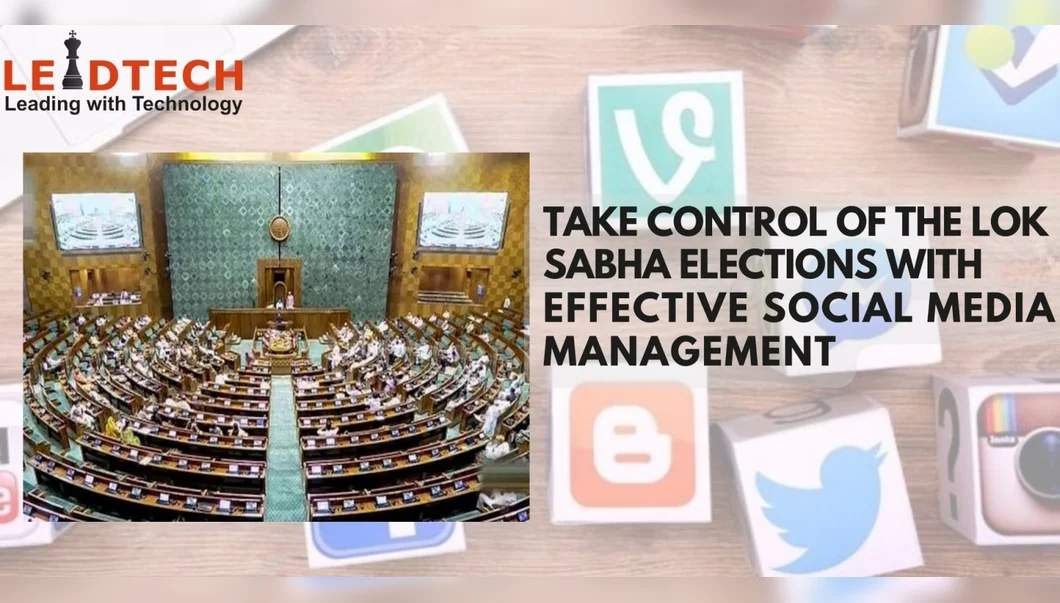
Master Lok Sabha Elections with Social Media Management


In today’s digital age, political parties rely heavily on social media to reach out to potential voters and gain an advantage over their opponents in the Lok Sabha elections. With the power of social media, parties can efficiently mobilize a vast electorate, both online and in person, to ensure victory. This was demonstrated during India’s 2019 Lok Sabha elections, as social media had a substantial impact on the outcome.

Leveraging the Power of Social Media for Lok Sabha Elections

The Bharatiya Janata Party (BJP) is a pioneer in the strategic use of social media and television for political communication. As early as 2004, the party recognized social media’s potential and began using it to engage with people. However, it wasn’t until the 2014 national elections that the BJP finally perfected the technique of social media management, leveraging it to their advantage and securing an overwhelming majority.

The BJP’s social media campaign was successful due to its early adoption of internet communication technologies (ICTs) and ability to effectively use messaging apps like WhatsApp and social networking sites like Facebook. The party identified roughly 160 constituencies that were ideal for digital campaigning, which contributed significantly to their success in these areas.

Following the BJP’s success, other political parties have jumped on the digital bandwagon and devised social media management strategies for the next Lok Sabha and state elections.

The Shift in Political Campaigning and Media Coverage

Political campaign communication is an important element of political communication research in India, with issues ranging from vote share to voter turnout, demography, economy, health, corruption, and more. However, with the 2014 elections, the emphasis switched to social media as an important campaign strategy.

Traditionally, official party events such as rallies, speeches, and canvassing have been central to campaign communication. Still, in recent years, a leader’s statement on social media has been regarded a formal form of communication.

The Changing Dynamics of Campaign Planning

Campaign plans are not etched in stone and are constantly updated to reflect political shifts and current circumstances. With the BJP setting the standard for using technology in electoral campaigns, other parties have begun to invest in specialized social media divisions and engage skilled social media strategists to improve their prospects of success.

However, it is important to emphasize that social media alone cannot win elections in India. It must be combined with a comprehensive campaign strategy that considers local characteristics as well as each constituency’s specific demands. The increase in internet usage suggests that social media management will remain an important feature of Lok Sabha elections, making it critical for parties to adapt and use these platforms efficiently.

Looking Ahead

With the increased use of social media in political campaigns, it is crucial to cultivate critical thinking skills and an inquiry mindset among citizens. This will allow voters to question and examine the information supplied to them, allowing them to make more educated judgments during the election.

In conclusion, social media has become an essential component of Lok Sabha election preparation, and it is up to political parties to successfully use this potent medium to reach the population and ensure victory in the upcoming elections.
Categories
Election PR Management

Is Samajwadi Party on a Path to Revival for 2024 Lok Sabha Elections?

Samajwadi Party

After Samajwadi Party’s improved performance in 2022 UP Assembly Elections (combined with BSP’s massive decline), many were speculating whether SP was set to regain its ground in Uttar Pradesh.

The next major elections in UP will take place 18 months from now. The 2024 Lok Sabha Elections will be a determinant about the state of SP in the state. In the past election of 2019, in which BJP swept the state, taking 62 out of the 80 seats, SP was in alliance with BSP and RLD.

But presently, the Bahujan Samaj Party has almost diminished entirely. The party which once ruled the whole of Uttar Pradesh independently, only managed to win 3 seats in the 2022 Assembly elections. Hence, it is unlikely that SP would want to form an alliance with them, or even that they can win in Lok Sabha in their individual capacity. There was a shift in the preferences of BSP’s loyal voters, and hence the party has weakened at the ground level. The 10 seats they won in 2019 are at risk of being won by either BJP or SP.

SP, in the alliance of 2019, did not benefit much. The alliance partner BSP won 10 of the 38 in which they contested, while SP won only 5 of their 37. In fact, they even lost 3 of them by the end of 2022. Rampur’s Azam Khan had to resign following his conviction, Azamgarh’s Akhilesh Yadav resigned when he won in the UP Assembly, and Mainpuri’s Mulayam Singh Yadav passed away recently. Both the former 2 seats were won back by the BJP in bypolls, and the third one is currently in the process of electing a new MP. Therefore, presently, SP is barely
represented in the Lok Sabha.

BJP continues to remain a strong force in UP. It is very unlikely that their seat share will reduce majorly, even in 2024. They might see a slight change, which could be either positive or negative, depending upon the opposition forces. But the fact of the matter is, their vote share has consistently stayed high, and hence seats are not a major worry for the ruling party.

Players like AD(S) are expected to hold their seats. In the past 2 cycles, the Anupriya Patel-led party has won the two western-most seats in UP. Parties like RLD have contested a few seats in both 2014 and 2019, but have remained unsuccessful so far. JDL was formed only recently, and this will be their second general election, but even then, they are only likely to contest one seat (Kaushambi). Overall, none of their leaders are influential enough nationally to create a wave and influence the results.

Congress could have potentially been considered a serious contender in UP, especially following their recent party restructuring and Bharat Jodo Yatra. But their yatra route in Uttar Pradesh is considerably shorter in proportion to the seats the state carries. Hence, their performance in 2024 is still doubtful.

This only leaves Samajwadi Party as the main opposition to BJP in the 2024 General Elections. Without an alliance, back in 2004, SP peaked by winning 35 of the 80 seats. Their performance was a result of Mulayam Singh Yadav’s leadership. But with him out of the picture, the pressure comes on his son, Akhilesh’s shoulders. Since leaving office in 2017, his party went through a severe decline, until 2022, when they saw some improvement in the Assembly elections. If his wife Dimple Yadav wins in the upcoming Mainpuri by-elections, SP might be in a position to win more in 2024. In any case, regardless of the aforementioned results, SP is set to win back most of the BSP seats. But unless Akhilesh pulls up his socks and actively opposes the BJP, before and during elections, their party is in the same danger as BSP.

    Get in Touch


    By clicking Submit, I hereby authorize Leadtech and its affiliates to call, email, send a text through the Short messaging Service (SMS) and/or Whatsapp. The consent herein shall override any registration for DNC/NDNC.