
Categories
Election Election Campaigns Management Election management software Elections 2026 Leadtech Services

Leadtech’s Guide to Digital Campaigns for New Zealand Elections

Introduction

Elections in New Zealand are celebrated for transparency, high voter participation, and a structured democratic framework. Operating under the Mixed-Member Proportional (MMP) system, campaigns must balance nationwide party performance with electorate-level strategy and precise voter engagement. In such a competitive political environment, digital political campaign management can be the deciding factor between winning and losing.

  • This is where Leadtech Political Consulting emerges as one of the best political consulting firms and digital campaign partners. Specializing in political research, voter information management software (VIMS), digital media marketing, social media strategy, content production, and public relations, Leadtech enables campaigns to execute structured, data-backed strategies.

  • By combining advanced technology with practical political expertise, Leadtech ensures that candidates like Chris Hipkins (Labour), Christopher Luxon (National), and David Seymour (ACT) are able to engage strategically with voters across key constituencies like Auckland Central, Wellington Central, and Christchurch East.

  • This article explores how technology-driven political solutions can strengthen performance in New Zealand elections and elevate the effectiveness of campaign management.

Why Digital Political Strategy Is Crucial in Modern New Zealand Elections

Adapting to an Informed and Digitally Active Electorate

  • New Zealand voters are highly informed, digitally connected, and responsive to issue-based messaging. Campaigns cannot rely on generic communication but must implement targeted, research-backed strategies that resonate with local electorates.

  • A technology-led approach ensures that candidates can connect with voters at multiple touchpoints, including email campaigns, social media engagement, digital ads, and online surveys.

  • For example, constituencies like Te Atatū, Mount Roskill, Tauranga, and Ilam have distinct voter demographics, requiring tailored messaging to address local concerns effectively.

Research and Constituency-Level Insights

  • In MMP elections, both electorate seats and party votes are critical. Leadtech conducts detailed constituency-level research, offering insights into voter demographics, issue priorities, and behavioral trends.

  • By leveraging booth-level analysis, opinion polls, and targeted surveys, campaigns can identify swing regions, refine messaging, and develop strategies tailored to each electorate. Major electorates such as North Shore, Mount Albert, Wellington Central, and Christchurch East are mapped meticulously to ensure voter outreach is precise, consistent, and data-driven.

  • These insights also help parties anticipate challenges, respond to political shifts, and allocate campaign resources efficiently.

Voter Information Management Software (VIMS)

  • Efficient campaigns require a centralized, secure voter database. Leadtech’s VIMS allows political teams to store, segment, and analyze voter data, conduct real-time surveys, and track engagement patterns across multiple constituencies.

  • Advanced analytics ensure campaigns optimize outreach, predict voter behavior, and maintain compliance with New Zealand’s strict data protection laws.

  • VIMS also supports integration with social media analytics and email marketing tools, providing a 360-degree view of voter interaction for candidates and campaign managers.

Targeted Outreach Across Digital Channels

  • Digital communication plays a central role in modern New Zealand elections. Leadtech manages strategic social media campaigns, email outreach, targeted digital advertising, and influencer engagement, enabling political organizations to reach voters effectively.

  • By combining audience segmentation, performance tracking, and engagement metrics, campaigns can strengthen candidate recall and build stronger connections with constituents.

  • Key electorates such as Auckland Central, Ilam, and Mount Albert benefit from region-specific messaging that resonates with local priorities like housing, employment, and climate policy.

High-Impact Political Communication

  • Clear, compelling content shapes voter perception. Leadtech produces campaign videos, digital creatives, issue-based messaging, and social media content tailored to the New Zealand political landscape.

  • By delivering consistent, credible, and emotionally resonant communication, campaigns elevate the visibility of candidates like Marama Davidson (Green Party) and Brooke van Velden (ACT) while ensuring that messaging aligns with local voter concerns.

  • Professional content production also helps campaigns stand out in a crowded digital space, building trust and credibility among diverse voter groups.

Building Sustained Social Media Presence

  • Social media has become one of the most influential tools in election cycles. Leadtech creates structured social media strategies, including content planning, audience engagement, sentiment tracking, and real-time communication management.

  • By leveraging platforms like Facebook, Instagram, TikTok, and LinkedIn, campaigns build long-term digital credibility, monitor voter sentiment, and respond quickly to emerging political trends.

  • This approach also ensures a strong presence across multiple constituencies simultaneously, supporting candidates’ overall strategy in a coordinated manner.

Strategic Reputation and Narrative Management

  • Public perception is critical during elections. Leadtech offers online reputation management, crisis communication planning, and narrative alignment, ensuring campaigns maintain credibility even during challenging situations.

  • By proactively managing media coverage, social chatter, and public sentiment, campaigns can shape narratives to highlight achievements, counter misinformation, and reinforce candidate integrity.

Key Challenges in Political Campaign Management

Security & Data Privacy

  • Data protection is paramount in digitally managed campaigns.

  • Leadtech integrates encrypted systems, multi-layered security protocols, and secure access controls into all voter management and analytics platforms, ensuring voter data remains confidential and campaigns operate safely.

Rapidly Changing Voter Behavior

  • Voter sentiment can shift rapidly due to political debates, policy announcements, or global developments. Leadtech uses continuous research, AI-driven monitoring tools, and social listening techniques to adjust campaign messaging and strategies in real time.

Resource & Budget Constraints

  • Even well-resourced campaigns must optimize expenditures. Leadtech’s digital campaign management tools reduce operational overhead, automate workflows, and enhance efficiency, allowing teams to maximize impact while adhering to budget limitations.

Why Choose Leadtech India for Political Campaign Services?

Offering the Best Political Campaign Solutions

  • Leadtech provides customizable digital campaign management services for international elections. From constituency research and voter database systems to digital media marketing and content production, each service is tailored to campaign size, voter demographics, and strategic objectives.

  • Structured packages and strategic consultation allow political teams to execute campaigns efficiently, ensuring the highest return on investment.

Proven Track Record

  • With extensive experience in technology-led political consulting, Leadtech has successfully supported campaigns with data-driven insights, strategic planning, and disciplined execution. This expertise translates seamlessly into New Zealand’s democratic system, giving campaigns a measurable advantage.

Advanced Technology & Security

  • Leadtech integrates voter tracking software, analytics dashboards, and secure database management systems, enabling campaigns to operate with precision, safety, and transparency.

Real-Time Customer Support

  • International campaigns require seamless coordination. Leadtech provides responsive, 24/7 support and structured communication channels, ensuring smooth implementation across all phases of the election cycle.

Conclusion

  • New Zealand elections demand precision, transparency, and strategic communication. Campaigns that embrace digital political campaign management gain a measurable advantage through structured research, secure voter databases, targeted digital outreach, high-impact content production, disciplined social media, and strategic PR.

  • Leadtech Political Consulting delivers modern, data-driven election solutions designed to enhance performance across constituencies and maximize candidate visibility.

Contact Leadtech India today to plan and execute a winning political campaign strategy for New Zealand’s upcoming elections, ensuring every vote is strategically secured.
Categories
Door to door campaign

Knocking on Success: What Makes a Door-To-Door Campaign Effective

I. Introduction:
Door to Door campaigning is still one of the most important tools in political campaigns. In recent years digital media has gained prominence in voter outreach. However, direct interaction continues to play an important role at the grass root level as it influences opinions, builds trust and mobilises support. This type of campaign if executed in a well-planned manner will allow candidate to connect with voters at a personal level, understand local issues and deliver tailored message the resonate at ground level.

At Leadtech, door to door campaigning is well integrated with broader political campaign framework that combines ground-level outreach with advanced technology. By using data driven approaches and real time monitoring LeadTech assists political campaigns maximise the impact of these interactions in a positive way. This blog seeks to explore what makes door to door campaigning so effective and how it can shape a candidate’s winning strategy.

II. Door-to-Door Campaigning Importance and Key benefits:
Door to Door campaigning is not only about knocking doors, it is about building credibility, visibility and trust at local and personal level. In an era where voters are becoming increasingly sceptical, personal interactions offer authentic connect which digital only campaign lack. Through structured campaign, parties and candidates can directly get to know voters and their problems directly, it also helps in identifying swing voters and allows to reinforce presence in such areas. When supported by technology-driven campaign management services, this traditional method becomes far more targeted and impactful.

A well planned and well executed Door to door campaign can offer high return on modest investment. As areas are focused and high impact voter segment are targeted it leads to very less expenditure. Leadtech India uses voter data analysis to ensure that campaign resources are deployed only where they matter most.

Door-to-door campaign can be handled seamlessly with little interruptions once the campaign architecture is in place. Campaign leaders have less administrative work to do thanks to Lead tech’s campaign management tools, which simplify volunteer coordination, daily reporting, and performance tracking.

A door-to-door campaign can be quickly and effectively set up with the appropriate political campaign management software. Leadtech India guarantees that campaigns may be started quickly and without operational confusion, from volunteer onboarding to route planning and voter data allocation.

III. Challenges of Door-to-Door Campaign:
One of the main challenges is sentiments of voters don’t remain constant can change due to political and social developments or local issues. However, LeadTech helps campaigns stay responsive by capturing real feedbacks from door-to-door interactions and adapting strategies accordingly.

Another challenge lies in human resource constraints as large number of volunteers are required to carry out such campaigns. addresses this by optimising resource allocation with careful planning tools that give importance to high-impact areas, ensuring maximum voter engagement within available budgets.

Data security is also a critical concern. Voter information is among the most valuable assets in modern campaigns, and any breach can damage trust and credibility. Leadtech India safeguards this data through secure storage systems, encrypted access, and strict compliance protocols at every stage of the campaign.

IV. Why Choose Leadtech
Voters can’t be taken for granted. Leaders have to perform and offer excellent governance in order to meet constituency expectations. LEADTECH can assist you in achieving your goal by providing the following Door to Door Campaign service:

  • Establishing a leader’s true image, his beliefs, and his vision for the constituencies and constituents’ development.
  • All households in the constituency should receive bills, letters, and appeals.
  • A list of the work done by your party’s government and you should be distributed as a pamphlet to every household to keep them informed.
  • A list of new voters whose names should be added to the voter list would be prepared during door-to-door political campaign.
  • Phone/Mobile no, Correspondence Address and Email of the Head of the Family would be noted down to start communication in all possible forms from all.
  • LEADTECH team will also ensure to put your hoardings and banners on the required site.

Over the past 15 years, Leadtech has strategized and executed multiple doors to door campaigns for over 1000 candidates. Our Analytics Team designs these campaigns after conducting preliminary door to door surveys and understanding the voter sentiment in the constituency. The survey not only establishes preferences but also reveals the caste equation, the pain points of the constituency, the most recognized candidates, and so on. The findings of the survey guide the strategy adopted by the campaign.

V. Conclusion
An effective door to door campaign is built on trust, planning and precision. Although the core of the campaign lies in personal interaction with voters. However, integrating technology and professional campaign management transforms it into a powerful tool in election strategy. From the perspective of cost efficiency and scalability to data security and structured door to door campaigns deliver lasting impact.

Leadtech stands as one of the most trusted partners in political campaign management by combining grassroots outreach with advanced technology and strategic expertise. If you are looking to plan and execute a winning door-to-door campaign, contact Leadtech India today to take the first step towards electoral success.

Categories
Bihar Elections

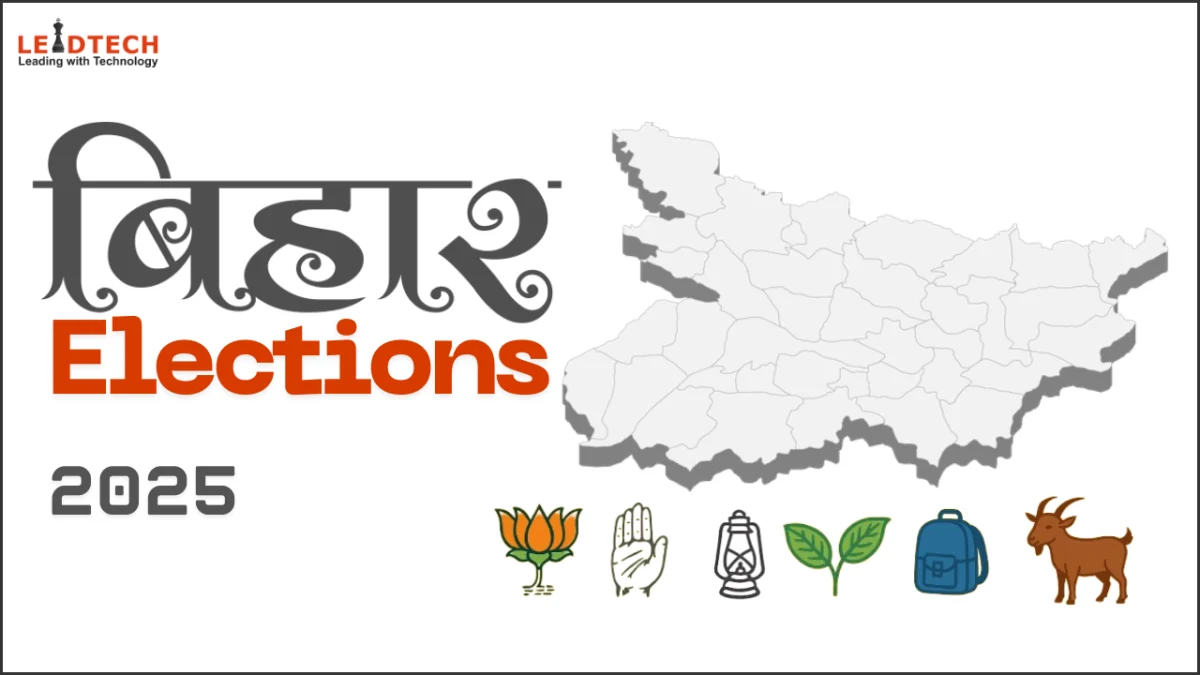
Bihar Election 2025: How National & Regional Parties Will Shape Results

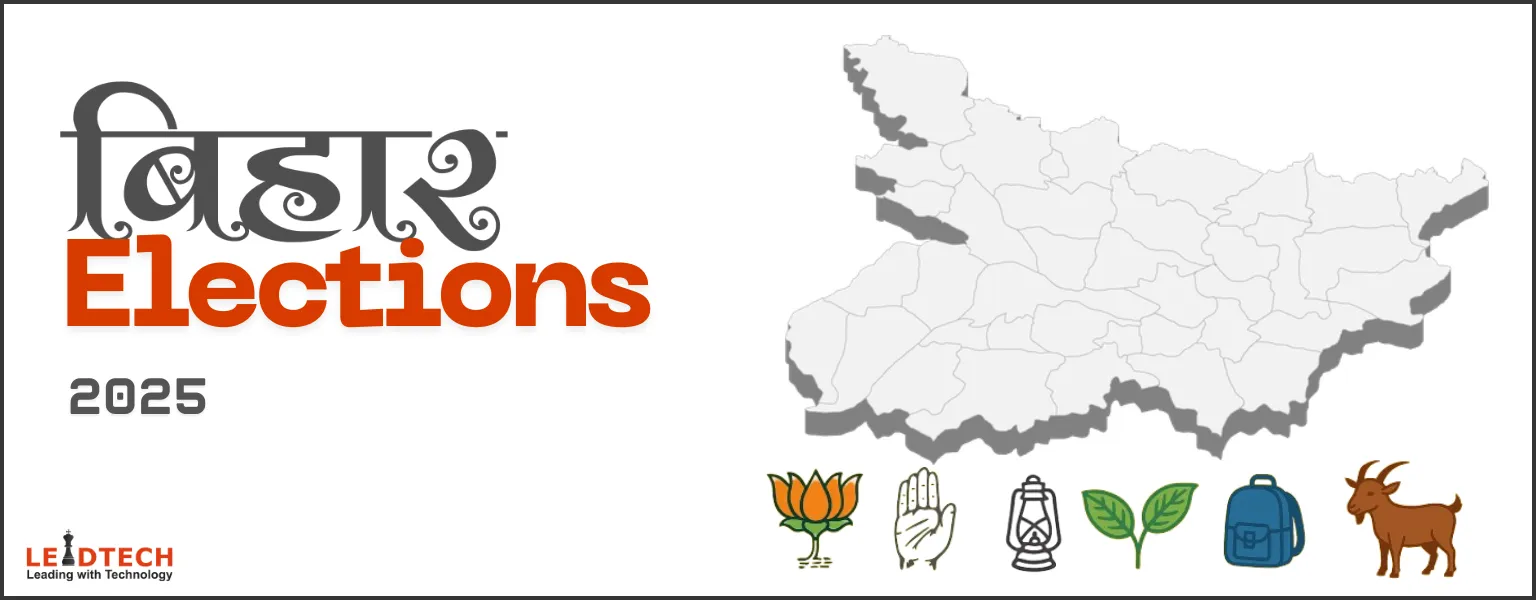
Bihar Elections 2025

Bihar is preparing for the crucial elections scheduled for 2025. Leading parties have already begun launching digital campaigns like door-to-door surveys and social media management in Bihar election. Political parties are conducting training sessions and offering incentives to volunteers to keep them engaged. Regular meetings, community work, and political campaign management are helping them build stronger and more loyal ground teams and influence voters. 

Social Media Management in Bihar Election: How National Parties Will Shape the Results

National political parties are using social media to reach the maximum number of voters to propagate their ideology, mobilize public opinion, and set policy agendas. Since the 2014 general elections, India’s two major parties, which are the BJP and Congress, have invested heavily in digital political campaigning, whether it is social media management in Bihar election or in any other state. These political parties use social media to engage with voters continuously. Social media is among the strongest platforms, which can amplify and mobilize political opinions and reach out to even the most remote geographical areas.

One of the major benefits of social media is that it allows for both mass messaging and micro-targeting and is immensely powerful in molding public opinion both regionally and nationally. Social media has established itself as a major communication platform for indian political parties. Youth participation in political discourses via social networking services has significantly increased. The majority of the population uses smartphones and WhatsApp, forwarding the most content worldwide. This means that social media platforms are effective tools to reach every corner, regardless of geographical location. 

Social media management in Bihar election is definitely helping national parties to shape public opinion and the results, as it has evolved into a sophisticated practice involving data analytics, artificial intelligence, and targeted messaging to influence a diverse and massive electorate in Bihar.  

Door to Door Survey in Bihar: A Potent Tool for Regional Parties to Shape Results

The door to door survey in Bihar has its own importance in elections. These surveys have long been a cornerstone of successful political campaigns. This is a personalized approach that allows candidates and volunteers to connect with voters on a grassroots level. This enables candidates to address pressing concerns and build trust among voters, ensuring they understand the voters’ needs. Though social media management in Bihar election has a significant impact, door to door surveys remain relevant and powerful due to their ability to foster genuine human connections.  

Leading parties have already been launching their political campaigns, combining ground-level methods like door-to-door visits and the use of modern tools such as AI in prediction, data analytics, and digital political campaign management to engage and influence voters effectively. Bihar is a state where caste dynamics, community ties, and local pride play a crucial role in shaping public opinion. This means that winning elections is not just about grand speeches or posters; it is about truly understanding what people want and reaching them in every village and community. 

How Political Campaign Management Supports Political Parties 

In the dynamic landscape of Indian politics, the strategies driving successful political campaigns have evolved through time and age. Today, political campaign management plays a vital role in shaping electoral outcomes with its expert strategies and innovative tools. Since Bihar is always in the spotlight of elections, it is still known to be strongly influenced by caste, regional parties, and the differences between urban and rural voters. Moreover, young and first-time voters care more about real issues than about caste or identity. Urban voters are focused on development, jobs, and better infrastructure. Rural voters still tend to trust local leaders and support those from their own communities. 

Political campaign management involves various strategies, such as door-to-door surveys, opinion polls, and social media management. Leading parties are running well-planned campaigns and gathering voters’ information to frame more personalized and targeted messages. Opinion polls in Bihar are more advanced and data-driven, as they feature inclusive sampling to ensure representation of different castes, religions, and income levels. These polls also involve questions focused on real issues to understand what matters most to voters. 

Political campaigns through social media management reach young voters online. Political parties are heavily investing in social media campaigns, defined by extensive use of micro-targeting apps, influencer collaborations, and AI-generated content. Campaigns are among the strongest strategies to influence voters and shape public opinion. Political parties are developing commercial apps to create personalized, geo-targeted content like reels and posters featuring leaders and local news. This helps them run local digital campaigns tailored to specific communities.

The Power of Social Media Campaigning

Political parties that are doing social media management in Bihar election are creating a strong impact among voters. In today’s modern era, being online is not just helpful; it is essential. These campaigns help political parties reach people faster, stay connected, and build trust with voters in a more personal and relatable way. Political parties are building digital voter networks through apps like WhatsApp and Telegram. Furthermore, they are using social media apps like Facebook and Instagram to run location-based ads while leveraging local influencers and meme pages to influence young and first-time voters. 

Final Thoughts

The upcoming Bihar elections in 2025 are more than just a contest of votes; they are a contest of strategies, technologies, and sentiments. One of the major lessons from the past Bihar elections is the limited use of digital tools and reliance on traditional methods to reach voters, ignoring the power of social media and digital strategies. 

The 2025 elections mark a turning point for political parties in Bihar, where learning from history and integrating digital outreach could define long-term political success. Political parties that are ready to combine grassroots connections with digital tools and social media management in Bihar election are more likely to win.   


Categories
About Leadtech Assembly Election Media Social Media Management

Go Viral, Win Big: Social Media Management for Lok Sabha Elections

Social Media Management for Lok Sabha Elections

Party IT cell workers are discreetly sitting in war rooms, reaching out to millions through social media. At the same time, political leaders vie to mobilize the electorate through on-the-ground campaign activities, including massive rallies, party booths on the streets, and door-to-door canvassing.

During the 2019 Lok Sabha election, India, the world’s largest democracy, saw intense social media campaigning. Political parties in the US, UK, and Europe have taken advantage of every opportunity of the fast-paced growth of Internet Communication Technologies (ICTs) and social media in the present ‘fourth era of political communication’. Political parties in India began using social media management for Lok Sabha elections to connect with voters during the 2004 election. Still, with increased accessibility following the 2014 national election, they were able to do so more successfully.

Making The Best Of Social Media Management For Lok Sabha Elections 

It is believed that the Bharatiya Janata Party (BJP) is a leader in strategically using social media and television for political communication. For example, when televisions became commonplace household goods, the BJP party allegedly used entertainment programs to mobilize the electorate through television culturally. Even though ICTs were labelled as elite and urban, the BJP was the first in India to use the Internet and social media during the 2014 national election.

However, research suggested that some of the BJP’s success—which included an absolute majority- was partly attributable to its more elite and urbanized internet marketing during the 2024 Lok Sabha election preparation, which will take place twenty years later. 2014 was an important year when social media management for the Lok Sabha Elections came in handy.

When combined with messaging apps like WhatsApp and social networking sites like Facebook, Instagram, Threads, and X, digital campaigning has shown to be a successful strategy for electorate mobilization and election victory. For example, the BJP declared in the lead-up to the 2014 election that roughly 160 of the 543 constituencies were appropriate for using a digital campaign strategy, and the BJP won these digital constituencies.

Thus, it was inevitable that other political parties would jump on the bandwagon and develop social media management for Lok Sabha elections and upcoming state elections.

Rise During the Pandemic

Social media also played a crucial role during the pandemic. Politicians relied heavily on social media platforms to communicate with their constituents and the general public. Even, the elections in several Indian States during 2021 and 2022 were held digitally. 

Additionally, since the Indian Election Commission limited physical rallies, political parties were held back and resorted to social media for promotions. BJP, the ruling party had turned to digital media during the Uttar Pradesh, Uttrakhand, Himachal Pradesh and Gujarat Assembly elections. As per Amit Malaviya(BJP’s IT Cell Head), the Prime Minister addressed several virtual rallies that saw huge participation as well. These virtual rallies were also conducted during the assembly elections in Bihar and West Bengal. The social media team had reached out to the people through songs, slogans, cartoon videos and pictures on social media.

Speaking of the opposition parties, the INC, the Samajwadi Party, the BSP, and AAP, several virtual rallies were organized in UP during the assembly elections. All of these parties having recognized the importance of social media, ran multiple campaigns to woo voters.

Media and Political Campaigns

In India, campaign communication—the process by which political parties interact with the public during an election—is at the heart of political communication study. Research on Indian elections covers overall vote share, voter turnout, policy implications, demographics, economics, health, corruption, particular elections, campaign tactics, media coverage, and more. Research on political campaigns indicates that after the 2014 election, social media became a major focus of campaign tactics.

Traditionally, formal party activities such as rallies, speeches, policies, manifestos, door-to-door canvassing, party booths, posters, and billboards on the streets have all been a component of campaign communication. But these days, a leader or a party’s message on Facebook or Twitter also counts as formal political communication.

Political parties and leaders in India now have a much stronger online presence because of this shift; for instance,  just before the house was dissolved, over 70% of MPs in the 16th Lok Sabha had a Twitter account. Research on political communication and technology advancements repeatedly demonstrates that political parties adjust to change.

Though they are created through a dynamic process, campaign plans may seem arbitrary because of political changes and things that happen in the lead-up to the election. Rather than a unified, nationwide policy, each party implements a customized, multi-level approach that considers local circumstances. When it comes to using technology for electoral campaigning, the BJP is the early adopter.

Consequently, due to Lok sabha election preparation, numerous political parties searched for campaign strategists and established their social media divisions. According to a BJP response, the JDS and INC hired a lot of social media strategists and campaigners who had previously worked for the BJP in the 2014 election. 

Conclusion

The internet and social media can have a coupling effect, enhancing the current campaigning system and increasing the campaign message’s reachability among voters. But it is exceedingly implausible to argue that social media alone, as an autonomous system, can win elections in India. Year after year, growth in internet usage points to more social media management for Lok Sabha elections. Everybody consumes the information, but few genuinely challenge it. It is imperative to foster critical thinking skills and an attitude of inquiry, given the likelihood of increased efforts in the future to translate local to national campaign narratives.

Categories
About Leadtech Assembly Election Leadtech Services Social Media Management

Master Lok Sabha Elections with Social Media Management


In today’s digital age, political parties rely heavily on social media to reach out to potential voters and gain an advantage over their opponents in the Lok Sabha elections. With the power of social media, parties can efficiently mobilize a vast electorate, both online and in person, to ensure victory. This was demonstrated during India’s 2019 Lok Sabha elections, as social media had a substantial impact on the outcome.

Leveraging the Power of Social Media for Lok Sabha Elections

The Bharatiya Janata Party (BJP) is a pioneer in the strategic use of social media and television for political communication. As early as 2004, the party recognized social media’s potential and began using it to engage with people. However, it wasn’t until the 2014 national elections that the BJP finally perfected the technique of social media management, leveraging it to their advantage and securing an overwhelming majority.

The BJP’s social media campaign was successful due to its early adoption of internet communication technologies (ICTs) and ability to effectively use messaging apps like WhatsApp and social networking sites like Facebook. The party identified roughly 160 constituencies that were ideal for digital campaigning, which contributed significantly to their success in these areas.

Following the BJP’s success, other political parties have jumped on the digital bandwagon and devised social media management strategies for the next Lok Sabha and state elections.

The Shift in Political Campaigning and Media Coverage

Political campaign communication is an important element of political communication research in India, with issues ranging from vote share to voter turnout, demography, economy, health, corruption, and more. However, with the 2014 elections, the emphasis switched to social media as an important campaign strategy.

Traditionally, official party events such as rallies, speeches, and canvassing have been central to campaign communication. Still, in recent years, a leader’s statement on social media has been regarded a formal form of communication.

The Changing Dynamics of Campaign Planning

Campaign plans are not etched in stone and are constantly updated to reflect political shifts and current circumstances. With the BJP setting the standard for using technology in electoral campaigns, other parties have begun to invest in specialized social media divisions and engage skilled social media strategists to improve their prospects of success.

However, it is important to emphasize that social media alone cannot win elections in India. It must be combined with a comprehensive campaign strategy that considers local characteristics as well as each constituency’s specific demands. The increase in internet usage suggests that social media management will remain an important feature of Lok Sabha elections, making it critical for parties to adapt and use these platforms efficiently.

Looking Ahead

With the increased use of social media in political campaigns, it is crucial to cultivate critical thinking skills and an inquiry mindset among citizens. This will allow voters to question and examine the information supplied to them, allowing them to make more educated judgments during the election.

In conclusion, social media has become an essential component of Lok Sabha election preparation, and it is up to political parties to successfully use this potent medium to reach the population and ensure victory in the upcoming elections.