
Categories
Election PR Management

How BJP Fared this Election Season – And What It Says About the Future

BJP Fared this Election Season

December of 2022 was a tough one for the national ruling party BJP. The right-wing Hindu party has been in power at the Centre since 2014, and since then has mostly seen unbounded success. From domestic success like organically flipping traditional Congress states, to international success like improved national image, BJP managed to make its mark.

Politically speaking, BJP has impressed even naysayers by winning where their win was unimaginable. For instance, the way they emerged as the single largest opposition in the state of West Bengal (a traditionally communist-electing state) in the 2021 Assembly elections, came as a shock to political analysts and the public at large. However, not every election season is favorable for them, as was exhibited in the recent string of elections.

Between 7 and 8 December, results for 3 types of elections were announced – Assembly elections in Gujarat and Himachal Pradesh, Corporation elections in Delhi, and a few by-elections in Uttar Pradesh and other states, both for Lok Sabha and their Assembly. BJP’s scorecard this election season was a little worrying.

Gujarat is a BJP bastion – the state groomed the present Prime Minister Narendra Modi, and has won in the state consecutively since 1998. In the last election held in 2017, they saw a dip in seat share, although they managed to woo some Opposition MLAs back and maintained their dominance. Earlier this year, they decimated their main opposition Congress by poaching one of their main leaders, Hardik Patel. It was no surprise that they won 156 of the 182 seats in the 2022 Gujarat Assembly Elections. Leadtech, a pioneer in Election Management, collected primary data from the ground and was able to predict this win earlier this year.

But in all the others, BJP lost out a lot.

Their loss in the MCD (Municipal Corporation of Delhi) elections, which were postponed several times, ended their 15-year streak. Between 2007 and 2022, they had managed to win the corporation, regardless of whether Congress or AAP had formed the government at the State level, but this time, in a neck-to-neck competition with AAP, they faced a bitter defeat. It wasn’t a lack of effort – BJP’s campaign for MCD was aggressive and unmatched. State President Adesh Gupta managed to get BJP a 39% vote share – a 3% increase from last term, but it still fell short of AAP. They won only 104 seats, to AAP’s 134. This is another result Leadtech had predicted earlier this year.

Himachal Pradesh, which, like Rajasthan, gave the mandate alternatively to Congress’s Virbhadra Singh and BJP’s Prem Kumar Dhumal for several decades, chose a BJP government in 2017. The CM face changed, however, since Dhumal did not win, and they managed a decent run of 5 years. But the government was toppled this year when Congress, despite the lack of stalwart Virbhadra Singh (due to his passing), won 40 of the 68 seats. AAP won no seats, however, and BJP was reduced to a minority

The by-elections were also disappointing for BJP. Mulayam Singh Yadav’s Mainpuri seat was won by his daughter-in-law, Dimple Yadav, standing as proof that Samajwadi Party is still a force to be reckoned with, at least in Uttar Pradesh. In assembly by-elections, only 2 of the 6 seats were won by BJP.

These results are worrying for BJP, which plans to expand into every state, every territory. States like Himachal Pradesh and Corporations like the MCD, in which they had a good control and history, were lost out to parties that BJP doesn’t consider to be serious opponents. Winning Gujarat alone is not enough – that is just testimony to their old roots – losing previously won territories is what is crucial. BJP needs to pull up their socks and move beyond media control -they need to work harder on ground and engage in membership drives. Other parties like INC and AAP, which are doing well, need to engage in mass door to door campaigns. Leadtech has an expertise in all such services.

The future isn’t as simple and predictable anymore – Congress is not dead yet, and BJP isn’t the only option.
GET IN TOUCH

    Get in Touch


    By clicking Submit, I hereby authorize Leadtech and its affiliates to call, email, send a text through the Short messaging Service (SMS) and/or Whatsapp. The consent herein shall override any registration for DNC/NDNC.

    Categories
    Election PR Management

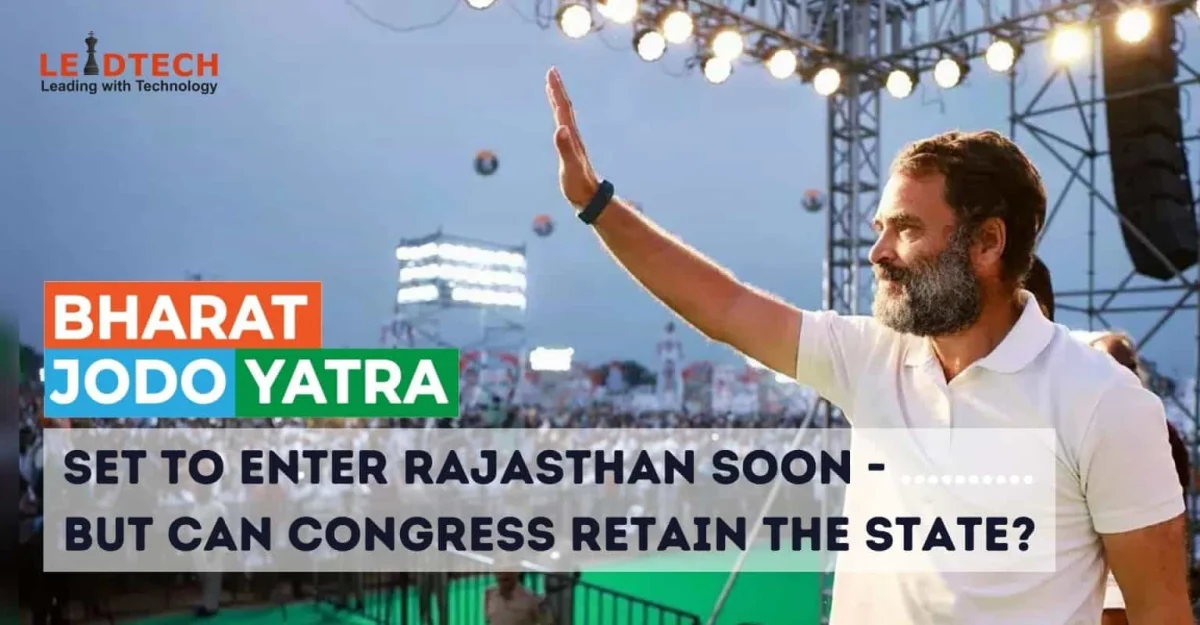
    Bharat Jodo Yatra Enters Rajasthan: Can Congress Hold Power?

    BHARAT JODO YATRA

    There are only two states in the country where Congress is ruling independently, without the support of a coalition partner – Chhattisgarh and Rajasthan. Although Chhattisgarh, after 15 years of BJP rule, gave the mandate to INC in the last election (2018), Rajasthan has a so-called tennis court arrangement. Since 1998, every term, the party in power changes, andthe other one takes control. Since 1998, only 2 people, Ashok Gehlot and Vasundhra Raje, have served as the Chief Minister, on and off. What’s more – it’s a well known fact among political circles that these two opposing forces are actually friends.

    While Congress suffered in multiple states since their loss in Lok Sabha beginning 2014, Rajasthan was one of the few states that they won in, and didn’t lose out to political crises like in MP and Karnataka. It certainly wasn’t due to Gehlot’s good governance – his present term has been full of controversies and scandals. Union Home Minister Amit Shah’s speech in September earlier this year highlighted some of the broken promises – the collapse of law and order, high VAT and power tariffs, unemployment, and many more.

    Some allege that Vasundhra Raje is the reason why Gehlot is still in power. It is no secret that Raje has been sidelined from Rajasthan politics almost altogether. She has served two full terms, with many successful schemes, but due to her differences with the BJP high command, Amit Shah in particular, she is no longer involved in the state. She holds no posts – Satish Poonia is the state party president and former state minister Gulab Chand Kataria is the Leader of Opposition despite having a former CM in the assembly. She has the ceremonial post of National Vice President, but no control in her home state. It is not far-fetched for the public to assume that after being denied opportunities, Raje would work against the party, or at least, not find motivation to help the party.

    Despite Raje’s present position, and her potential to prevent BJP forming government next year when Rajasthan goes to the polls, BJP is not in crisis-mode yet. There is no lack of influential leaders from the state. Lok Sabha Speaker Om Birla, for instance, is a gold-medal candidate for the Chief Minister. Gajendra Singh Shekhawat, the MP from Jodhpur, also is favored by Modi-Shah, even though his influence is mainly restricted to Western Rajasthan. There are many underdogs who are also vying for the seat, but the decision “will be up to the party”, they
    all claim.

    Despite Raje’s present position, and her potential to prevent BJP forming government next year when Rajasthan goes to the polls, BJP is not in crisis-mode yet. There is no lack of influential leaders from the state. Lok Sabha Speaker Om Birla, for instance, is a gold-medal candidate for the Chief Minister. Gajendra Singh Shekhawat, the MP from Jodhpur, also is favored by Modi-Shah, even though his influence is mainly restricted to Western Rajasthan. There are many underdogs who are also vying for the seat, but the decision “will be up to the party”, they all claim.

    On the first glance, one may assess Congress’s position in the state as strong, but the party has its own complications. For starters, the CM face for the party is still dubious. 3 term incumbent Ashok Gehlot seems like the more natural choice, but Sachin Pilot has been aiming for the seat for a long time. Even though Gehlot gave up the Congress presidential post to safeguard his position in the state, it would be interesting to see who Mallikarjun Kharge would pick for the face next year. If at all they decide to go with Pilot, a begrudged Gehlot might work Raje-style and help Congress lose. Besides leadership, Congress also has the problem of caste-based vote consolidation – a strategy BJP is a master of, but Congress lately seems to have lost an understanding of. Ultimately, it will depend upon the on-ground work both parties undertake.

    LEADTECH has been a pioneer in Election Management since its inception in 2008. From assisting individual candidates in their constituencies to whole parties in over 20 states, LEADTECH has focused on improving leadership with the help of technology. Contact us to find more information about our past work and how we can help you win in your constituency next year.

    GET IN TOUCH

      Get in Touch


      By clicking Submit, I hereby authorize Leadtech and its affiliates to call, email, send a text through the Short messaging Service (SMS) and/or Whatsapp. The consent herein shall override any registration for DNC/NDNC.

      Categories
      Election PR Management

      Is Samajwadi Party on a Path to Revival for 2024 Lok Sabha Elections?

      Samajwadi Party

      After Samajwadi Party’s improved performance in 2022 UP Assembly Elections (combined with BSP’s massive decline), many were speculating whether SP was set to regain its ground in Uttar Pradesh.

      The next major elections in UP will take place 18 months from now. The 2024 Lok Sabha Elections will be a determinant about the state of SP in the state. In the past election of 2019, in which BJP swept the state, taking 62 out of the 80 seats, SP was in alliance with BSP and RLD.

      But presently, the Bahujan Samaj Party has almost diminished entirely. The party which once ruled the whole of Uttar Pradesh independently, only managed to win 3 seats in the 2022 Assembly elections. Hence, it is unlikely that SP would want to form an alliance with them, or even that they can win in Lok Sabha in their individual capacity. There was a shift in the preferences of BSP’s loyal voters, and hence the party has weakened at the ground level. The 10 seats they won in 2019 are at risk of being won by either BJP or SP.

      SP, in the alliance of 2019, did not benefit much. The alliance partner BSP won 10 of the 38 in which they contested, while SP won only 5 of their 37. In fact, they even lost 3 of them by the end of 2022. Rampur’s Azam Khan had to resign following his conviction, Azamgarh’s Akhilesh Yadav resigned when he won in the UP Assembly, and Mainpuri’s Mulayam Singh Yadav passed away recently. Both the former 2 seats were won back by the BJP in bypolls, and the third one is currently in the process of electing a new MP. Therefore, presently, SP is barely
      represented in the Lok Sabha.

      BJP continues to remain a strong force in UP. It is very unlikely that their seat share will reduce majorly, even in 2024. They might see a slight change, which could be either positive or negative, depending upon the opposition forces. But the fact of the matter is, their vote share has consistently stayed high, and hence seats are not a major worry for the ruling party.

      Players like AD(S) are expected to hold their seats. In the past 2 cycles, the Anupriya Patel-led party has won the two western-most seats in UP. Parties like RLD have contested a few seats in both 2014 and 2019, but have remained unsuccessful so far. JDL was formed only recently, and this will be their second general election, but even then, they are only likely to contest one seat (Kaushambi). Overall, none of their leaders are influential enough nationally to create a wave and influence the results.

      Congress could have potentially been considered a serious contender in UP, especially following their recent party restructuring and Bharat Jodo Yatra. But their yatra route in Uttar Pradesh is considerably shorter in proportion to the seats the state carries. Hence, their performance in 2024 is still doubtful.

      This only leaves Samajwadi Party as the main opposition to BJP in the 2024 General Elections. Without an alliance, back in 2004, SP peaked by winning 35 of the 80 seats. Their performance was a result of Mulayam Singh Yadav’s leadership. But with him out of the picture, the pressure comes on his son, Akhilesh’s shoulders. Since leaving office in 2017, his party went through a severe decline, until 2022, when they saw some improvement in the Assembly elections. If his wife Dimple Yadav wins in the upcoming Mainpuri by-elections, SP might be in a position to win more in 2024. In any case, regardless of the aforementioned results, SP is set to win back most of the BSP seats. But unless Akhilesh pulls up his socks and actively opposes the BJP, before and during elections, their party is in the same danger as BSP.

        Get in Touch


        By clicking Submit, I hereby authorize Leadtech and its affiliates to call, email, send a text through the Short messaging Service (SMS) and/or Whatsapp. The consent herein shall override any registration for DNC/NDNC.

        Categories
        Political research

        Is AAP in a Winning Position for the 2022 MCD polls?

        AAP IN A WINNING POSITION

        BJP, which has not had a single Chief Minister of Delhi since the early 90s, has had several mayors administering Delhi. For the past 15 years, they have held power at the Municipal level and consistently grown in seat share. Their vote share continued to remain stagnant at about 36%, yet in 2017, they had won 67% of the seats.

        REASONS FOR WINNING M.C.D.

        In 2007, when their (presently) main opposition AAP did not exist, BJP won marginally against INC. Congress’s share was diluted by other opposition parties, and BJP, a strong national opposition at the time, took advantage of this. However, in 2008, Sheila Dikshit managed to win another term despite losing control of the MCD.

        In 2012, the downfall of INC in Delhi continued, fueled especially by the 2011 anti-corruption protests and the 2010 Commonwealth scam. BJP won a pure majority (138 seats out of 272) – but it must be noted that AAP had not contested this time.

        To understand the results of the 2017 election, we must understand AAP’s growth trajectory. After the infamous 2013 AK49-term, Arvind Kejriwal won a thumping majority in the Delhi state assembly. INC was completely booted out while BJP had only 3 seats, giving birth to the “Entire Opposition in One Auto Rickshaw” joke. The reason AAP did so well in 2015 Delhi Assembly elections is because of Kejriwal’s appeasement manifesto, which only targeted the lower-middleclass of Delhi. In both 2017 MCD elections and 2019 Parliamentary elections, AAP suffered badly. BJP in fact gained 43 seats when AAP contested for the first time, and swept all 7 Lok Sabha seats. Despite these failures, AAP retained power in the Delhi Assembly in 2020.

        The Aam Aadmi Party did eat away at Congress’s share, but they could not position themselves in a way that the majority considered them worthy of getting the mandate – something that BJP was able to do. One may understand why, at the national level, Delhiites chose BJP over AAP, but why at the administrative level too?

        THE PRESENT CAMPAIGNS

        It is safe to say that Congress has lost its ground in Delhi. There are only two main parties in Delhi, and they are both actively campaigning in Delhi. Even before the December 4 polling date was set by the courts, MCD elections had been a major part of the political discourse. The matter of trifurcation was even taken up in the Indian Parliament.

        AAP, which desperately needs control of the MCD to fully deliver their promises to the public of Delhi, has been running a “Helpless” campaign since 2020. Their claims, although true, are strategically disseminated to the aggrieved public whenever they hold AAP accountable for shortcomings in their civic life. Be it TV debates or through their official and non-official social media handles, AAP has maintained that they have always been up to the mark in their work, but a lot of civic matters do not come under their jurisdiction, and since they don’t have control of the MCD, they can’t be held accountable. They want to help the people of Delhi, they claim, but they are “helpless” as long as BJP stays in power.

        BJP’s campaign in response has been tepid at best, mainly because it is a reactionary campaign. When AAP puts the blame on BJP by quantifying the lack of delivery of promises, BJP does the same. There are a lot of sharp words exchanged but BJP has not provided a reason why they should stay in power.

        WHO WILL WIN THIS TIME?

        The blame game is a very common element in bipolar elections, but technically, the odds are more in favor of AAP this time.

        From a voter’s perspective, if BJP is voted back into power, Delhi’s civic amenities will most likely continue to suffer. Kejriwal and the new mayor will continue to have scuffles and each party will try to bring the other down. Kejriwal will double down on acting helpless, while BJP will continue to attack him. In this case, the mayor might be positioned as the new CM face, and could replace Kejriwal in 2025, leading to the original outcome of the same party holding both the state assembly and municipality.

        On the other hand, if AAP wins, they will gleefully stop blaming the BJP, but will have immense pressure on their head to prove that they are capable of undoing BJP’s “bad work” and doing the “good work” they promised. If they fail to do so, there is a possibility that BJP might take over the assembly from them in 2025.

        Hence, from a rational viewpoint, AAP is more likely to win. But elections involve real voters, most of whom are not original thinkers. What matters is what they are made to believe, not what they actually believe. There are still other factors to consider.

        OTHER FACTORS TO CONSIDER

        BJP’s support base, as seen in the past 15 years, is consistent – their base supporters are loyal. Be it Lok Sabha or Vidhan Sabha or MCD, they have the support of at least 36% voters. AAP does not have loyal voters – it has situationally-loyal voters. Considering this factor, BJP is more likely to win. But AAP has not contested MCD elections often enough (just once) for anyone to determine their voter loyalty.

        Therefore, it is possible for the election results to swing either way, depending upon the steps taken by either party.

        The first step in winning any election is understanding the voter sentiment, which is done by conducting surveys either internally or by hiring a reliable external agency, like LEADTECH. However, for this election, which is less than a month away, many might want to skip this step and jump straight to campaigning – especially important in weaker wards. This is another service in which LEADTECH holds a lot of expertise due to years of experience.

        While both parties are aggressively strategizing and aiming to win the most seats, some wards are weak and need special attention. Nominees from these wards should hire external help in addition to their party’s assistance, if they want to guarantee a win. For that, LEADTECH would be able to provide several services, including door to door campaign, social media, war room, public relations, and many more.

        GET IN TOUCH

          Get in Touch


          By clicking Submit, I hereby authorize Leadtech and its affiliates to call, email, send a text through the Short messaging Service (SMS) and/or Whatsapp. The consent herein shall override any registration for DNC/NDNC.

          Categories
          Election 2022

          21 Years of TRS – Will It Continue to Grow, Or Begin to Fail?

          TRS

          In Telangana, TRS is undoubtedly the dominant party. It was the first party formed with the single-point agenda of bifurcating Andhra Pradesh and creating Telangana. The party cited lack of development, disproportionate allocation of resources and employment, and differences in culture. TRS’s spearheading of the final Telangana Movement was ultimately successful in 2014, which elevated them to a much higher, distinct level, separate from other parties who also campaigned for separate statehood – TRS obtained a paternal image in the state.

          In the first assembly elections, they won 63 out of 119 seats. Over the next 4 years, they poached several MLAs from different parties. TDP was virtually extinguished by this exercise, and independent candidates also were swept out. In the 2018 elections, they won 88 seats, but by 2022, they have already poached another 15 MLAs to bring them to a grand total of 103. They are a super-majority government, with strongholds in every region of Telangana. MLAs from other parties felt compelled to join the party so their assemblies also witnessed fast development, as was promised by the TRS government. So far, BJP and AIMIM were the only 2 parties from which elected MLAs have never defected to TRS.

          TRS, in its 8 years of governance, has focused on appeasing varied voter bases by means of welfare schemes. This has led to 2 things – rapid development in many sectors – something which could not be attained in united Andhra Pradesh, and large voter groups who pledge loyalty to TRS. However, TRS has been inefficient in the delivery of many schemes – Double Bedroom Housing, for instance. The government also takes controversial decisions like GO 317 which alienates significant groups. TRS has not tapped into some key areas – employment is the biggest one of them.

          TRS has several weak areas besides their inefficiencies, including

          1. The feudal, nepotistic, corrupt conduct of KCR (especially evident in the cabinet – 62% is Upper Caste, only 11% women)
          2. The promotion of caste-based occupations – eg distribution of sheep & goats to Golla Kuruma communities
          3. The unjustified public spending (eg Rythu Bandhu which only benefits landowners, construction of new secretariat, etc)

          While TDP may have diminished in the state completely, and AIMIM is unlikely to expand its reach beyond Hyderabad, TRS faces competition from 2 parties mainly – INC and BJP. INC is stronger in Southern Telangana (this regional bastion has been consistent for a long time) and BJP is stronger in North (evidenced by recent wins in Lok Sabha) and urban areas of GHMC (evidenced by recent wins in the corporation and generally due to BJP’s appeal in urban areas). Although TRS has only seen growth over the years, its future is uncertain. Elimination of multiple oppositions would turn the elections bipolar or tripolar, which would mean that the opposition vote would be consolidated. This would be harmful to TRS, which may face tough competition from nationally strong parties like BJP and regionally strong parties like INC.

          Categories
          Election 2022 Political research

          6 Reasons Congress May Stay in Opposition for the Next Decade

          CongressCongress was the dominant party in India post independence. For the first 25 years, they ruled without strong opposition. From the 1970s to 1990s, INC often lost power, but they always managed to come back. They were indisputable winners – with secure vote banks in every nook and corner of the country. But post 2014, their situation has only been described as “dismal”. BJP’s dominance at the Center has virtually eliminated INC from its original position. But is it all due to the BJP? Let’s explore –
          1. Leadership – The high command bodies of Congress (eg. Working Committee) are generally headed by Gandhi family members. Many members have never even contested elections, like Ambika Soni.
          2. Organizational Structure – INC has a lot of leaders, but none of them are organized. Each of them acts on their own, which is detrimental to the party. In-party dissatisfaction, voiced mainly by the G23, also makes the party look weak.
          3. History – INC has a long history of corruption, nepotism, and fascism – the shadow of which it still can’t escape.
          4. Defection – Party seniors, who have been associated with the party for a long time, are now beginning to leave the party since they no longer see benefit in this association. Another major reason for defection is lack of rewards – Jyotiraditya Scindia left because INC refused to make him the CM of MP.
          5. Narrative – INC’s media team is probably their biggest drawback. Their public narrative, explaining their consecutive defeats across states, is always that their message never reached the audience in the way they had intended. INC is also unable to control the media storm about Nehru, or bank upon their involvement with the independence movement. Congress still hasn’t changed their media structure.
          6. Behavior – INC has even begun behaving like the Opposition. Their stances are pro-minorities to distinguish themselves from BJP, but minorities are firstly not enough to win, and secondly, even these minorities aren’t totally polarized in their favor.

          INC is a stubborn party with a weak foundation. Their decline is not only due to BJP, but their own cons – the range of which includes the aforementioned. Even with a strategist like Prashant Kishor on board, they are unlikely to gain back their position in the country.

          Categories
          Election 2022 Political research

          10 Quick Facts About Gujarat Elections Campaign

          1. Gujarat Vidhan Sabha is the unicameral legislature of the state of Gujarat, with 182 seats.
          2. Post independence, the area of Gujarat came under 3 states – Bombay, Saurashtra, and Kutch. Gujarat, as a state, was formed in 1962.
          3. From 1962 to 1995, INC had varying levels of success in this assembly, forming the government on numerous occasions.
          4. Their main opposition during this period kept changing, from Swatantra Party (liberalism) to INC (O) (a faction of Congress).
          5. INC lost in 1975 due to a strong opposition presence – most of which banded together to form a short-lived coalition government. However, in the 1980s, they revived themselves using the KHAM formula, and won 149 out of 182 seats – the highest majority in Gujarat’s history.
          6. However, since the late 80s, BJP began rising on the national front, especially in Gujarat, which serves as the home state for the party. In 1990, BJP could form a coalition government with Janata Dal, but the coalition broke in less than 8 months, and INC became the coalition partner.
          7. Since 1995, Gujarat has been a BJP bastion. BJP has won here consecutively for 6 terms.
          8. However, in the initial years of BJP dominance, from 1995 to 2001, due to infighting and defections, Gujarat saw 4 different Chief Ministers from 2 different parties. In the first term, BJP lost the majority in the assembly and RJP formed the government. In the second term, BJP maintained its majority but the then-incumbent CM Keshubhai Patel resigned due to ill-health, paving the way for Narendra Modi. Post that, BJP has been consistently strong.
          9. Likewise, the party’s vote share was in the 42% to 45% range during its initial years, but jumped to the 48% to 50% range during the Modi era (which lasted almost 13 years, until 2014 when Modi took over as PM). In the past 8 years, Gujarat has seen 3 new CM faces, including the state’s first female CM.
          10. However, despite a consistently high vote share, BJP’s seats have decreased progressively, from 127 seats in 2002 to 99 seats in 2017. INC is again emerging as a strong opposition face, witnessing an increase of 26 seats in the same period, mainly due to the evolution of the KHAM formula into the KHAMP formula.

          Gujarat Elections Campaign 2022

          Gujarat’s political future is uncertain, as the main opposition party, INC, is growing stronger. New parties like AAP are also trying to elbow their way into Gujarat politics, which may split the votes in future. The results of the upcoming 2022 Gujarat Election Campaign may surprise India.

          LEADTECH has worked in 8 constituencies in the 2007, 2012, and 2017 Gujarat Legislative Assembly elections, and 2 constituencies in the 2014 and 2019 General elections in Gujarat. Leadtech is a non-partisan political consultancy, with clients from all social and political backgrounds. Over 85% of our projects have been fully successful, in which our clients win the elections by large margins. The others have witnessed a large upswing in vote shares, which resulted in close bipolar contests, even if not a win.

          Categories
          Election 2022 Election PR Management Political research

          Can Congress Win Gujarat Assembly Election 2022?

          Indian National Congress had a stronghold over the state assembly of Gujarat since its inception in 1962, which was occasionally threatened by short-lived opposition. However, since 1995, BJP has become dominant in the state by breaking the INC winning streak.

          INC had several reasons for its win. Initially, INC banked upon its historical involvement in India’s independence and its commitment to modern India’s development. They did not face stiff competition from any of the opposition parties over the years. The opposition had strongholds only over certain communities, for example, Swatantra Party was strong among rich and middle class peasants, but even these communities were not completely alienated from the INC.

          In 1974, following the Nav Nirman movement, the then-incumbent Congress CM, Chimanbhai Patel had to resign. This led to a period of President’s rule, following which fresh elections were held. In 1975 elections, INC emerged as the single-largest party, but couldn’t form the government, since all the opposition parties came together. But this was followed by the National Emergency, and within a year, the dissolution of the state government. INC briefly came to power again, but it was short lived.

          The 1980s saw a massive revival of the Congress, mainly due to the KHAM formula. KHAM, which stands for Kshatriyas (including Kolis), Harijans, Adivasis, and Muslims, formed the major vote bank of INC. This caste equation appealed to the already secure voter groups of INC (like SC, ST and Minorities) but also polarized the populous Koli community in INC’s favor, which formed 24% of the population. INC used reservation as a tool to garner votes from these communities. This led to INC winning the largest majority in Gujarat’s legislative history, winning 149 out of 182 seats.

          1990 saw a completely different wave, as BJP was gaining prominence nationally. INC won only 33 seats, and JD formed the government in coalition with BJP. However, INC managed to bring back Chimanbhai Patel, and stayed in power. But this lasted only till 1995.

          1995 onwards, INC lost its winning streak and was reduced to the status of main opposition. Their vote share has been consistent too – in the 38% to 40% range. However, INC has been  progressively flipping more assembly seats – in 2002, they won 51 seats, but by 2017, they had won 77 seats. This can be credited to Hardik Patel, Jignesh Mewani, Alpesh Thakor, and Bharatsinh Solanki – who helped evolve the KHAM formula into the KHAMP formula – now inclusive of the Patels – a group previously alienated by INC.

          Congress, although historically strong in the state, had lost its majority in the 90s, and could not revive it since then. However, they have a strong formula which could work in their favor, if executed right. We see evidence of this in the 2017 election results – the first time since 1995 when BJP failed to cross 100 seats. In fact, the winning margin of BJP was reduced to just 22 seats in 2017, compared to 54 seats in 2012. INC, being the main opposition, secured most of the remaining seats.

          To win, INC firstly needs a credible CM face. In addition to that, they need a strong narrative, which would place them as a better alternative to BJP. They should consider targeting urban areas as well, by expanding the KHAMP formula. They must also beware of AAP, which plans to enter Gujarat politics. Most importantly, if INC wants to win, it needs to target certain assemblies in which it is strong, but loses by slim margins. In these cases, hiring a reliable political consultancy can help them win more seats and secure a majority in the upcoming Gujarat Assembly Elections 2022.

          Leadtech is a political advisory firm with 15 years of experience in Gujarat legislative and parliamentary elections. 85% of our clients have won with thumping majorities in their constituencies, and the remaining have seen substantial upswing in their vote share. Contact us now to find out more.

          Categories
          Election 2022 Election News

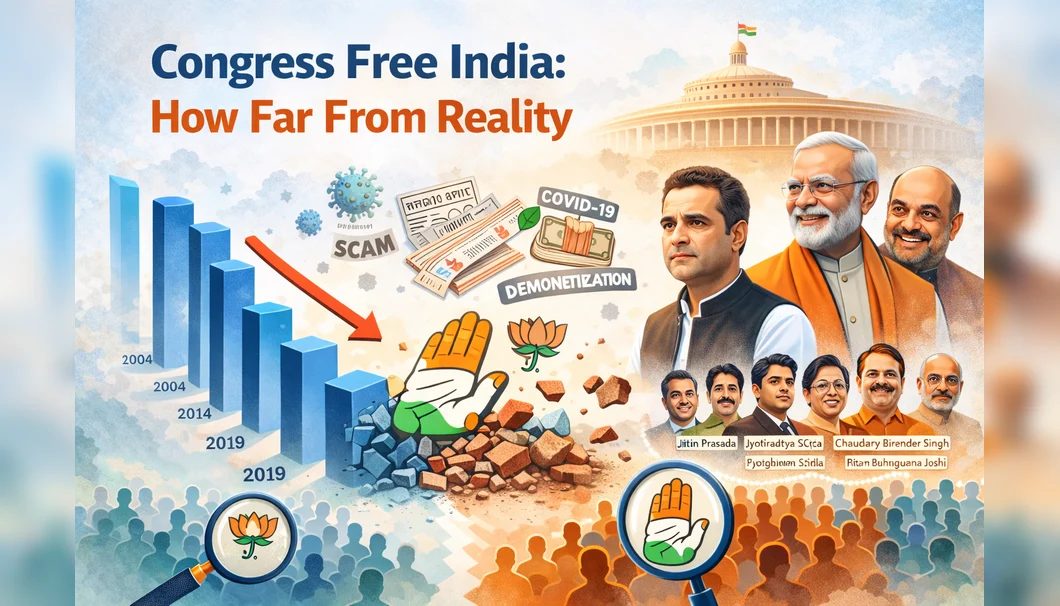
          Congress Free India: How Far From Reality

          The ongoing Covid-19 Pandemic has posed unprecedented challenges in our lives. The effects of demonetization, mismanagement of covid-19 in many parts of India, Job crisis and the low number of sitting in the parliament where vital issues are being discussed and debated and above all the role of opposition parties in raising the voice of voiceless people are the major cause of concern. The recent developments in Indian Electoral Politics have changed the narratives and our perspectives too about the style of leadership, hereditary nature of Indian leadership, the role of coherent ideology, the manner in which decisions being made and implemented and political parties approach towards reaching the various social groups, etc.  As many political experts say that despite having declined in electoral politics since 2014, one cannot imagine the Indian politics without the Congress party and it still plays a pivot role.

          This article has focused on the current state of Indian politics and the speedy decline of the Congress party from National politics particularly after 2014 and the possible ways forward.

           Glimpses of INC performance in the general election from 2004 to 2019  

          From 2004 to 2014 the congress party with help of other regional parties was able to form a govt. by defeating the National Democratic Alliance (NDA) led by the BJP.

          However, there are many theories, as propagated by political experts, around the decline of the Congress party. Many political pundits have argued that it has created a space for political entrepreneurs that led to various corruption scams such as the earlier Bofors scam, 2G scam, Sahara Scam, and poor governance system while others believed that lack of charismatic leadership, connectivity with masses, and social engineering of caste groups, etc. Many political observers even including ex-congress leaders (now in BJP) have mentioned that their personal growth has stagnated and decision-making process has been hijacked by a few veteran leaders that led to suffocation. For instance, referring to Rahul Gandhi, “Our once and future king” tweeted by a senior leader of the Congress party on the death anniversary of Rajiv Gandhi. What does it show? Do we believe in democracy or chamchagiri?  While on other hand pursuing president Pranab Mukherjee and giving a warm and emotional farewells to senior leader Gulan Nabi Azad was another political gesture of BJP.

          Politicians Who Thought to Left the INC

          1. Milind Deora who thought to left the INC as INC didn’t like his idea on Article 370. Since he supported the BJP’s strong decision on the suspension of Article 370 but congress party simply opposed his ideological stand.
          2. Sachin Pilot was another politician who was quite in news for going against the INC. The simple reason going against the party in Rajasthan was all hard work and Party campaigning was done by him but CM candidature offered to Ashok Gahlot.

          All is not well in the Congress Party

          Here is the list of prominent leaders who were earlier in the congress party but now have left and joined BJP as if   

          1. Jitin Prasad
          2. Jyotiraditya Scindia
          3. Chaudhary Birender Singh
          4. Rita Bahuguna Joshi
          5. Tom Vedakkan and the list goes on.

          Many political scientists believe that lack of consistency in policy decisions and policy actions, no coherent ideological commitment, growing Left-Congress synergy, and of course lack of personal growth of leaders, etc. are the possible reasons. For instance, Left-Congress Synergy has been unproductive as well as confusing for common party workers. In West Bengal they (Congress and Left together) fought election against Mamta Banerjee but what about in Kerala where Congress and Left parties were contested against each other.

          Way forward

          In the 2019 general election Rahul Gandhi was defeated by Smriti Irani in the Amethi Lok Sabha seat but manage to get elected from Wayanad (Kerala). In August 2020, G-23 i.e. 23 senior leaders of the Congress party have expressed their concerns to interim party Chief Sonia Gandhi. They have expressed their views on the poor performance of the Congress party in two consecutive general elections, bringing all structural reforms, self-introspection, and strategizing for upcoming elections. Even the post of Congress party president is still waiting for a full-time president. It was a clear political gesture to the congress party to rethink or purnavichar, restructure its party composition and bring fresh and young people to the party. But as being acknowledged by BJP-RSS senior leaders that still the congress party is the biggest challenger to the BJP party despite having a continuous decline. It is because it has managed to secure approx. 20% of total votes in two general elections i.e. 2014 and 2019 while the rest of the parties (excluding BJP) were not able to cross double-digit. It means at the bottom side it has maintained the status quo. Any increase in this percentage will surely affect the BJP vote share and would have led to a coalition government as well. Gandhi’s Family is still key to the Congress party that’s why Modi-Shah led BJP party keeps on attacking Gandhi Family. The Congress party needs to focus on

          1. To understand the changing nature of young voters, their aspirations and demography dividend and do all needful accordingly
          2. Innovative political Strategies and to communicate the masses at a large scale by judicious utilization of ICT platform.
          3. To provide some paces to local/regional parties and help them to form stable government where the Congress party is not in majority. Do not become power-hungry but adaptive according to the prevailing political scenario.
          4. Of course restructure its political organization or even vacating various seats as well otherwise many more leaders are waiting to join the BJP.
          Categories
          Political research

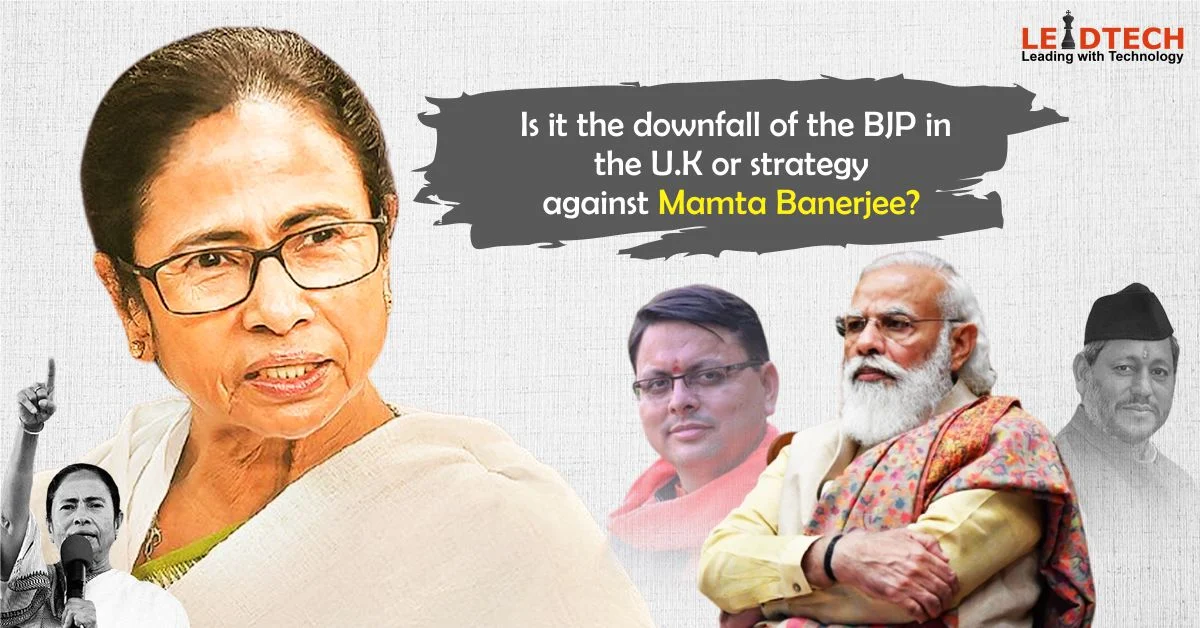
          BJP in UK: Downfall or Strategy Against Mamata Banerjee?

          The tenure of Uttarakhand’s CM has been in turmoil since the day state was formed. We have witnessed that hardly any CM has completed his full tenure without being faced either internal rivalry or anti-incumbency. Uneven developments in the state, hill vs plain divide, caste equation and above all leader’s personal relation with central high command (Delhi), etc. being considered for political instability.  As many political pundits observed that the exit of two BJP chief Ministers i.e. Trivendra Singh Rawat and Tirath Singh Rawat was not just a constitutional crisis.  Let’s go into the deeper analysis of political developments that have increased political instability in the state.

          Trivendra Singh Rawat (18th March 2017 to 10th March 2021):

          He remained in the office for 3 years and 357 days. Many political observers have cited various reasons for the resignation of Trivdendra Singh Rawat such as
          (a) his due to distance relationship with BJP central leadership i.e. Modi-Shah,
          (b) Putting restriction in the organization of Kumbh Mela,
          (c) Over-dependence on Bureaucracy,
          (d) Internal rivalry within BJP and lack of expansion of the cabinet, etc.

          In order to unite all factions, BJP high command appointed Madan Kaushik as Uttarakhand Chief and asked him to assess the ground reality. Meanwhile ignoring the fact that Tirath Singh Rawat was not a leader of masses being elevated to the post of CM due to his close relationship with Bhagat Singh Koshyari, a committed RSS pracharak and current governor of the state of Maharashtra. While neglecting Anil Baluni and Dhan Singh Rawat, both are close to RSS and enjoy goodwill in central leadership as well.

          Tirath Singh Rawat (10th March 2021 to 4th July 2021):

          After becoming the CM, Tirath Singh Rawat reversed many vital decisions of his predecessor Mr. Trivendra Singh Rawat such as
          (a) Organizing Kumbh Mela in the midst of covid-19 and putting people’s lives in danger,
          (b) Commitment to disband Char Dham Devasthanam Board
          (c) Putting on hold of creation of commissioner ate at Gairsain
          (d) Questioning women/girls who were wearing ripped jeans, etc.

          Below we have highlighted two issues that triggered the politics of Uttarakhand as if

          Kumbh Mela the super spreader of Covid-19 second waves:

          Kumbh Mela means a lot to Sanatanies and to Hindus and so as the responsibility. The responsibility bearer should make clear and strict decisions and address the guidelines to the public of the State and the people who will visit the Mela from other States. Rather than this, he (Mr. Tirath Singh Rawat) took the decision to remove the requirement of the Covid test. He further said, “Kumbh happens only after 12 years. Therefore, we do not want people to miss on the opportunities of experiencing the festivals”. So, this left him surrounded by controversies, and courting the controversies over the fake RT-PCR test during the Kumbh Mela and mismanagement of the issue had also affected his goodwill.

          Opening of tourism Sector:

          To boost the tourism sector, the hotelier requested the former CM to remove the restriction of RT-PCR in tourists and allow hotels to operate 50%-75% occupancy. Just to boost the tourism sector during Covid-19, when the corona was at its peak, it obviously questions the government whether they were putting the entire state at stake just to boost the tourism sector.

          Is BJP indirectly trying to target the Mamta Banerjee?

          On the 3rd of July, 2021 in front of the Union Minister Mr. Narendra Singh Tomar and other BJP leaders a new CM will be assigned to the State, since Mr. Tirath Singh Rawat filed the resignation within 4 months of minister ship of the State. For this reason he could not handle the situation of the state, which lead the state to instability. “Target is not Tirath Singh Rawat but Mamata Banerjee. Tirath Singh was the sacrificed goat who had been sacrificed to ensure that Mamta did not get elected. The way she has challenged the prime minister. We all know the PM does not accept any challenges. We have seen what happened to L K Advani and Murli Manohar Joshi” said Congress MLA and deputy leader of the opposition Karana Mahra in an interview.

          Let’s have a look at legal provisions:

          As per article 164 (4) of the Constitution, “a Minister who for any period of six consecutive months is not a member of the Legislature of the State shall at the expiration of that period cease to be a Minister. Further, Section 151 (A) of Representation of People Act 1951 says that by-elections to be held for Parliament or State Legislature for a vacant seats within 6 months. If we read Section 151 (A) with Article 164 (4) then it lays down two conditions:
          (I) if the period of the vacant seat is less than a year then there is no need to conduct by-election
          (II) if the Election Commission of India in the consultation with Central Government certifies that it is difficult to held by-election within the stipulated time period.

          Therefore the central authority of the BJP has not willing to support of by-election in the state of Uttarakhand that resulted in resignation of Tirath Singh Rawat. Many political pundits said that it might affect Mamata Banerjee’s CM candidature as well.

          In case of Unicameral Legislature:

          Unlike Maharashtra both Uttarakhand, as well as West Bengal, have a unicameral legislature means one house i.e.  State legislative assembly. In the bicameral legislature, as it happened in the state of Maharashtra, where after having lots of political tension between the Governor, Shiv Sena, and BJP, Mr. Uddhav Thakarey was nominated from the state legislative council. But in the case of West Bengal, the situation is different and that’s why all political pundits keep a bird’s eye view on 5th November.

          Supreme Court in SR Chaudhary vs State of Punjab in 2001 clearly ruled out that a person cannot become a minister or a chief minister again after the expiry of 6 months if he is not elected. Upon asking about the recent constitutional crisis in the state of West Bengal and Uttarakhand and to disallow a by-election, the former president of Supreme Court Bar Association Dudhyant Dave said, “I don’t think this argument will hold water before the law court. Elections were held in Bihar, West Bengal, Tamil Nadu, and Puducherry at the height of the pandemic. How can they stop this now? The court will not permit it”. Lastly, much depend on the newly appointed chief election commissioner that how he would assess the ground situation, and whether he allows to conduct the election or not.