AAP in Delhi, JD(U) in Bihar, TMC in West Bengal, and now, TRS in Telangana. All these political parties have one thing in common – they hired consultancies while still in power, to help them win in their respective upcoming elections. It might make sense for a losing party or candidate to hire a consultancy, but why do the winners need one too?
The answer is simple. Winning once doesn’t ensure re-election, no matter how successful the party’s governance was during their tenure. Democratic elections are popularity contests, which reward the one with the best narrative, not the highest virtue. Setting a narrative is not a one-time thing – just like advertising, it needs to be consistent and dynamic. And simply running advertisements doesn’t cut it, at least in politics. This is where consultants come in.
Political consultancies, like regular consultancies, are specialized companies which provide a range of services. During election time, their main function is narrative setting. Admittedly, there was no need for consultants in the past (consider democracy in the 20th century). Parties used to internally assess their position in the market and won based on strategies they devised. But in the 21st century, with everyone hiring external professionals, most political parties cannot survive or grow if they continue with the old model. These consultancies rely not on individual judgment, but rather on real-time data. They canvass voters more than ever before, locate trends and pain-points, and are able to set the right narrative – which is technically and logistically impossible for political parties to set themselves. They are able to expand the electorate by targeting groups which had previously never voted, and swing opinions using tools like social media aggressively.
Hence, be it a winning or losing party, consultancies have become inescapable players in the political process of India. LEADTECH, founded in 2008, is one of the pioneers in this industry. Over the past 15 years, LEADTECH has advised over 1400 politicians. We have collected data from over 3 crore households using innovative technology. Contact LEADTECH today to book an appointment.
Indian politics is incomplete without social media in the 21st century. From its roots back in the late 2000s when very few politicians had a Twitter or Facebook account, to now, when politicians without a social media presence are suspiciously viewed, Indian politics has happily adopted this medium to communicate with the public.
This change, while greatly reducing costs for potential candidates and opinion leaders to broadcast their messages and establish themselves, has also come at its own cost. Propaganda campaigns have gone unchecked, fake news has grown rapidly, and smear campaigns have become relatively easy. It became possible to create a media storm with very little money (as low as Rs 2 per tweet) – with some Indian politics stakeholders forgetting that storms have consequences.
But as the Indian politics game was played, the players had an advantage – there was no umpire. Social media giants realized that their products were expanding into culturally diverse communities and lands, and it was not possible for a single set of rigid rules to guide them. Hence, social media tried to not censor most users. Violence and pornography, too, were not banned from the beginning. It was paradise for those who could dominate the conversation – the ultimate free market (of messages).
In recent years, however, companies began to feel the consequences of letting things run wild and took relevant measures – measures which many people did not take kindly to. A great example was the suspension of former US President Trump’s Twitter account, or perhaps the labelling of BJP Spokesperson Sambit Patra’s tweet as “manipulated media”. Twitter was criticized by the right-wing as a curtailer of free speech, which was followed by several measures (like raids by the police, or criticism by governments) which cost the company.
Twitter is now a private company. Business magnate Elon Musk bought the company for $44 billion on 25 April 2022, in a bid to unlock the “tremendous potential” of the company. Musk felt the company could not thrive or serve its purpose (of free speech) in its present state. He wanted to transform it by defeating spam bots, authenticating humans, and making the algorithms open source.
The platform that everyone had become familiarized with, is highly likely to change. LEADTECH has 15 years of experience in providing all services (especially social media) to political candidates to enable them to unlock their potential and has a dedicated team with an in-depth knowledge of this evolution of technology. Check out this link or contact us today to see how we can help you in these changing times.
Elon Musk clearly isn’t partisan. He has no left or right leanings. He criticizes the left when they speak of increasing taxes and neo-pronouns, but at the same time, criticizes the right when they ban abortions or ridicule climate change. But he wholeheartedly funds both sides. It is unlikely for Twitter to be a one-sided platform.
The one crucial point he made, that could change the political model, was about spam accounts. Burner accounts are quite common on social media to disseminate messages at a large scale and spread misinformation. Organizations use real-people profiles, several of which are operated by a single person, to relay the same message multiple times (to either make the topic “trending” or as an intimidation tactic), which tricks the algorithm into believing it truly is a valid message. Musk clearly stated his intention to do away with this, which could make things harder for indian politics stakeholders in this country.
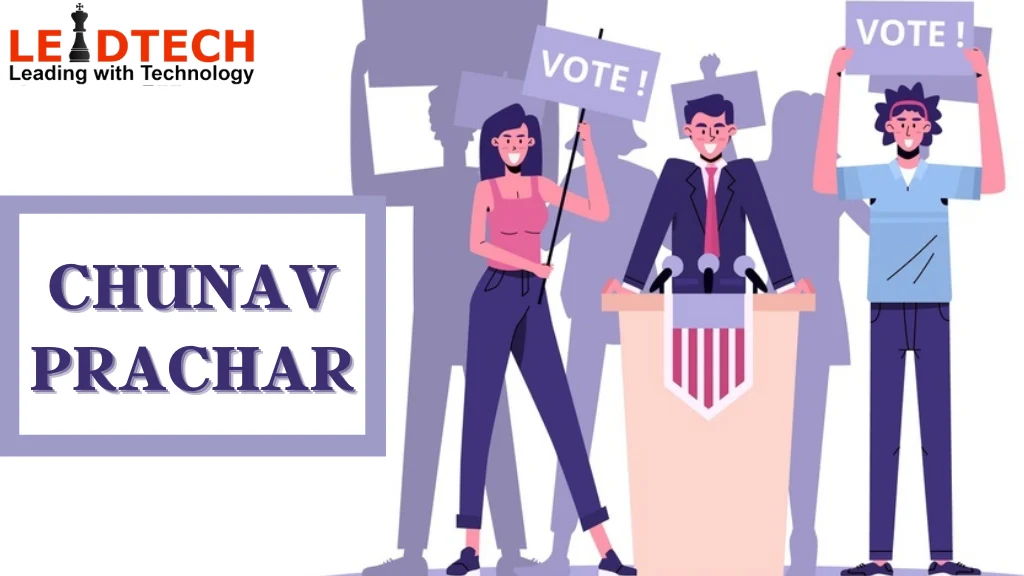
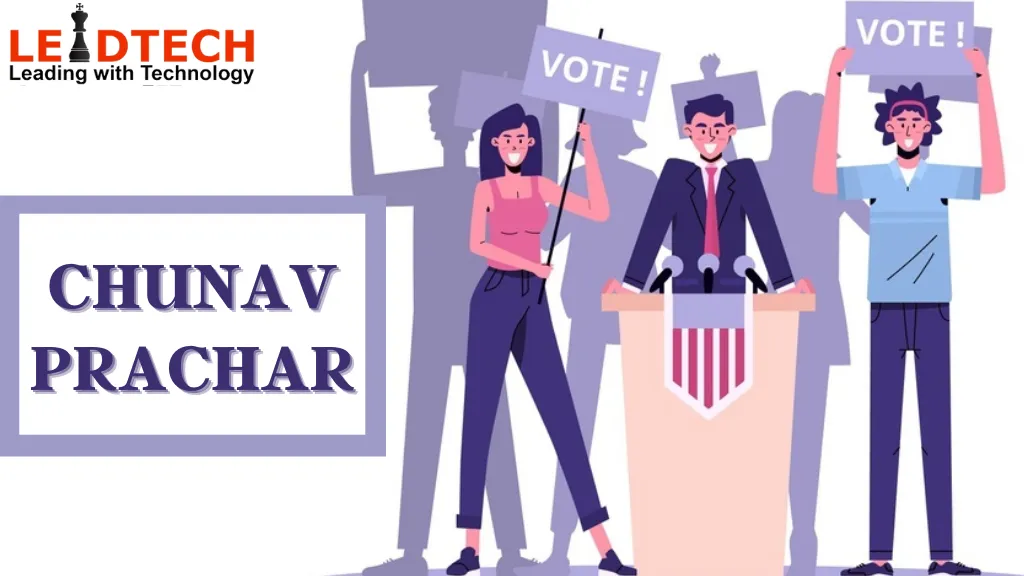
Chunav Prachar (Election campaign) is an important part of the electoral process, occurring at the end of each 5-year term. An election campaign is the touchstone of democracy that enables voters to make an informed choice. LEADTECH helps candidates understand their constituency members, through scientific methods of data collection, and launch an effective campaign.
The primary importance of a campaign right before the election lies in its ability to reach out to thousands and even more people through a singular mechanism. Candidates hold rallies and sessions which are attended by many. Reaching out to people personally through live speeches and other methods breeds reliability among the masses, giving the candidate an edge.
This process also puts to test the resilience of the candidate by putting them under heavy scrutiny of the public and media alike. Campaigns are also psychological warfare where candidates find creative methods to leave an imprint on people’s minds. This is done through party symbols.
Voters often associate their candidates with these symbols. This also enables them to lay roots for the party they are representing. Chunav Prachar also helps candidates put forward their proposals, giving them a platform to make proposals and promises. These proposals are what help voters decide while polling. Lastly, they display the public skills of the candidates. Politicians are required to not only be well-versed with their constituencies but also be good speakers since a lot of their job is done in the public eye.
Chunav Prachar Gives a Competitive Edge!
In the case of Politics and government particularly, a campaign strategy is designed when political parties put up a candidate for the elections. This Chunav Prachar Strategy involves a series of coordinated events including public speaking and demonstrating to help convince the voters. Following an effective and strong strategy has a big role in winning the election.
Candidate Promotion
This is the obvious reason for creating an effective campaign strategy. Though larger elections get extensive media coverage, for small elections, Chunav Prachar is endowed with the heavy task of promoting a particular candidate.
The objective of Chunav Prachar is to make the candidate memorable to voters, especially when the voters step into the voting booth.
Cause Information
Effective political campaigns are meant to inform the general public about a specific cause. This could be the candidate’s platform or the proposed bill. This spread of information is a must so that voters can make informed choices.
Election Date
It is essential for the electorates to be informed about the election date and other details associated with voting. Such details cover election venues, voting sites, and election hours.
Since the motive of Chunav Prachar is to get the people to vote for a candidate, LEADTECH helps political parties to study the environment as well. This covers gaining an understanding of what the voters are looking for in an electoral candidate. Using this vital information, we can design an effective campaign relating to the voters.
Set an aim
While most election campaigns end up going wrong in fixing an aim. LEADTECH helps candidates stick to a singular purpose for the campaign being created. The varying thoughts aims or plans can confuse the campaign making it less effective. Doing this may create confusion among the voters who would not be able to understand the campaign and its focus.
Regardless of whether you as a candidate win or lose, upholding aim is always of great significance.
There are certain tactics and methods available for a political party to choose from when creating an election campaign strategy. However, the first thing that is performed by LEADTECH experts is a detailed amount of research. This ensures that the tactics being used by us are tried and tested and will guarantee success.
Any wrong move can not only affect the campaign but also potentially cause the candidate to lose the election. We don’t know what the future holds and therefore, believe presenting a good image to the public is a smart move.
Why do election campaigns matter?
Election campaigns help political candidates and parties with opportunities to present the right message to citizens, helping voters make an educated and informed decision on Election Day.
Are there any restrictions on displaying posters, and banners of the party concerned or the candidate?
Candidates may use any political sign or display poster, or banner for the party concerned, subject to provisions of local laws and prohibitory orders.
How does Chunav Prachar help political candidates?
Chunav Prachar gives exposure and builds awareness of candidature, as well as the causes.
How does LEADTECH guide political parties or candidates while making election campaigns?
By conducting a detailed amount of research, understanding the voters, and deciding on a fixed aim, LEADTECH helps political parties create a winning campaign strategy.
Hence, Chunav Prachar is an indispensable aspect of electoral democracy as it helps shape public opinion. LEADTECH helps their client’s campaign effectively by conducting door to door survey, gathering information, and scientifically analyzing that information. Through this, the candidates get to know the grievances and demands of their target audience and work on them to win the election.