
Categories
Election PR Management

How BJP Fared this Election Season – And What It Says About the Future

BJP Fared this Election Season

December of 2022 was a tough one for the national ruling party BJP. The right-wing Hindu party has been in power at the Centre since 2014, and since then has mostly seen unbounded success. From domestic success like organically flipping traditional Congress states, to international success like improved national image, BJP managed to make its mark.

Politically speaking, BJP has impressed even naysayers by winning where their win was unimaginable. For instance, the way they emerged as the single largest opposition in the state of West Bengal (a traditionally communist-electing state) in the 2021 Assembly elections, came as a shock to political analysts and the public at large. However, not every election season is favorable for them, as was exhibited in the recent string of elections.

Between 7 and 8 December, results for 3 types of elections were announced – Assembly elections in Gujarat and Himachal Pradesh, Corporation elections in Delhi, and a few by-elections in Uttar Pradesh and other states, both for Lok Sabha and their Assembly. BJP’s scorecard this election season was a little worrying.

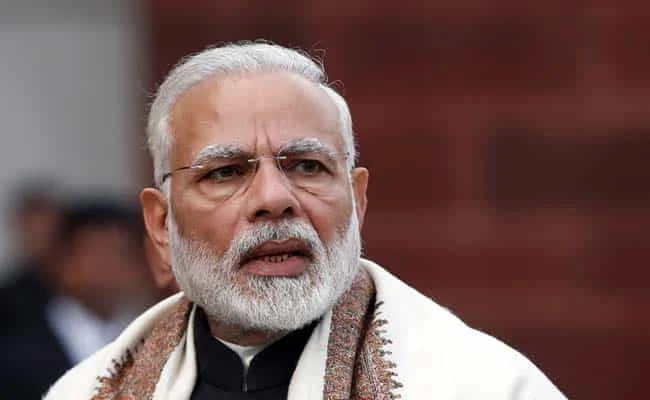
Gujarat is a BJP bastion – the state groomed the present Prime Minister Narendra Modi, and has won in the state consecutively since 1998. In the last election held in 2017, they saw a dip in seat share, although they managed to woo some Opposition MLAs back and maintained their dominance. Earlier this year, they decimated their main opposition Congress by poaching one of their main leaders, Hardik Patel. It was no surprise that they won 156 of the 182 seats in the 2022 Gujarat Assembly Elections. Leadtech, a pioneer in Election Management, collected primary data from the ground and was able to predict this win earlier this year.

But in all the others, BJP lost out a lot.

Their loss in the MCD (Municipal Corporation of Delhi) elections, which were postponed several times, ended their 15-year streak. Between 2007 and 2022, they had managed to win the corporation, regardless of whether Congress or AAP had formed the government at the State level, but this time, in a neck-to-neck competition with AAP, they faced a bitter defeat. It wasn’t a lack of effort – BJP’s campaign for MCD was aggressive and unmatched. State President Adesh Gupta managed to get BJP a 39% vote share – a 3% increase from last term, but it still fell short of AAP. They won only 104 seats, to AAP’s 134. This is another result Leadtech had predicted earlier this year.

Himachal Pradesh, which, like Rajasthan, gave the mandate alternatively to Congress’s Virbhadra Singh and BJP’s Prem Kumar Dhumal for several decades, chose a BJP government in 2017. The CM face changed, however, since Dhumal did not win, and they managed a decent run of 5 years. But the government was toppled this year when Congress, despite the lack of stalwart Virbhadra Singh (due to his passing), won 40 of the 68 seats. AAP won no seats, however, and BJP was reduced to a minority

The by-elections were also disappointing for BJP. Mulayam Singh Yadav’s Mainpuri seat was won by his daughter-in-law, Dimple Yadav, standing as proof that Samajwadi Party is still a force to be reckoned with, at least in Uttar Pradesh. In assembly by-elections, only 2 of the 6 seats were won by BJP.

These results are worrying for BJP, which plans to expand into every state, every territory. States like Himachal Pradesh and Corporations like the MCD, in which they had a good control and history, were lost out to parties that BJP doesn’t consider to be serious opponents. Winning Gujarat alone is not enough – that is just testimony to their old roots – losing previously won territories is what is crucial. BJP needs to pull up their socks and move beyond media control -they need to work harder on ground and engage in membership drives. Other parties like INC and AAP, which are doing well, need to engage in mass door to door campaigns. Leadtech has an expertise in all such services.

The future isn’t as simple and predictable anymore – Congress is not dead yet, and BJP isn’t the only option.
GET IN TOUCH

    Get in Touch


    By clicking Submit, I hereby authorize Leadtech and its affiliates to call, email, send a text through the Short messaging Service (SMS) and/or Whatsapp. The consent herein shall override any registration for DNC/NDNC.

    Categories
    Political research

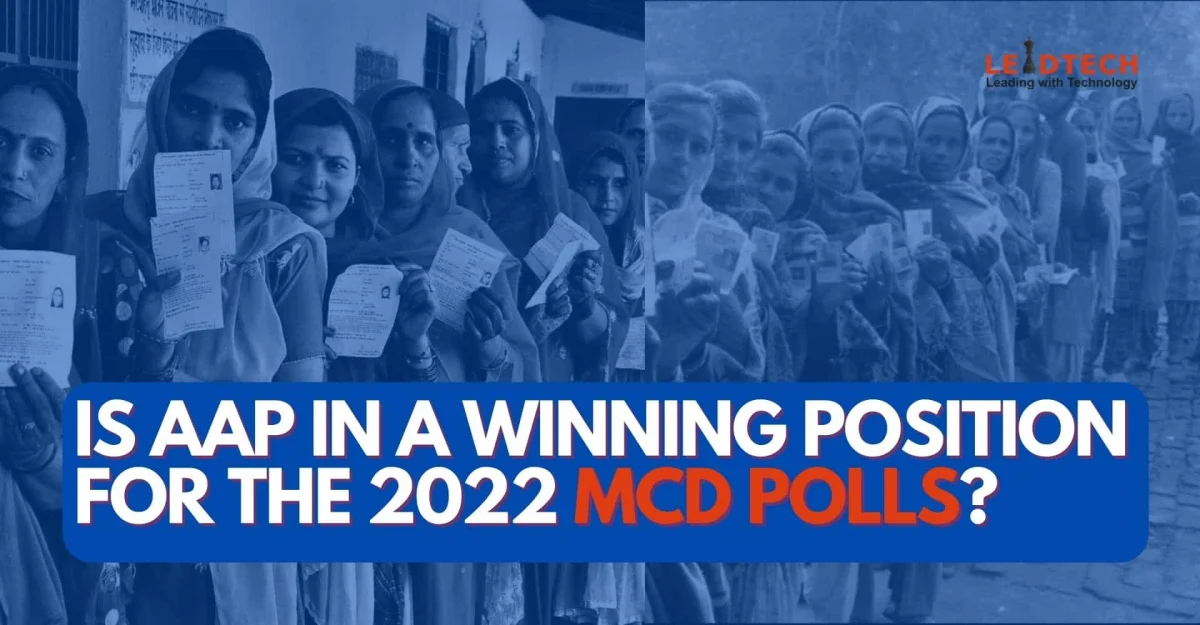
    Is AAP in a Winning Position for the 2022 MCD polls?

    AAP IN A WINNING POSITION

    BJP, which has not had a single Chief Minister of Delhi since the early 90s, has had several mayors administering Delhi. For the past 15 years, they have held power at the Municipal level and consistently grown in seat share. Their vote share continued to remain stagnant at about 36%, yet in 2017, they had won 67% of the seats.

    REASONS FOR WINNING M.C.D.

    In 2007, when their (presently) main opposition AAP did not exist, BJP won marginally against INC. Congress’s share was diluted by other opposition parties, and BJP, a strong national opposition at the time, took advantage of this. However, in 2008, Sheila Dikshit managed to win another term despite losing control of the MCD.

    In 2012, the downfall of INC in Delhi continued, fueled especially by the 2011 anti-corruption protests and the 2010 Commonwealth scam. BJP won a pure majority (138 seats out of 272) – but it must be noted that AAP had not contested this time.

    To understand the results of the 2017 election, we must understand AAP’s growth trajectory. After the infamous 2013 AK49-term, Arvind Kejriwal won a thumping majority in the Delhi state assembly. INC was completely booted out while BJP had only 3 seats, giving birth to the “Entire Opposition in One Auto Rickshaw” joke. The reason AAP did so well in 2015 Delhi Assembly elections is because of Kejriwal’s appeasement manifesto, which only targeted the lower-middleclass of Delhi. In both 2017 MCD elections and 2019 Parliamentary elections, AAP suffered badly. BJP in fact gained 43 seats when AAP contested for the first time, and swept all 7 Lok Sabha seats. Despite these failures, AAP retained power in the Delhi Assembly in 2020.

    The Aam Aadmi Party did eat away at Congress’s share, but they could not position themselves in a way that the majority considered them worthy of getting the mandate – something that BJP was able to do. One may understand why, at the national level, Delhiites chose BJP over AAP, but why at the administrative level too?

    THE PRESENT CAMPAIGNS

    It is safe to say that Congress has lost its ground in Delhi. There are only two main parties in Delhi, and they are both actively campaigning in Delhi. Even before the December 4 polling date was set by the courts, MCD elections had been a major part of the political discourse. The matter of trifurcation was even taken up in the Indian Parliament.

    AAP, which desperately needs control of the MCD to fully deliver their promises to the public of Delhi, has been running a “Helpless” campaign since 2020. Their claims, although true, are strategically disseminated to the aggrieved public whenever they hold AAP accountable for shortcomings in their civic life. Be it TV debates or through their official and non-official social media handles, AAP has maintained that they have always been up to the mark in their work, but a lot of civic matters do not come under their jurisdiction, and since they don’t have control of the MCD, they can’t be held accountable. They want to help the people of Delhi, they claim, but they are “helpless” as long as BJP stays in power.

    BJP’s campaign in response has been tepid at best, mainly because it is a reactionary campaign. When AAP puts the blame on BJP by quantifying the lack of delivery of promises, BJP does the same. There are a lot of sharp words exchanged but BJP has not provided a reason why they should stay in power.

    WHO WILL WIN THIS TIME?

    The blame game is a very common element in bipolar elections, but technically, the odds are more in favor of AAP this time.

    From a voter’s perspective, if BJP is voted back into power, Delhi’s civic amenities will most likely continue to suffer. Kejriwal and the new mayor will continue to have scuffles and each party will try to bring the other down. Kejriwal will double down on acting helpless, while BJP will continue to attack him. In this case, the mayor might be positioned as the new CM face, and could replace Kejriwal in 2025, leading to the original outcome of the same party holding both the state assembly and municipality.

    On the other hand, if AAP wins, they will gleefully stop blaming the BJP, but will have immense pressure on their head to prove that they are capable of undoing BJP’s “bad work” and doing the “good work” they promised. If they fail to do so, there is a possibility that BJP might take over the assembly from them in 2025.

    Hence, from a rational viewpoint, AAP is more likely to win. But elections involve real voters, most of whom are not original thinkers. What matters is what they are made to believe, not what they actually believe. There are still other factors to consider.

    OTHER FACTORS TO CONSIDER

    BJP’s support base, as seen in the past 15 years, is consistent – their base supporters are loyal. Be it Lok Sabha or Vidhan Sabha or MCD, they have the support of at least 36% voters. AAP does not have loyal voters – it has situationally-loyal voters. Considering this factor, BJP is more likely to win. But AAP has not contested MCD elections often enough (just once) for anyone to determine their voter loyalty.

    Therefore, it is possible for the election results to swing either way, depending upon the steps taken by either party.

    The first step in winning any election is understanding the voter sentiment, which is done by conducting surveys either internally or by hiring a reliable external agency, like LEADTECH. However, for this election, which is less than a month away, many might want to skip this step and jump straight to campaigning – especially important in weaker wards. This is another service in which LEADTECH holds a lot of expertise due to years of experience.

    While both parties are aggressively strategizing and aiming to win the most seats, some wards are weak and need special attention. Nominees from these wards should hire external help in addition to their party’s assistance, if they want to guarantee a win. For that, LEADTECH would be able to provide several services, including door to door campaign, social media, war room, public relations, and many more.

    GET IN TOUCH

      Get in Touch


      By clicking Submit, I hereby authorize Leadtech and its affiliates to call, email, send a text through the Short messaging Service (SMS) and/or Whatsapp. The consent herein shall override any registration for DNC/NDNC.

      Categories
      Assembly Election Election Parliament Election

      Importance of Chunav Prachar to Win Election

      Chunav Prachar (Election campaign) is an important part of the electoral process, occurring at the end of each 5-year term. An election campaign is the touchstone of democracy that enables voters to make an informed choice. LEADTECH helps candidates understand their constituency members, through scientific methods of data collection, and launch an effective campaign.

      Chunav Prachar

      The primary importance of a campaign right before the election lies in its ability to reach out to thousands and even more people through a singular mechanism. Candidates hold rallies and sessions which are attended by many. Reaching out to people personally through live speeches and other methods breeds reliability among the masses, giving the candidate an edge.

      This process also puts to test the resilience of the candidate by putting them under heavy scrutiny of the public and media alike. Campaigns are also psychological warfare where candidates find creative methods to leave an imprint on people’s minds. This is done through party symbols.

      Voters often associate their candidates with these symbols. This also enables them to lay roots for the party they are representing. Chunav Prachar also helps candidates put forward their proposals, giving them a platform to make proposals and promises. These proposals are what help voters decide while polling. Lastly, they display the public skills of the candidates. Politicians are required to not only be well-versed with their constituencies but also be good speakers since a lot of their job is done in the public eye.

      Chunav Prachar Gives a Competitive Edge!

      In the case of Politics and government particularly, a campaign strategy is designed when political parties put up a candidate for the elections. This Chunav Prachar Strategy involves a series of coordinated events including public speaking and demonstrating to help convince the voters. Following an effective and strong strategy has a big role in winning the election.

      Candidate Promotion

      This is the obvious reason for creating an effective campaign strategy. Though larger elections get extensive media coverage, for small elections, Chunav Prachar is endowed with the heavy task of promoting a particular candidate.

      The objective of Chunav Prachar is to make the candidate memorable to voters, especially when the voters step into the voting booth.

      Cause Information

      Effective political campaigns are meant to inform the general public about a specific cause. This could be the candidate’s platform or the proposed bill. This spread of information is a must so that voters can make informed choices.

      Election Date

      It is essential for the electorates to be informed about the election date and other details associated with voting. Such details cover election venues, voting sites, and election hours.

      Since the motive of Chunav Prachar is to get the people to vote for a candidate, LEADTECH helps political parties to study the environment as well. This covers gaining an understanding of what the voters are looking for in an electoral candidate. Using this vital information, we can design an effective campaign relating to the voters.

      Set an aim

      While most election campaigns end up going wrong in fixing an aim. LEADTECH helps candidates stick to a singular purpose for the campaign being created. The varying thoughts aims or plans can confuse the campaign making it less effective. Doing this may create confusion among the voters who would not be able to understand the campaign and its focus.

      Regardless of whether you as a candidate win or lose, upholding aim is always of great significance. 

      There are certain tactics and methods available for a political party to choose from when creating an election campaign strategy. However, the first thing that is performed by LEADTECH experts is a detailed amount of research. This ensures that the tactics being used by us are tried and tested and will guarantee success.

      Any wrong move can not only affect the campaign but also potentially cause the candidate to lose the election. We don’t know what the future holds and therefore, believe presenting a good image to the public is a smart move.

      Why do election campaigns matter?

      Election campaigns help political candidates and parties with opportunities to present the right message to citizens, helping voters make an educated and informed decision on Election Day.

      Are there any restrictions on displaying posters, and banners of the party concerned or the candidate?

      Candidates may use any political sign or display poster, or banner for the party concerned, subject to provisions of local laws and prohibitory orders.

      How does Chunav Prachar help political candidates?

      Chunav Prachar gives exposure and builds awareness of candidature, as well as the causes.

      How does LEADTECH guide political parties or candidates while making election campaigns?

      By conducting a detailed amount of research, understanding the voters, and deciding on a fixed aim, LEADTECH helps political parties create a winning campaign strategy.

      Hence, Chunav Prachar is an indispensable aspect of electoral democracy as it helps shape public opinion. LEADTECH helps their client’s campaign effectively by conducting door to door survey, gathering information, and scientifically analyzing that information. Through this, the candidates get to know the grievances and demands of their target audience and work on them to win the election.