
Categories
Election PR Management

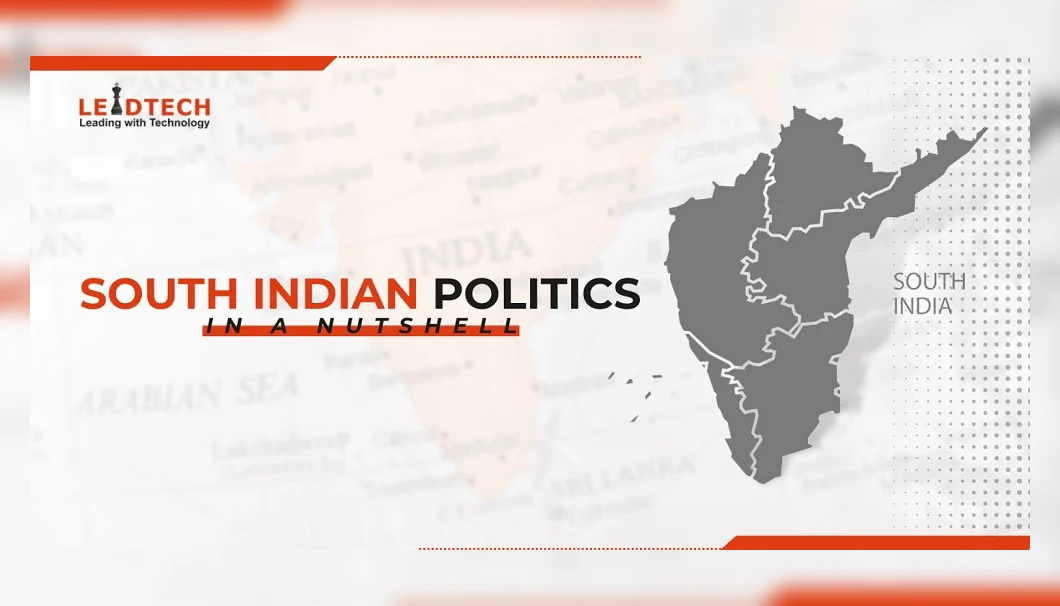
South Indian Politics – In A Nutshell

Politics in South India is particularly distinct. Most southern states have strong linguistic and cultural identities, which ensures the inevitable dominance of regional parties, and the subsequent growth limitation of national parties.

DEFYING THE NORM

Admittedly, during the early years of post-independence, Congress penetration was deep, but one of the first Indian states to defy the norm was a Southern state (Kerala, 1957, CPI government). Tamil Nadu went next, and elected a DMK government in 1967. Andhra Pradesh and Karnataka both came next in 1983, successively electing TDP (on 9 January) and Janata Party (on 10 January) respectively.

NARRATIVE BUILDING

Regional politics is not new in India. Parties always come into existence to satisfy a public need – and regional parties do exactly that. But many of these parties burn out when their narrative weakens or if their narrative becomes too exclusive. TDP was conceptualized by harnessing the Telugu identity, but the party ceased to make it their focal point gradually, and TRS filled that gap. Now TRS is on the same path.

STILL STRONG

But many parties continue to sustain themselves, even when external forces attempt to enter the contest. Kerala, which had a highly active, hyper-aware working-class community, naturally gravitated towards the mobilizing Communists as early as the 1950s. Even today, they manage to come back to power intermittently. Congress leader C Rajagopalachari’s insistence on Hindi gave birth to the imposition-resistant DMK, and virtually eliminated Congress from Tamil Nadu for many years to come. Even though Congress now features in TN politics, it is only a minority partner in a SPA coalition headed by DMK; and unsurprisingly, the party still hitting the language chord (BJP) sits as a minority partner in the Opposition. Andhra Pradesh and Telangana have now managed to virtually keep both INC and BJP out of power.

THE EXCEPTION

The only possible exception to this trend in South Indian politics is Karnataka. The state is not controlled by 3 parties, as is the popular belief. JD(S) is the main regional party, but it is only influential in a few areas, where loyal caste groups have kept it alive. National parties with singular narratives fill in the gap everywhere else. INC, which has not only lost its national narrative, but also several key leaders, still flourishes under a strong state leadership.

THE FUTURE

Democratic politics, to a large extent, is a game. It starts with a narrative, which evolves into a movement, and concludes with the election. If the narrative is strengthened, the need for a sponsored/organized movement is obviated – the public organizes it themselves. The elections then just act as a formality – a yardstick to measure the impact of the narrative.

Especially in a country as diverse as India, where dialects change every 20 kilometers, a common narrative is not only the best possible strategy, but also the need of the land. The public demands a unifying message – without which they would feel rudderless. Even if it polarizes them, narrows their minds, or causes them discomfort otherwise – it provides a sense of security; of belongingness.

South India politics may appear like a whole nother game. The states do not align themselves with national narrative, yet they make no attempts to secede. They want to stay a part of the family, but still hold onto their own identity. This shall continue for the foreseeable future – which is what the trends prove too.

HOW WE CAN HELP YOU

If you’re a political candidate or party, or even an influential leader with political ambitions, look no further. In today’s age, everyone needs professional expertise in building strong narratives, propagating them, and executing a mass movement. Leadtech has been in this profession since 2008, and is still going strong. Leadtech has handled over 1400 clients and led 95% to victory. With project coordinators and teams employed all over the country, Leadtech’s teams have an in-depth understanding of local politics and sentiments, and the resources to execute campaigns to help their clients emerge victorious. Contact the Director, Vivek Singh Bagri at 9650060882 for more information.
Categories
Indian political news

Twitter Takeover: What It Might Mean For Indian Politics

TWITTER TAKEOVER

Indian politics is incomplete without social media in the 21st century. From its roots back in the late 2000s when very few politicians had a Twitter or Facebook account, to now, when politicians without a social media presence are suspiciously viewed, Indian politics has happily adopted this medium to communicate with the public.

This change, while greatly reducing costs for potential candidates and opinion leaders to broadcast their messages and establish themselves, has also come at its own cost. Propaganda campaigns have gone unchecked, fake news has grown rapidly, and smear campaigns have become relatively easy. It became possible to create a media storm with very little money (as low as Rs 2 per tweet) – with some Indian politics stakeholders forgetting that storms have consequences.

But as the Indian politics game was played, the players had an advantage – there was no umpire. Social media giants realized that their products were expanding into culturally diverse communities and lands, and it was not possible for a single set of rigid rules to guide them. Hence, social media tried to not censor most users. Violence and pornography, too, were not banned from the beginning. It was paradise for those who could dominate the conversation – the ultimate free market (of messages).

In recent years, however, companies began to feel the consequences of letting things run wild and took relevant measures – measures which many people did not take kindly to. A great example was the suspension of former US President Trump’s Twitter account, or perhaps the labelling of BJP Spokesperson Sambit Patra’s tweet as “manipulated media”. Twitter was criticized by the right-wing as a curtailer of free speech, which was followed by several measures (like raids by the police, or criticism by governments) which cost the company.

Twitter is now a private company. Business magnate Elon Musk bought the company for $44 billion on 25 April 2022, in a bid to unlock the “tremendous potential” of the company. Musk felt the company could not thrive or serve its purpose (of free speech) in its present state. He wanted to transform it by defeating spam bots, authenticating humans, and making the algorithms open source.

The platform that everyone had become familiarized with, is highly likely to change. LEADTECH has 15 years of experience in providing all services (especially social media) to political candidates to enable them to unlock their potential and has a dedicated team with an in-depth knowledge of this evolution of technology. Check out this link or contact us today to see how we can help you in these changing times.

Elon Musk clearly isn’t partisan. He has no left or right leanings. He criticizes the left when they speak of increasing taxes and neo-pronouns, but at the same time, criticizes the right when they ban abortions or ridicule climate change. But he wholeheartedly funds both sides. It is unlikely for Twitter to be a one-sided platform.

The one crucial point he made, that could change the political model, was about spam accounts. Burner accounts are quite common on social media to disseminate messages at a large scale and spread misinformation. Organizations use real-people profiles, several of which are operated by a single person, to relay the same message multiple times (to either make the topic “trending” or as an intimidation tactic), which tricks the algorithm into believing it truly is a valid message. Musk clearly stated his intention to do away with this, which could make things harder for indian politics stakeholders in this country.

Categories
Election 2022 Political research

6 Reasons Congress May Stay in Opposition for the Next Decade

CongressCongress was the dominant party in India post independence. For the first 25 years, they ruled without strong opposition. From the 1970s to 1990s, INC often lost power, but they always managed to come back. They were indisputable winners – with secure vote banks in every nook and corner of the country. But post 2014, their situation has only been described as “dismal”. BJP’s dominance at the Center has virtually eliminated INC from its original position. But is it all due to the BJP? Let’s explore –

  1. Leadership – The high command bodies of Congress (eg. Working Committee) are generally headed by Gandhi family members. Many members have never even contested elections, like Ambika Soni.
  2. Organizational Structure – INC has a lot of leaders, but none of them are organized. Each of them acts on their own, which is detrimental to the party. In-party dissatisfaction, voiced mainly by the G23, also makes the party look weak.
  3. History – INC has a long history of corruption, nepotism, and fascism – the shadow of which it still can’t escape.
  4. Defection – Party seniors, who have been associated with the party for a long time, are now beginning to leave the party since they no longer see benefit in this association. Another major reason for defection is lack of rewards – Jyotiraditya Scindia left because INC refused to make him the CM of MP.
  5. Narrative – INC’s media team is probably their biggest drawback. Their public narrative, explaining their consecutive defeats across states, is always that their message never reached the audience in the way they had intended. INC is also unable to control the media storm about Nehru, or bank upon their involvement with the independence movement. Congress still hasn’t changed their media structure.
  6. Behavior – INC has even begun behaving like the Opposition. Their stances are pro-minorities to distinguish themselves from BJP, but minorities are firstly not enough to win, and secondly, even these minorities aren’t totally polarized in their favor.

INC is a stubborn party with a weak foundation. Their decline is not only due to BJP, but their own cons – the range of which includes the aforementioned. Even with a strategist like Prashant Kishor on board, they are unlikely to gain back their position in the country.

Categories
Election 2022 Election News

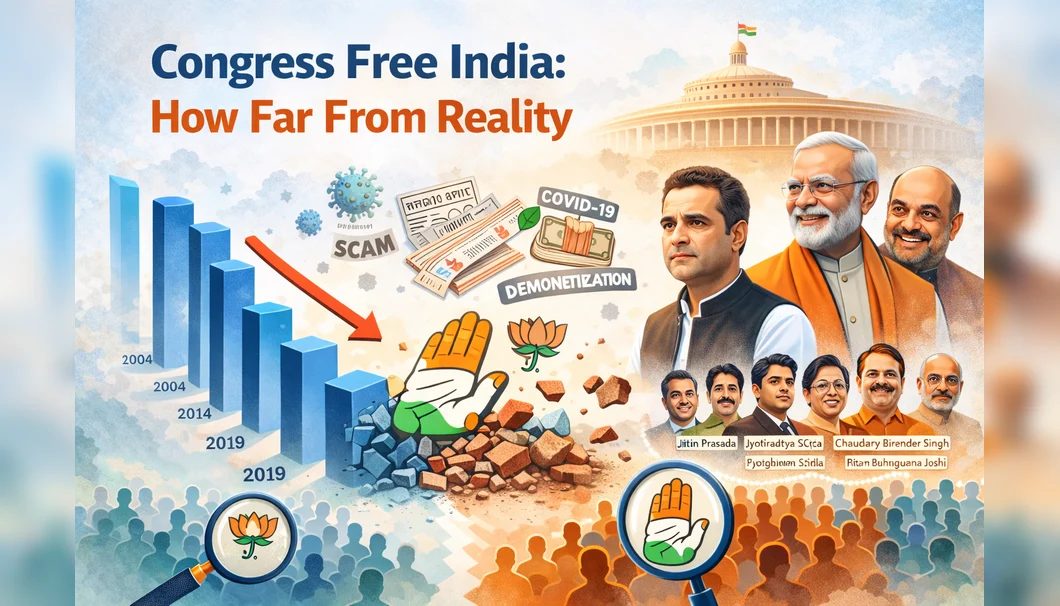
Congress Free India: How Far From Reality

The ongoing Covid-19 Pandemic has posed unprecedented challenges in our lives. The effects of demonetization, mismanagement of covid-19 in many parts of India, Job crisis and the low number of sitting in the parliament where vital issues are being discussed and debated and above all the role of opposition parties in raising the voice of voiceless people are the major cause of concern. The recent developments in Indian Electoral Politics have changed the narratives and our perspectives too about the style of leadership, hereditary nature of Indian leadership, the role of coherent ideology, the manner in which decisions being made and implemented and political parties approach towards reaching the various social groups, etc.  As many political experts say that despite having declined in electoral politics since 2014, one cannot imagine the Indian politics without the Congress party and it still plays a pivot role.

This article has focused on the current state of Indian politics and the speedy decline of the Congress party from National politics particularly after 2014 and the possible ways forward.

 Glimpses of INC performance in the general election from 2004 to 2019  

From 2004 to 2014 the congress party with help of other regional parties was able to form a govt. by defeating the National Democratic Alliance (NDA) led by the BJP.

However, there are many theories, as propagated by political experts, around the decline of the Congress party. Many political pundits have argued that it has created a space for political entrepreneurs that led to various corruption scams such as the earlier Bofors scam, 2G scam, Sahara Scam, and poor governance system while others believed that lack of charismatic leadership, connectivity with masses, and social engineering of caste groups, etc. Many political observers even including ex-congress leaders (now in BJP) have mentioned that their personal growth has stagnated and decision-making process has been hijacked by a few veteran leaders that led to suffocation. For instance, referring to Rahul Gandhi, “Our once and future king” tweeted by a senior leader of the Congress party on the death anniversary of Rajiv Gandhi. What does it show? Do we believe in democracy or chamchagiri?  While on other hand pursuing president Pranab Mukherjee and giving a warm and emotional farewells to senior leader Gulan Nabi Azad was another political gesture of BJP.

Politicians Who Thought to Left the INC

  1. Milind Deora who thought to left the INC as INC didn’t like his idea on Article 370. Since he supported the BJP’s strong decision on the suspension of Article 370 but congress party simply opposed his ideological stand.
  2. Sachin Pilot was another politician who was quite in news for going against the INC. The simple reason going against the party in Rajasthan was all hard work and Party campaigning was done by him but CM candidature offered to Ashok Gahlot.

All is not well in the Congress Party

Here is the list of prominent leaders who were earlier in the congress party but now have left and joined BJP as if   

  1. Jitin Prasad
  2. Jyotiraditya Scindia
  3. Chaudhary Birender Singh
  4. Rita Bahuguna Joshi
  5. Tom Vedakkan and the list goes on.

Many political scientists believe that lack of consistency in policy decisions and policy actions, no coherent ideological commitment, growing Left-Congress synergy, and of course lack of personal growth of leaders, etc. are the possible reasons. For instance, Left-Congress Synergy has been unproductive as well as confusing for common party workers. In West Bengal they (Congress and Left together) fought election against Mamta Banerjee but what about in Kerala where Congress and Left parties were contested against each other.

Way forward

In the 2019 general election Rahul Gandhi was defeated by Smriti Irani in the Amethi Lok Sabha seat but manage to get elected from Wayanad (Kerala). In August 2020, G-23 i.e. 23 senior leaders of the Congress party have expressed their concerns to interim party Chief Sonia Gandhi. They have expressed their views on the poor performance of the Congress party in two consecutive general elections, bringing all structural reforms, self-introspection, and strategizing for upcoming elections. Even the post of Congress party president is still waiting for a full-time president. It was a clear political gesture to the congress party to rethink or purnavichar, restructure its party composition and bring fresh and young people to the party. But as being acknowledged by BJP-RSS senior leaders that still the congress party is the biggest challenger to the BJP party despite having a continuous decline. It is because it has managed to secure approx. 20% of total votes in two general elections i.e. 2014 and 2019 while the rest of the parties (excluding BJP) were not able to cross double-digit. It means at the bottom side it has maintained the status quo. Any increase in this percentage will surely affect the BJP vote share and would have led to a coalition government as well. Gandhi’s Family is still key to the Congress party that’s why Modi-Shah led BJP party keeps on attacking Gandhi Family. The Congress party needs to focus on

  1. To understand the changing nature of young voters, their aspirations and demography dividend and do all needful accordingly
  2. Innovative political Strategies and to communicate the masses at a large scale by judicious utilization of ICT platform.
  3. To provide some paces to local/regional parties and help them to form stable government where the Congress party is not in majority. Do not become power-hungry but adaptive according to the prevailing political scenario.
  4. Of course restructure its political organization or even vacating various seats as well otherwise many more leaders are waiting to join the BJP.
Categories
Assembly Election Election Parliament Election

Importance of Chunav Prachar to Win Election

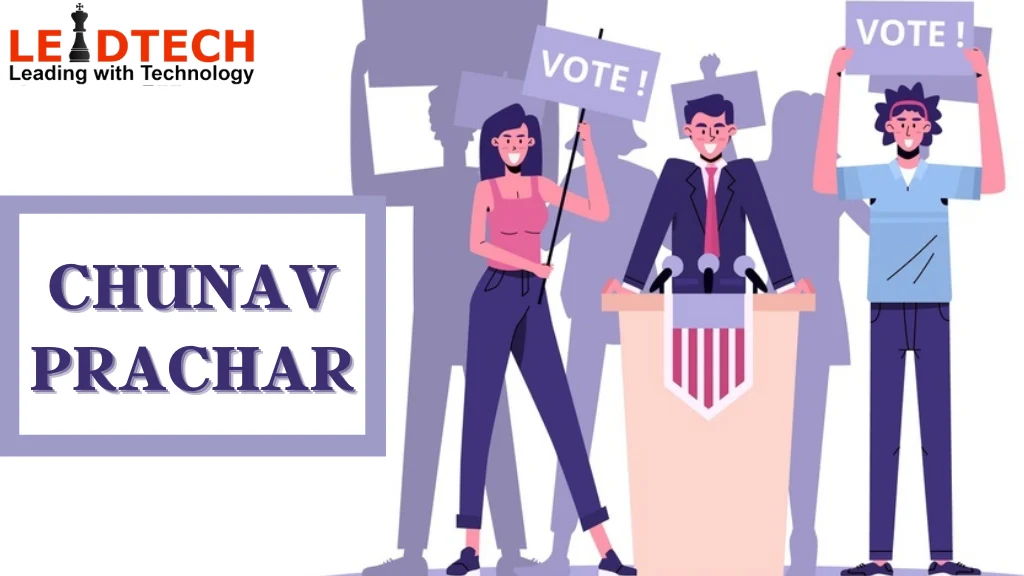
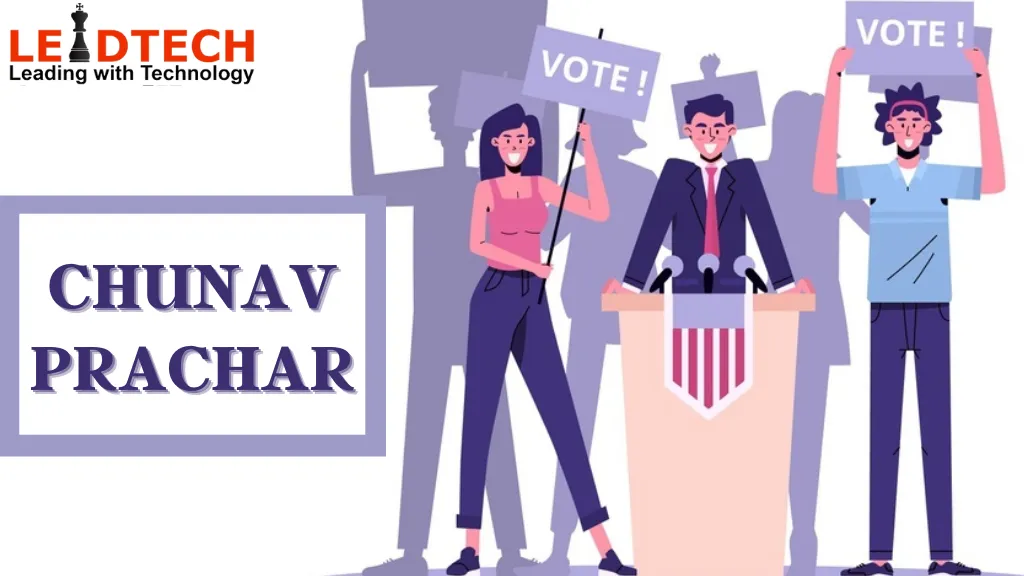
Chunav Prachar (Election campaign) is an important part of the electoral process, occurring at the end of each 5-year term. An election campaign is the touchstone of democracy that enables voters to make an informed choice. LEADTECH helps candidates understand their constituency members, through scientific methods of data collection, and launch an effective campaign.

Chunav Prachar

The primary importance of a campaign right before the election lies in its ability to reach out to thousands and even more people through a singular mechanism. Candidates hold rallies and sessions which are attended by many. Reaching out to people personally through live speeches and other methods breeds reliability among the masses, giving the candidate an edge.

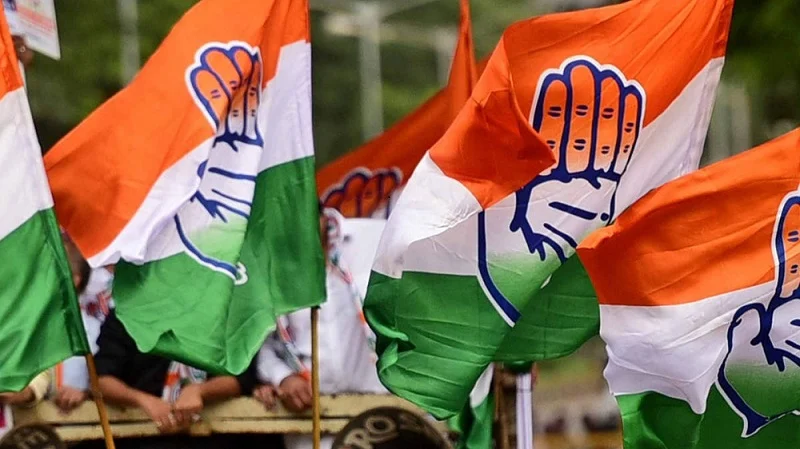
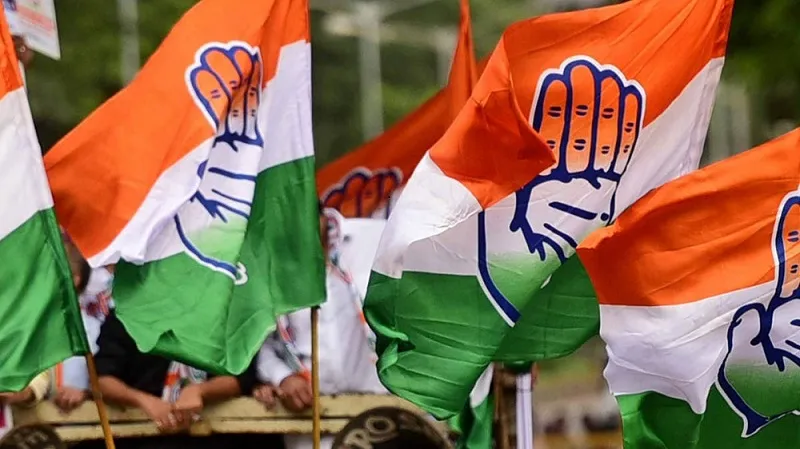
This process also puts to test the resilience of the candidate by putting them under heavy scrutiny of the public and media alike. Campaigns are also psychological warfare where candidates find creative methods to leave an imprint on people’s minds. This is done through party symbols.

Voters often associate their candidates with these symbols. This also enables them to lay roots for the party they are representing. Chunav Prachar also helps candidates put forward their proposals, giving them a platform to make proposals and promises. These proposals are what help voters decide while polling. Lastly, they display the public skills of the candidates. Politicians are required to not only be well-versed with their constituencies but also be good speakers since a lot of their job is done in the public eye.

Chunav Prachar Gives a Competitive Edge!

In the case of Politics and government particularly, a campaign strategy is designed when political parties put up a candidate for the elections. This Chunav Prachar Strategy involves a series of coordinated events including public speaking and demonstrating to help convince the voters. Following an effective and strong strategy has a big role in winning the election.

Candidate Promotion

This is the obvious reason for creating an effective campaign strategy. Though larger elections get extensive media coverage, for small elections, Chunav Prachar is endowed with the heavy task of promoting a particular candidate.

The objective of Chunav Prachar is to make the candidate memorable to voters, especially when the voters step into the voting booth.

Cause Information

Effective political campaigns are meant to inform the general public about a specific cause. This could be the candidate’s platform or the proposed bill. This spread of information is a must so that voters can make informed choices.

Election Date

It is essential for the electorates to be informed about the election date and other details associated with voting. Such details cover election venues, voting sites, and election hours.

Since the motive of Chunav Prachar is to get the people to vote for a candidate, LEADTECH helps political parties to study the environment as well. This covers gaining an understanding of what the voters are looking for in an electoral candidate. Using this vital information, we can design an effective campaign relating to the voters.

Set an aim

While most election campaigns end up going wrong in fixing an aim. LEADTECH helps candidates stick to a singular purpose for the campaign being created. The varying thoughts aims or plans can confuse the campaign making it less effective. Doing this may create confusion among the voters who would not be able to understand the campaign and its focus.

Regardless of whether you as a candidate win or lose, upholding aim is always of great significance. 

There are certain tactics and methods available for a political party to choose from when creating an election campaign strategy. However, the first thing that is performed by LEADTECH experts is a detailed amount of research. This ensures that the tactics being used by us are tried and tested and will guarantee success.

Any wrong move can not only affect the campaign but also potentially cause the candidate to lose the election. We don’t know what the future holds and therefore, believe presenting a good image to the public is a smart move.

Why do election campaigns matter?

Election campaigns help political candidates and parties with opportunities to present the right message to citizens, helping voters make an educated and informed decision on Election Day.

Are there any restrictions on displaying posters, and banners of the party concerned or the candidate?

Candidates may use any political sign or display poster, or banner for the party concerned, subject to provisions of local laws and prohibitory orders.

How does Chunav Prachar help political candidates?

Chunav Prachar gives exposure and builds awareness of candidature, as well as the causes.

How does LEADTECH guide political parties or candidates while making election campaigns?

By conducting a detailed amount of research, understanding the voters, and deciding on a fixed aim, LEADTECH helps political parties create a winning campaign strategy.

Hence, Chunav Prachar is an indispensable aspect of electoral democracy as it helps shape public opinion. LEADTECH helps their client’s campaign effectively by conducting door to door survey, gathering information, and scientifically analyzing that information. Through this, the candidates get to know the grievances and demands of their target audience and work on them to win the election.