
Categories
About Leadtech Assembly Election Political Parties Voters

Master Political Campaigns to Win Lok Sabha Elections 2024


India has a vibrant democracy, where every citizen holds the power to shape the country’s destiny through their vote. Political campaigns play a pivotal role in shaping their opinion and swaying electoral outcomes. As the 2024 Lok Sabha elections loom large on the horizon, political parties are gearing up for a battle of ideologies, strategies, and promises.  And,  in  this  dynamic  landscape,   masterful   lok  sabha  election  preparations through effective election campaign management will define the path to success, both at the national and state levels.

Setting the Stage for Victory

The Lok Sabha, or the House of the People, is the cornerstone of India’s parliamentary democracy. With 543 constituencies spread across the length and breadth of the country, winning the Lok Sabha elections requires meticulous planning, extensive groundwork, and a deep understanding of local dynamics.

1. Crafting a Compelling Narrative

Lok sabha election preparations include charting a plan for campaign management. Every successful campaign begins with a compelling narrative that resonates with the aspirations and concerns of the electorate. From economic development to social justice, and from national security to grassroots empowerment, political parties must articulate a vision that strikes a chord with voters across diverse demographics.

2. Harnessing Technology and Data Analytics

In an era defined by digital connectivity, harnessing the power of technology and data analytics can provide a decisive edge in electoral campaigns. From targeted social media outreach to predictive analytics for voter behavior, leveraging cutting-edge tools can amplify the reach and impact of a party’s message.

3. Building a Strong Ground Game

While digital outreach is indispensable, the importance of a robust ground game cannot be overstated. From door-to-door canvassing to organizing grassroots rallies and meetings, connecting with voters at the grassroots level forms the bedrock of a successful campaign strategy.

4. Coalition Building and Alliances

In the complex mosaic of Indian politics, coalition building and alliances often hold the key to electoral success. By forging strategic partnerships with like-minded parties and stakeholders, political outfits can consolidate their support base and maximize their electoral prospects.

Complete Election Campaign Management

Beyond the Lok Sabha election preparation, the battleground of Indian politics extends to the state assemblies, where regional dynamics, local issues, and regional identities shape electoral outcomes. Mastering the intricacies of complete election campaign management is essential for navigating this diverse landscape.

1. Curating Strategies for Assembly Elections: 

Unlike the national canvas of the Lok Sabha elections, assembly elections demand a nuanced approach tailored to the specificities of each state. From understanding regional aspirations to addressing local grievances, crafting a customized campaign strategy is imperative for success.

2. Mobilizing Grassroots Support:

In state assembly elections, the role of grassroots mobilization assumes paramount importance. By empowering local leaders, mobilizing volunteers, and galvanizing community support, political parties can establish a formidable presence at the grassroots level, which is often the deciding factor in closely contested races.

3. Effective Communication and Messaging: 

Communication is the lifeblood of any political campaign, and effective messaging can make all the difference in swaying public opinion. Whether it’s through persuasive speeches, resonant slogans, or visually impactful campaign materials, conveying a compelling message is essential for winning hearts and minds.

4. Continuous Monitoring and Adaptation:

In the fast-paced arena of electoral politics, agility and adaptability are indispensable virtues. By continuously monitoring voter sentiment, tracking emerging trends, and recalibrating strategies in real-time, political parties can stay ahead of the curve and seize opportunities as they arise.

How to Win an Assembly Election?

While the path to victory in assembly elections may vary from state to state, certain timeless principles remain universally applicable. By heeding these lessons from the trenches, political parties can enhance their electoral prospects and chart a course toward success.

1. Connect with the Grassroots

Assembly elections are won and lost on the strength of grassroots connections. By listening to the pulse of the people, addressing their concerns, and championing their aspirations, political parties can forge an enduring bond of trust with the electorate.

2. Embrace Inclusivity and Diversity

India is rich in cultures, languages, and identities, and successful political campaigns must reflect this rich tapestry of diversity. By embracing inclusivity, fostering dialogue, and accommodating diverse perspectives, political parties can build broad-based coalitions that transcend narrow divides.

3. Focus on Delivering Results

Ultimately, electoral success hinges on the ability to deliver tangible results that improve the lives of citizens. By focusing on governance, development, and inclusive growth, political parties can earn the trust and confidence of the electorate, laying the foundation for sustained electoral success.

The Final Word

Election campaign management is an ongoing journey marked by masterful lok sabha election preparations, innovation, adaptability, and resilience. Whether it’s the high-stakes arena of the Lok Sabha elections or the intricate dynamics of state assemblies, political parties must harness the power of technology, mobilize grassroots support, and communicate effectively to emerge victorious. Finally, as we know Lok Sabha elections will be held in different states including Lok Sabha Elections in Madhya Pradesh 2024, Rajasthan, and Chhattisgarh, working with a leading political campaign manager like Leadtech can make all the difference. Connect with Leadtech today and emerge victorious in Lok Sabha Elections 2024.
Categories
About Leadtech Election Indian political news Political research

Political Campaign Roadmap Using Indian Voter Demographics & Trends

In the dynamic landscape of Indian politics, understanding voter demographics and trends is crucial for political parties to tailor their campaigns effectively. With a diverse electorate comprising various demographic segments and evolving preferences, parties must navigate intricate dynamics to secure electoral success.

Let’s delve into the analysis of voter demographics and trends based on past elections and current polling data, shedding light on key segments that parties should target and emerging voter preferences.

Youth Power:

India’s youth demographic, defined as voters between the ages of 18 and 35, constitutes a significant electoral force. With over 600 million individuals in this age group, their voting preferences can sway election outcomes. Past elections have shown a growing inclination among young voters toward issues like employment opportunities, education, and social justice.

Targeting Rural Heartlands:

India’s rural population continues to wield considerable electoral influence, with over 65% of the electorate residing in rural areas. Parties must address rural concerns such as agriculture, infrastructure development, and access to basic amenities to resonate with voters in these heartlands. Moreover, initiatives like the Pradhan Mantri Gram Sadak Yojana (PMGSY), Mahatma Gandhi National Rural Employment Guarantee Act (MGNREGA), and Pradhan Mantri Awas Yojana (PMAY) have gained traction among rural voters, signaling their importance in political campaigns.

Urban Dynamics:

India’s urban centers, characterized by rapid urbanization and a burgeoning middle class, present a unique set of challenges and opportunities for political parties. Issues like urban infrastructure, pollution, healthcare, and employment resonate strongly with urban voters. Moreover, the youth and tech-savvy urban population is increasingly influenced by digital media and social networking platforms, making digital campaigning essential for parties vying for urban votes.

Meme Culture:

In recent years, meme culture has become a potent force in shaping political discourse, especially among young voters. Memes, often humorous and satirical, have become a popular medium for political commentary and criticism. Parties that embrace meme culture and engage with it creatively can effectively reach out to young, digitally-savvy voters and inject humor into their campaigns while conveying their message.

Regional Diversity:

India’s vast and diverse geographical landscape is reflected in its regional political dynamics. Each state and union territory has its unique socio-cultural fabric and political priorities, necessitating region-specific campaign strategies. For instance, parties must factor in regional identities, language preferences, caste dynamics, and local issues while crafting their messaging and policy agenda.

Emerging Voter Preferences:

Current polling data suggests several emerging voter preferences that parties should take into account:

  • Performance-Based Governance: Voters are increasingly demanding performance-based governance, focusing on issues like infrastructure development, healthcare, and education outcomes.
  • Transparency and Accountability: There’s a growing emphasis on transparency and accountability in governance, with voters holding parties and politicians accountable for their promises and actions.
  • Social Welfare Schemes: Government welfare schemes like the Pradhan Mantri Jan Dhan Yojana (PMJDY), Ayushman Bharat, and Ujjwala Yojana have garnered widespread support among voters, especially in rural and marginalized communities.

Conclusion:

In conclusion, understanding voter demographics and trends is paramount for political parties seeking electoral success in India. By analyzing past elections and current polling data, parties can identify key voter segments, tailor their campaign strategies, and address emerging preferences effectively. From youth empowerment to rural development and regional dynamics, parties must navigate through diverse challenges and opportunities to connect with voters and secure their mandate in the vibrant democracy of India.

For more political updates and trends, Read Leadtech blog.

Categories
About Leadtech Political research

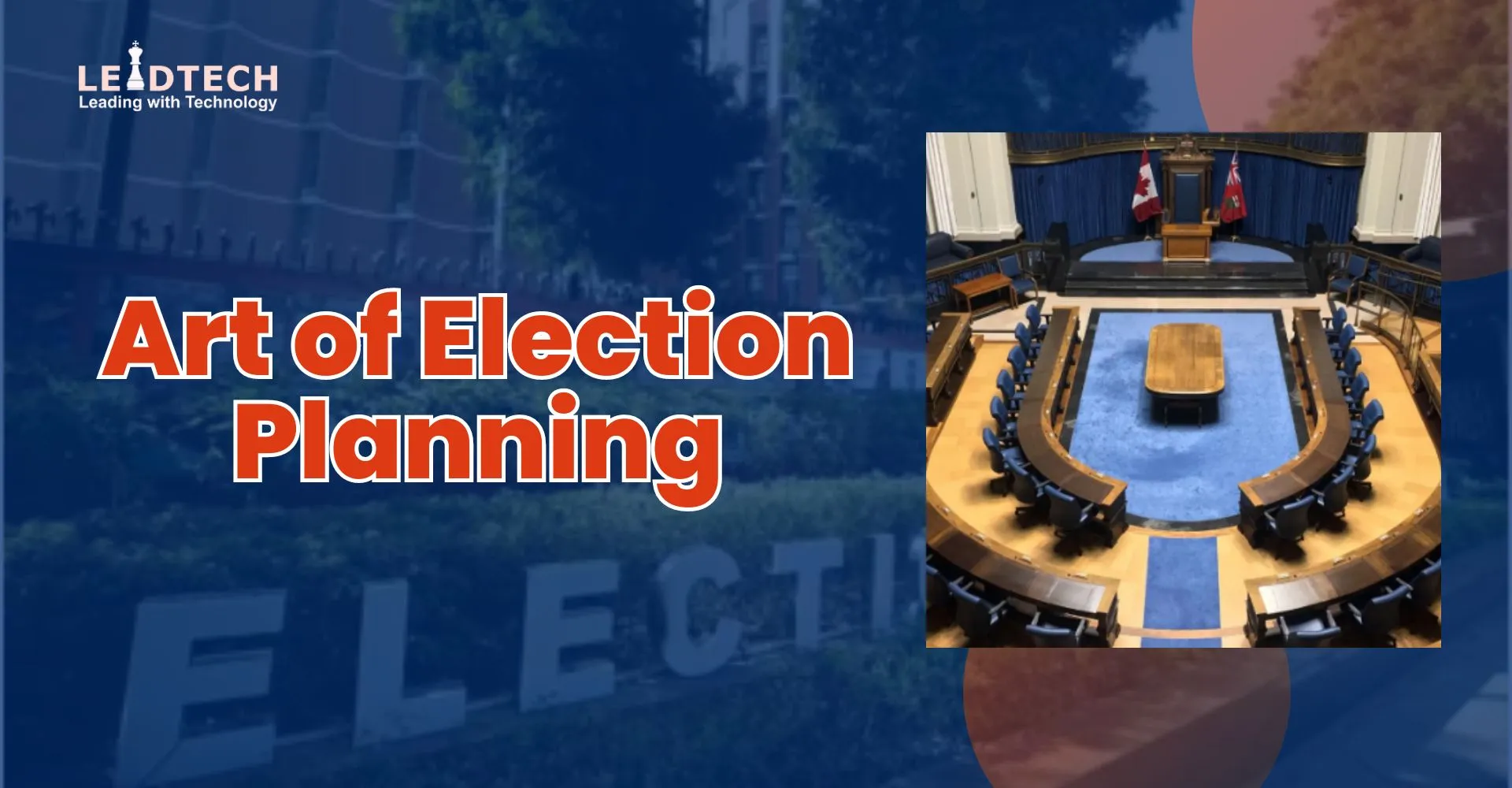
Political Consultancy- The Art of Election Planning

India, one of the biggest democracies in the world, faces its test of democracy every year in the form of elections. The election season is the time when citizens, decide the future of the state in particular and the country as a whole. Elections resemble a delicate chess game, where a single moment of oversight can result in defeat. Politicians avoid the risk of any lapse, as even a minute can sway the outcome. The long exercise of elections includes various dynamics and there are different stakeholders that successfully execute this comprehensive exercise. One of the crucial dynamics, of the elections is a political consultancy and a key role played by political consultants. Political consultancy is the process, in which a leader is advised on various aspects which include, election and campaign management, strategizing the pathways, and gauging the pulse of the constituency in order to win the elections. Each above-mentioned aspect is systematically carried out through proper planning and tools. Data analysis, Public Relations strategy for the candidate, management of outreach, survey, policy guidance, opinion poll and constituency study of the electorate are some of the fundamentals of political consultancy. These all-skill sets are executed by political consultants.

Art of Election Planning

Individuals who are socially conscious, politically engaged, and possess in-depth political knowledge often find a comfortable niche in political consultancy. This allows them to showcase their expertise through avenues such as grassroots intelligence, data administration, social media management, digital communication, and technology integration. They demonstrate a proactive and strategic working style. Political consultancy serves as a neutral ground where people from diverse backgrounds converge, contributing their skills to various spheres. In recent times, we have observed a surge in young minds adopting distinctive techniques and methodical approaches within this career path. This manifests a unique blend of fresh perspectives, technological acumen and dynamic and forward-thinking.

To win an election, the need to go to the roots is important, helping the candidates, know the pulse of their constituency, the visit to each door, of each booth of the constituency, all this helps to make a detailed study about the constituency, understanding of the caste profile, voting behaviour, and the political wave in the constituency. The in-depth research and analysis build a foundation for the leaders to project themselves in the constituency, resonate with the political nerves of the masses, build a narrative around the issues pertaining to the constituency, and perception about his/her leadership that turns his/her popularity into votes.

This consultancy, to the leaders, helps them to understand their constituency, voters and dynamics of the area, which translates into his/her promises, policy formulations, and agenda setting for the constituency. The political consultant creates an impactful campaign, that spreads across the small gaps of the constituency in a uniform manner. Effective communication is one of the core exercises of the elections. Consultants in coordination with leaders craft a well-planned communication strategy, that will totally reflect a voter’s voice. Further, this creates a manifesto, that is voter centric. Here the in-depth and comprehensive survey, research and analysis make a constituency-driven manifesto, effective communication and management. 

In this tech world, even the space of politics is not left untouched, the blend of technology and political consultancy has given rise to new and unique perspectives and developments. For example, we at
Leadtech provide a top-class tech blended political consultancy to our client, which has helped us to be in this industry for more than a decade. Through tech support, there is ease and coverage of the constituencies and nuanced details of the voters and constituency at the fingertips. With the era of new technologies, politicians are leveraging these technologies to learn about people’s expectations, vision, needs, demands, and hopes. Through AI, Chatbots, and social media, all these technological interventions have made the field of political consultancy very much unique and advanced. The technological wrapping around the political consultancy makes it a more strong and structured space for Indian elections. 

Hence, political consultancy, an area, that is growing rapidly in India, is becoming a new space wherein, through consultancy the elections are more enhanced,  won on more concrete and genuine issues, narratives and promises rather than on old practices of money and muscle power play. By bringing new innovations, structures, systems and technology to the space of Indian elections, it also generates substantial employment based on individuals’ capabilities and interests. Bringing together the scattered pieces of the constituency through political consultancy is the approach that was much needed for the Indian political landscape.