
Categories
Bihar Elections Election Campaigns Management

Political Campaigning in Bihar? Here’s What Your Competitors Are Doing

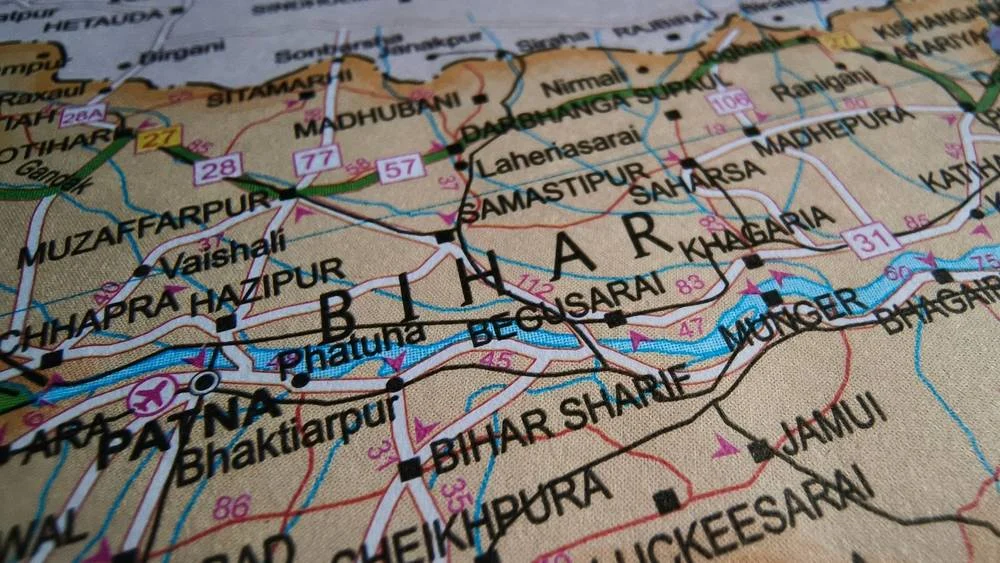
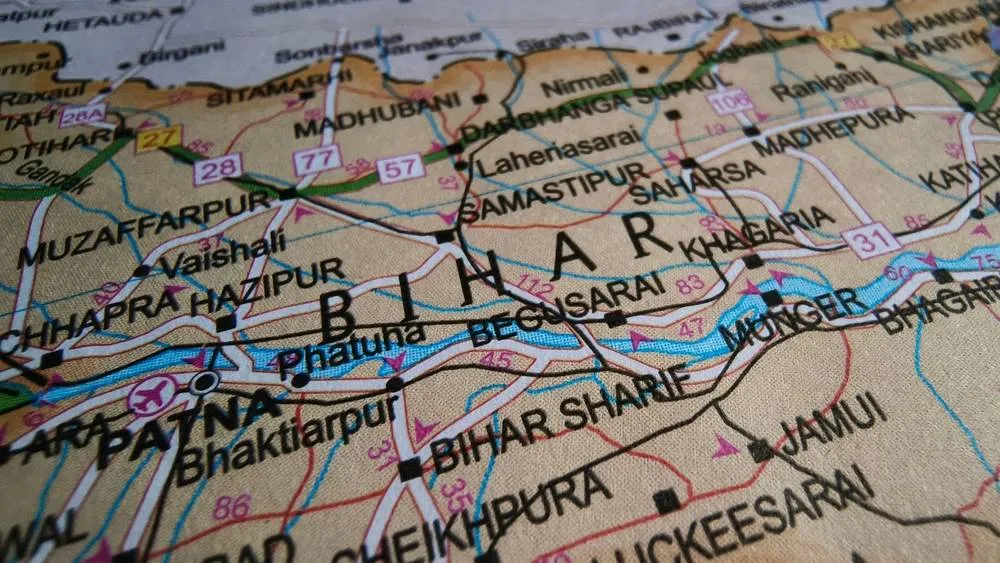
Bihar Map , Bihar Elections

The political landscape in Bihar is heating up as candidates prepare for upcoming elections. With its complex demographics and evolving voter preferences, Bihar presents unique challenges and opportunities for political campaigns. While traditional campaign methods remain important, innovative strategies are making a significant difference in reaching voters effectively. This article explores the current political scenario in Bihar and examines what successful campaigns are doing differently. If you’re planning to enter the political arena in Bihar, understanding your competitors’ strategies is essential for gaining an edge.

The Current Political Landscape in Bihar

Bihar, one of India’s most politically significant states, has seen dramatic shifts in party alliances and voter preferences in recent years. The political environment is currently dominated by two major alliances: the National Democratic Alliance (NDA) led by the Bharatiya Janata Party (BJP) and Janata Dal (United) [JD(U)], and the opposition Mahagathbandhan (Grand Alliance) consisting of Rashtriya Janata Dal (RJD), Congress, and other parties.

Chief Minister Nitish Kumar, who returned to the NDA fold in January 2024, leads the government in partnership with the BJP. This realignment has once again reshaped the state’s political dynamics. The RJD, led by Tejashwi Yadav, continues to be a formidable opposition force with strong support among certain demographic groups.

The political landscape is further complicated by smaller but influential parties like Lok Janshakti Party (Ram Vilas), led by Chirag Paswan, and Hindustani Awam Morcha of Jitan Ram Manjhi, which play crucial roles in Bihar’s coalition politics.

What Your Competitors Are Doing: Innovative Campaign Strategies
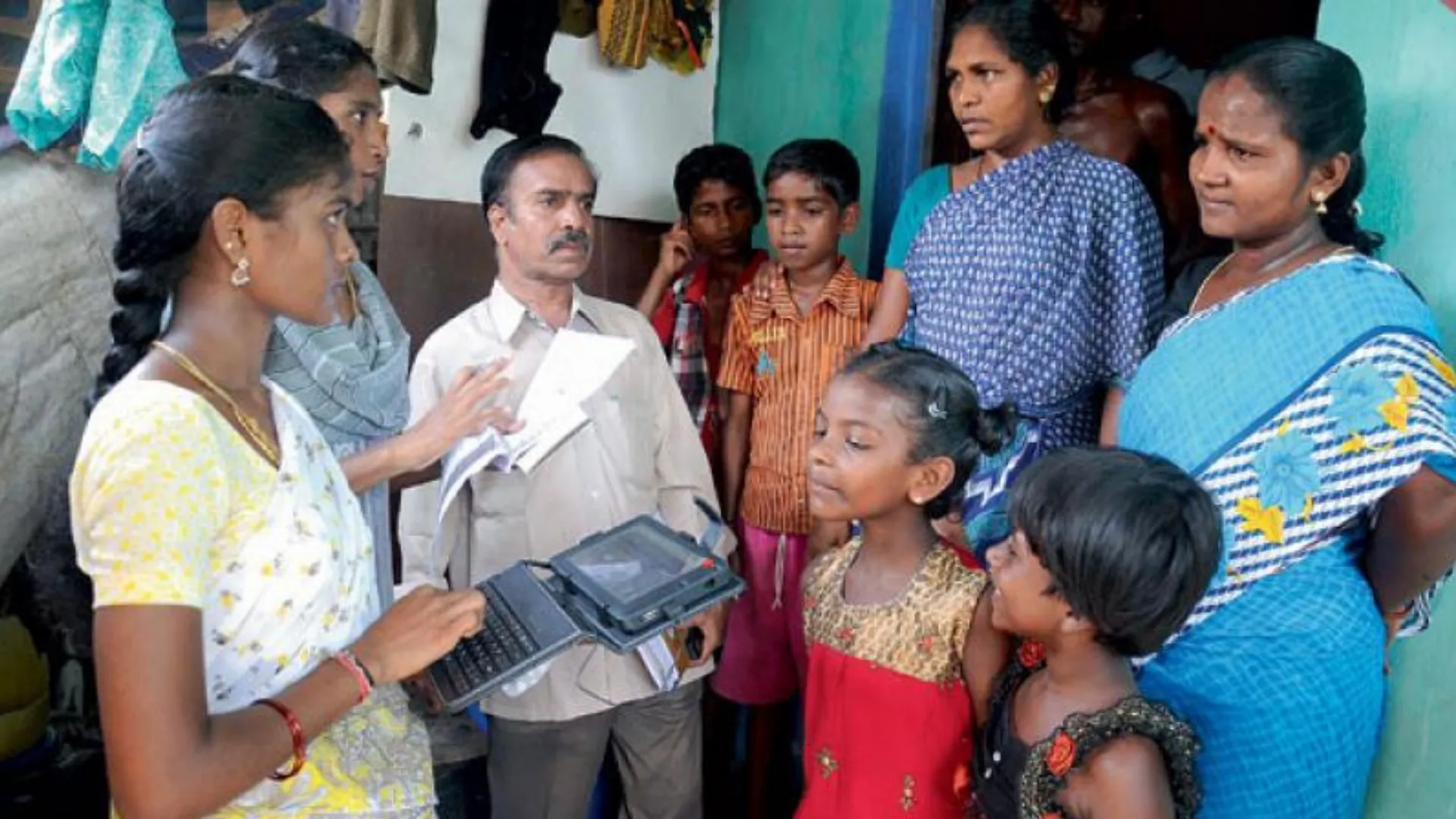
Political Survey Bihar

Comprehensive Door-to-Door Surveys in Bihar

The most successful political campaigns in Bihar are revolutionizing their approach to door-to-door engagement. No longer just about distributing pamphlets, these campaigns use sophisticated Door-to-Door Surveys in Bihar techniques to gather valuable voter data.

Campaign teams are equipped with tablets and specialized apps to record voter concerns, demographics, and political leanings. This digital approach allows for real-time data analysis and helps campaigns tailor their messages to specific neighborhoods or demographic groups.

For example, the BJP’s “Ghar Ghar BJP” campaign incorporated detailed survey mechanisms to understand voter concerns at the household level. Similarly, RJD’s grassroots outreach program used structured surveys to identify local issues that needed addressing in their campaign promises.

These door-to-door initiatives help campaigns build personal connections with voters while gathering crucial data for strategic decision-making.

Data-Driven Opinion Poll Surveys

Leading campaigns are now employing scientific Opinion Poll Survey in Bihar methods that go beyond simple voting intention questions. These sophisticated polls analyze voter attitudes on specific issues, measure candidate recognition, and identify swing voter segments.

Modern opinion polls in Bihar now incorporate:

  • Demographic-specific sampling to ensure representation across caste, religion, and economic status
  • Issue-based questioning to understand voter priorities beyond party loyalties
  • Sentiment analysis to gauge emotional responses to candidates and policies
  • Geographical targeting to identify regional differences in voter concerns

Political consulting firms working with major parties are conducting multi-wave tracking polls throughout the campaign period, allowing campaigns to adjust their messaging based on changing voter sentiments.

Innovative Social Media Management

Social Media Management in Bihar Election campaigns has evolved dramatically. Your competitors are no longer simply posting content- they’re building comprehensive digital ecosystems that engage voters across multiple platforms.

Successful campaigns in Bihar are employing strategies such as:

  • Content calendars synchronized with ground events and policy announcements
  • Platform-specific content tailored to different demographics (TikTok/Instagram for younger voters, Facebook/WhatsApp for older demographics)
  • Local language content that resonates with regional dialects and cultural nuances
  • Rapid response teams that address negative news or misinformation within hours
  • Micro-targeted advertising based on voter interests, locations, and online behaviors

The BJP’s social media campaign during recent elections demonstrated sophisticated targeting capabilities, with different messages crafted for urban and rural audiences. Meanwhile, younger leaders like Tejashwi Yadav have leveraged platforms like Instagram and Twitter to build personal connections with younger voters.

Hyper-Local Campaign Customization

The most effective campaigns recognize that Bihar’s 38 districts have distinct concerns and priorities. Rather than using a one-size-fits-all approach, sophisticated campaigns are customizing their messages and policy priorities for different regions.

For example, campaigns focus on flood management and agriculture in the northern regions bordering Nepal, while emphasizing industrial development and employment in more urbanized areas around Patna. In the Seemanchal region with its significant minority population, campaigns address specific concerns related to education and representation.

This hyper-local approach extends to candidate selection, with parties increasingly choosing candidates who can speak directly to local issues rather than relying solely on party loyalty or caste calculations.

What Makes Professional Political Consulting Services in Bihar Essential

The increasing complexity of Bihar’s political landscape has made professional Political Consulting services in Bihar more valuable than ever. Campaigns relying on traditional approaches without data-driven strategies find themselves at a significant disadvantage.

Professional political consultants bring expertise in:

  • Voter Segmentation and Targeting: Using demographic data and voter behavior analysis to identify key voter segments and develop targeted outreach.
  • Message Development and Testing: Creating campaign messages that resonate with specific voter groups and testing their effectiveness before full deployment.
  • Ground Operations Management: Organizing efficient canvassing, volunteer mobilization, and get-out-the-vote operations.
  • Crisis Communication: Preparing for and managing unexpected campaign challenges or negative publicity.
  • Digital Campaign Integration: Ensuring consistency between digital messaging and ground campaign activities.

Campaigns working with established political consulting firms report more efficient resource allocation and improved ability to respond to changing political circumstances.

The Technology Revolution in Bihar Campaigns

Bihar Election - Technology

Technological innovation is transforming political campaigning in Bihar. Your competitors are increasingly employing:

Mobile-First Voter Outreach

With smartphone penetration growing dramatically in Bihar, campaigns are developing mobile apps that allow voters to:

  • Register for campaign updates
  • Report local issues that need addressing
  • Register as volunteers
  • Access candidate information and policy positions

These apps collect valuable data while providing a direct channel to communicate with supportive voters.

GIS-Enabled Campaign Planning

Geographic Information Systems (GIS) technology allows campaigns to map voter demographics, previous election results, and economic indicators at very granular levels. This enables:

  • Strategic placement of campaign offices
  • Efficient routing for canvassing teams
  • Identification of high-priority precincts for Get-Out-The-Vote efforts
  • Correlation between local issues and voting patterns

The most sophisticated campaigns in Bihar are using these tools to make data-driven decisions about resource allocation.

AI and Predictive Analytics

Artificial intelligence and machine learning are helping campaigns predict voter behavior and identify persuadable voters. These technologies analyze patterns from previous elections, current survey data, and demographic information to:

  • Score voters based on their likelihood to support a candidate
  • Identify which issues are most likely to motivate specific voter segments
  • Predict turnout challenges in specific areas
  • Optimize campaign messaging for different audiences

Building a Winning Campaign Strategy in Bihar

To compete effectively in Bihar’s complex political environment, campaigns need comprehensive strategies that combine traditional outreach with modern techniques. Here’s what a winning approach includes:

Deep Cultural Understanding

Successful campaigns demonstrate genuine understanding and respect for Bihar’s diverse cultural landscape. This includes:

  • Acknowledging the state’s rich historical legacy
  • Respecting the various linguistic traditions across regions
  • Understanding the complex social structures that influence voter identity
  • Recognizing religious sensitivities and traditions

Campaigns that authentically connect with these cultural elements build stronger voter relationships than those relying solely on party symbols or national narratives.

Coalition-Building Expertise

Given Bihar’s fragmented political landscape, the ability to build and maintain effective coalitions is crucial. This requires:

  • Identifying compatible political partners
  • Negotiating seat-sharing arrangements that respect each party’s strengths
  • Creating messaging that appeals across coalition partners’ constituencies
  • Managing potential conflicts between alliance members

The most successful political leaders in Bihar have demonstrated remarkable skill in navigating these complex coalition dynamics.

Rural-Urban Bridge Strategies

While much of Bihar remains rural, urban centers are growing in importance. Effective campaigns develop messaging that resonates in both contexts through:

  • Economic proposals that address both agricultural and urban employment concerns
  • Infrastructure plans that connect rural areas to economic opportunities
  • Education policies that prepare students for both traditional and emerging sectors
  • Healthcare proposals that address the different challenges faced in rural and urban settings

The Final Word

The political landscape in Bihar continues to evolve rapidly. Campaigns that combine deep local knowledge with sophisticated modern techniques will have the greatest chance of success. Professional Political Consulting services in Bihar have become essential for campaigns seeking to navigate this complex environment effectively.

The most successful political campaigns in Bihar recognize that winning requires both art and science- the art of connecting authentically with voters and the science of using data to make strategic decisions. By understanding what your competitors are doing and adapting these insights to your own campaign, you can position yourself effectively in Bihar’s dynamic political arena.

For parties and candidates looking to make an impact in Bihar’s political landscape, partnering with experienced political consultants like Leadtech provides the expertise and tools needed to campaign effectively in this challenging environment. With comprehensive services covering everything from Door-to-Door Survey in Bihar to sophisticated Social Media Management in Bihar Election campaigns, professional consultants help campaigns maximize their impact and connect meaningfully with voters.
Start Today →  📞☎📞 

Categories
Political research

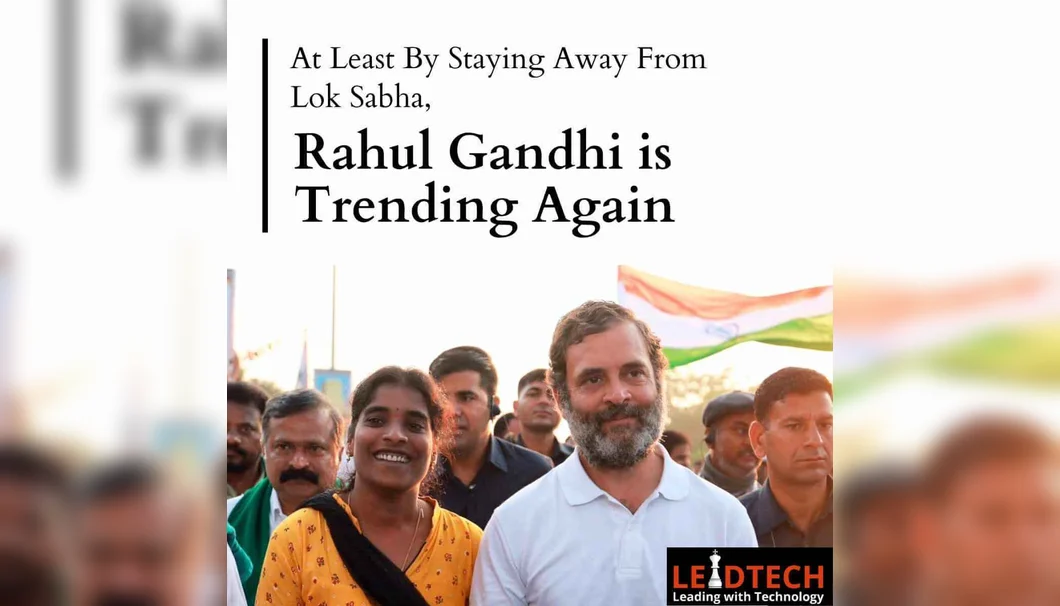
Lok Sabha Absence Puts Rahul Gandhi Back in Spotlight

The heir to the Gandhi legacy, the present representative of the clan, the Congress PM face since before 2004, the unlucky Gandhi – Rahul Gandhi has been described in many ways. But since Modi’s ascent in 2014, there’s been largely one way to describe him, and that is ridicule. He has been ridiculed for his statements, his leadership, his vacations, his electoral failures, just to list a few. The media has been merciless, his support base has been waning, and his Opposition has been growing stronger. It was expected that after 18 years of vying for the Prime Ministerial seat, his spirit would break and he would retract. If not entirely from politics, then at least just from his party’s front. But Rahul did not do that. Rahul has come back into the limelight, and this time, his publicity isn’t all negative.

On 17 December 2022, Rahul Gandhi was trending on Twitter, with over 60,000 tweets mentioning him. What was that about? A statement he made about the Indian soldiers – more accurately, about the lack of preparement of the Indian Army in comparison to China’s, and questioning the facts of previous surgical strikes which took place under Modi’s rule. Unsurprisingly, it got reactions from the BJP’s elite media team, consisting of personalities like Amit Malviya, Anand Ranganathan, Shehzad Poonawala, amongst others. Ministers like Kiren Rijiju also contributed to this debate. Rahul was likened to Bilawal Bhutto Zardari, and news anchors also came down heavily on him.

Yet, despite the whole kerfuffle, Rahul benefitted. This isn’t the first time he has gained media traction this year.

This is because in the year 2022, Congress finally seems to be on a path of revival. Earlier this year, they invited Prashant Kishor of IPAC to fix the party and potentially get involved for the 2024 Lok Sabha polls. Even though the meeting went awry, it was a good sign for the Grand Old Party, which despite struggling all these years, refused to seek external help. Rahul stopped vying for the Party President seat this year, after years of criticism of the Gandhi family, dynasty politics and nepotism. Mallikarjun Kharge took his place, relieving Rahul of another responsibility. Now Rahul could be free to pursue just one thing – and that was trying to remove BJP from the country. He started with his Bharat Jodo Yatra, but it was ignored by the media. So Rahul is simply trying to bring attention to it.

This is what happens when Rahul trends for his “controversial” statement. A Twitter user may scroll to find the first 3 posts about the statement, but the 4th post will inevitably be about a huge rally, with a salt-and-pepper bearded Rahul waving to them. Even if Rahul’s supporters seem to be reducing, there are over 10,000 tweets daily about the Bharat Jodo Yatra, which go unmissed since such a small number usually would not trend. But add in 50,000 tweets which go against Rahul, and the total tally goes up – and it captures Twitter’s attention. Suddenly Rahul is trending.

The polarized audience continue to stay polarized – prima facie, they still dislike Rahul, they still think he has no chance in any polls – but they are subliminally introduced to the flip side of the coin, which is that Rahul is leading a very successful pad yatra throughout the country. The media manipulation tactics, which were successfully used by BJP through the years – putting money in advertising and wooing mainstream anchors to vocalize their support of the party, are now being countered by Rahul and Congress. He is not only trending on Twitter – even news organizations are having to report on him. And that is better than being out of the limelight like he was for several years. He is finally behaving like an Opposition is supposed to behave.

Social media is a strong tool that the ruling party has mastered using, since the boom of the digital age in India. Other parties still struggle with it, and go for either generic media agencies with low political understanding and/or use internal teams with low media knowledge. Leadtech has a dedicated wing to Digital Management, with a primary focus on social media. Contact us today to find out how we can help capture your audiences.

GET IN TOUCH

    Get in Touch


    By clicking Submit, I hereby authorize Leadtech and its affiliates to call, email, send a text through the Short messaging Service (SMS) and/or Whatsapp. The consent herein shall override any registration for DNC/NDNC.

    Categories
    Election PR Management

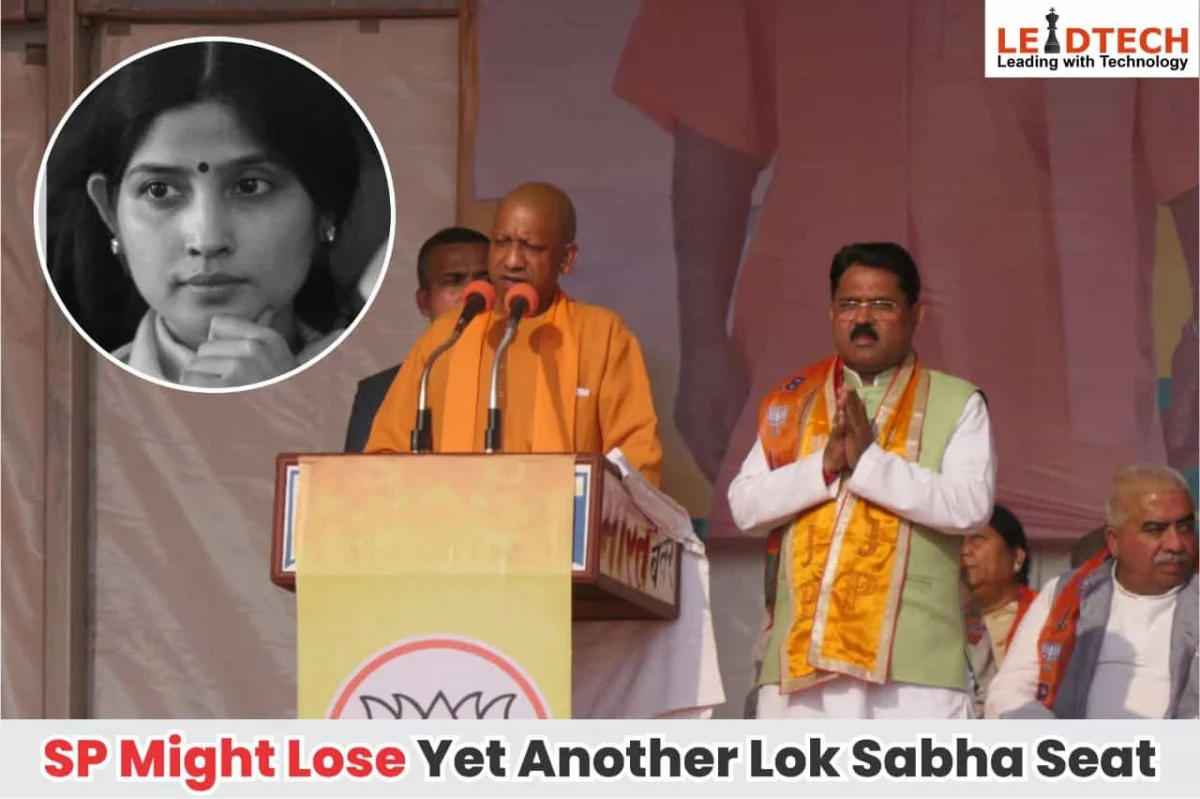
    Mainpuri By-Election – SP Might Lose Yet Another Lok Sabha Seat

    Mainpuri Election

    The whole of Mainpuri is bustling with the cries of SP’s recent campaign slogan, “UP ki Chaabi, Dimple Bhabhi.” After the unexpected passing of SP founder and patriarch Mulayam Singh Yadav, this by-election is a crucial one for Samajwadi Party. They won only 5 seats in the 2019 general elections due to their Mahagathbandhan Alliance, of which they had already lost 2 seats (Azamgarh and Rampur), which went to BJP in the by-polls. Mulayam’s stronghold, Mainpuri Lok Sabha, is now the third seat lost by SP. The question now is – can SP at least retain this seat, or will it go to the BJP again?

    Mulayam Singh Yadav has won this seat 5 times, but non-consecutively (except 2009-14). Samajwadi Party has won this seat consecutively since 1996. This seat has always been a stronghold of SP. However, in the past few years, the vote share of SP has gone down. From 2014, when his grandson Tej Pratap Singh won with over 32% margin over BJP’s Prem Singh Shakya, the margin in 2019 was barely 9% – even though Mulayam himself contested. Even the 5 Assembly segments under Mainpuri Lok Sabha were threatened. In 2022, two of the five seats were won by BJP (Bhongaon and Mainpuri), when in the past, all 5 used to be won by SP. Both Yogi Adityanath and Modi factors have reduced the influence of SP in Mainpuri. This was also exacerbated by the internal conflicts of the Yadav clan – differences between Shivpal and nephew Akhilesh.

    Caste wise, it is clear why Mainpuri was a Samajwadi Party bastion. Almost 4.25 lakh voters belong to the Yadav community, which forms approximately 20% of the votebase. The Shakya community consists of 3.25 lakh voters. Both these strong OBC groups used to vote for SP. The constituency is actually Mulayam Singh Yadav (popularly known as ‘Netaji’)’s home constituency. It was the first Lok Sabha seat in which he contested and won, way back in 1996.

    In this by-election, which took place on 5 December 2022, both major parties projected new faces.

    SP decided to nominate Dimple Yadav, the daughter-in-law of Netaji, and the wife of former CM Akhilesh Yadav. Her candidature even led to the union of the Yadav family, with PSP(L) head Shivpal Singh Yadav campaigning in favor of Dimple. Her electoral history is tainted – she won in 2012 only when her husband vacated the Kannauj Lok Sabha seat to become the CM, and in 2014, when the opposition withdrew the nominations. Whenever she has been in a real competition, like in 2009 against Raj Babbar (INC) or in 2019 against Subrat Pathak (BJP), she has lost. However, again, this time, she has the advantage of her father-in-law’s illustrious career and on-ground popularity.

    BJP decided to project Raghuraj Singh Shakya, who very recently quit PSP(L). He has served as an SP MLA from Etawah Assembly from 2012-17, and as an MP from Etawah Lok Sabha, from 1999 to 2009. After that, the seat became reserved for SCs, and hence Shakya could not contest. His decision to join BJP may have been fueled by the internal differences within SP and PSP(L), and his admiration of PM Narendra Modi.

    Leadtech’s top analysts have been involved in UP elections since 2008. With a tremendous amount of caste data collected by our surveyors over the years and through the elections, Leadtech has a high accuracy in result prediction.

    BJP, in this case, has higher chances of winning Mainpuri, mainly due to the caste consolidation. They will receive support from communities like Shakyas (original SP loyalists), Thakurs, Brahmins, and Lodhi. The Dalit vote will be split, and a small percentage of Yadav vote will go to BJP too. BJP has already shown that it plans to capture every by-poll and take back seats that they could not win in 2019. Their on-ground campaigning, combined with Modi’s national appeal, has resulted in a lot of success for BJP in even traditional SP seats. Dimple’s only benefit this election is the sympathy vote, which she will garner due to her father-in-law’s passing. Besides this, the caste factor will not work in SP’s favor this election.

    The results for the by-poll are expected to come on 8 December 2022. If SP manages to retain it, their representation in Lok Sabha will increase to 3 – or else, it will be a humiliation for them and raise questions about their future in Uttar Pradesh. Another consequence will be that if she loses, there will be no member of the Yadav clan in either Lok Sabha or Rajya Sabha – which will be a first for the family since 1996.

    GET IN TOUCH

      Get in Touch


      By clicking Submit, I hereby authorize Leadtech and its affiliates to call, email, send a text through the Short messaging Service (SMS) and/or Whatsapp. The consent herein shall override any registration for DNC/NDNC.

      Categories
      Election PR Management

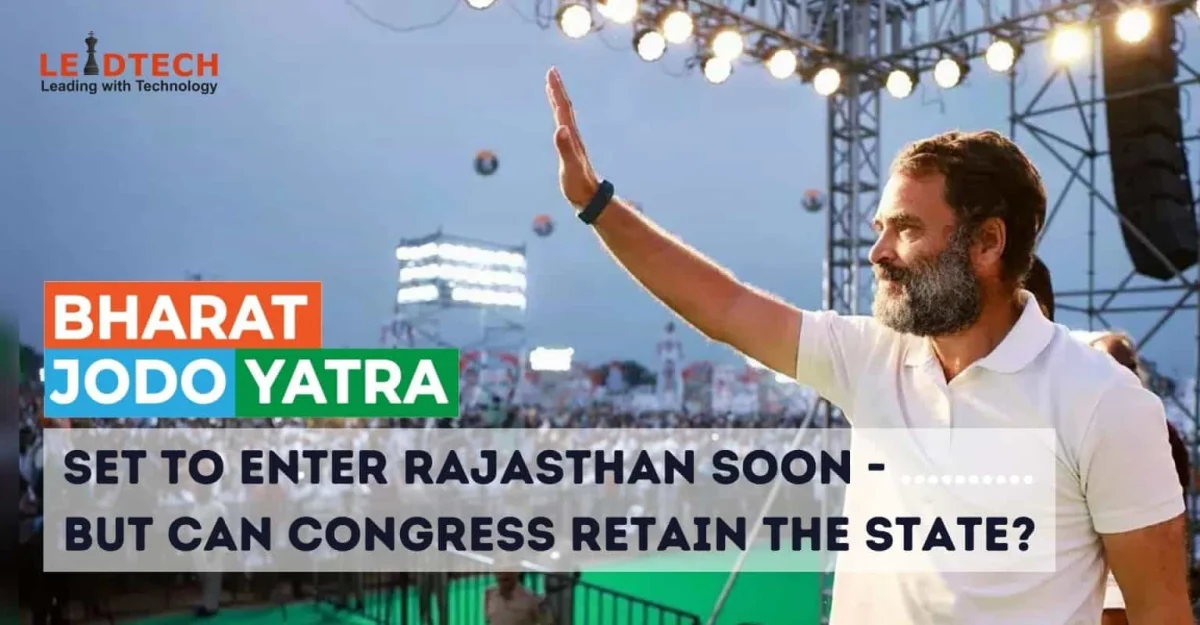
      Bharat Jodo Yatra Enters Rajasthan: Can Congress Hold Power?

      BHARAT JODO YATRA

      There are only two states in the country where Congress is ruling independently, without the support of a coalition partner – Chhattisgarh and Rajasthan. Although Chhattisgarh, after 15 years of BJP rule, gave the mandate to INC in the last election (2018), Rajasthan has a so-called tennis court arrangement. Since 1998, every term, the party in power changes, andthe other one takes control. Since 1998, only 2 people, Ashok Gehlot and Vasundhra Raje, have served as the Chief Minister, on and off. What’s more – it’s a well known fact among political circles that these two opposing forces are actually friends.

      While Congress suffered in multiple states since their loss in Lok Sabha beginning 2014, Rajasthan was one of the few states that they won in, and didn’t lose out to political crises like in MP and Karnataka. It certainly wasn’t due to Gehlot’s good governance – his present term has been full of controversies and scandals. Union Home Minister Amit Shah’s speech in September earlier this year highlighted some of the broken promises – the collapse of law and order, high VAT and power tariffs, unemployment, and many more.

      Some allege that Vasundhra Raje is the reason why Gehlot is still in power. It is no secret that Raje has been sidelined from Rajasthan politics almost altogether. She has served two full terms, with many successful schemes, but due to her differences with the BJP high command, Amit Shah in particular, she is no longer involved in the state. She holds no posts – Satish Poonia is the state party president and former state minister Gulab Chand Kataria is the Leader of Opposition despite having a former CM in the assembly. She has the ceremonial post of National Vice President, but no control in her home state. It is not far-fetched for the public to assume that after being denied opportunities, Raje would work against the party, or at least, not find motivation to help the party.

      Despite Raje’s present position, and her potential to prevent BJP forming government next year when Rajasthan goes to the polls, BJP is not in crisis-mode yet. There is no lack of influential leaders from the state. Lok Sabha Speaker Om Birla, for instance, is a gold-medal candidate for the Chief Minister. Gajendra Singh Shekhawat, the MP from Jodhpur, also is favored by Modi-Shah, even though his influence is mainly restricted to Western Rajasthan. There are many underdogs who are also vying for the seat, but the decision “will be up to the party”, they
      all claim.

      Despite Raje’s present position, and her potential to prevent BJP forming government next year when Rajasthan goes to the polls, BJP is not in crisis-mode yet. There is no lack of influential leaders from the state. Lok Sabha Speaker Om Birla, for instance, is a gold-medal candidate for the Chief Minister. Gajendra Singh Shekhawat, the MP from Jodhpur, also is favored by Modi-Shah, even though his influence is mainly restricted to Western Rajasthan. There are many underdogs who are also vying for the seat, but the decision “will be up to the party”, they all claim.

      On the first glance, one may assess Congress’s position in the state as strong, but the party has its own complications. For starters, the CM face for the party is still dubious. 3 term incumbent Ashok Gehlot seems like the more natural choice, but Sachin Pilot has been aiming for the seat for a long time. Even though Gehlot gave up the Congress presidential post to safeguard his position in the state, it would be interesting to see who Mallikarjun Kharge would pick for the face next year. If at all they decide to go with Pilot, a begrudged Gehlot might work Raje-style and help Congress lose. Besides leadership, Congress also has the problem of caste-based vote consolidation – a strategy BJP is a master of, but Congress lately seems to have lost an understanding of. Ultimately, it will depend upon the on-ground work both parties undertake.

      LEADTECH has been a pioneer in Election Management since its inception in 2008. From assisting individual candidates in their constituencies to whole parties in over 20 states, LEADTECH has focused on improving leadership with the help of technology. Contact us to find more information about our past work and how we can help you win in your constituency next year.

      GET IN TOUCH

        Get in Touch


        By clicking Submit, I hereby authorize Leadtech and its affiliates to call, email, send a text through the Short messaging Service (SMS) and/or Whatsapp. The consent herein shall override any registration for DNC/NDNC.

        Categories
        Election PR Management

        Why Start Election Preparations at Least 18 Months Early

        Why You Should Begin Preparations At Least 18 Months Prior to Elections

        Indian elections have become highly competitive in the past decade or so. With data-driven technology seeping deep into the electoral process, simple election techniques have become redundant and highly ineffective. Political aspirants have to work harder than before to shine brighter than their competitors, and ensure they have a profound impact on the constituents who they hope will support them in the polls.

        Most Indian constituencies need a lot of time and attention – either they are naturally heavily populated, or they are sparsely populated but spread in a way that constituents are harder to reach. In either case, a lot of energy needs to be devoted to reach out to each and every voter. Door to door campaigns are the cornerstone of all elections, despite moving into a more digital world, since the technology only complements the traditional process.

        The way to win an election is to map voters in all divisions of a constituency – be it for local corporations, the Assembly, or the Parliament. The aspirant needs to be aware of his/her strong areas and weak areas. This helps guide both manifestos and campaign action – both of which are crucial in flipping weak areas to strong, and also improving the situation in the constituency (and eventually the country).

        This data is not static – it is constantly evolving. Government agencies obviously do not provide such information, and general market researchers and news agencies may have biased data based on their sponsorships. A political aspirant needs to hire an agency for themselves to collect such data on a regular and real-time basis, so they are constantly updated on developments in the constituency.

        Many agencies can provide this service, but one of India’s foremost agencies working largely for individual clients is Leadtech Management Consulting Pvt Ltd. In the past 17 years, they have worked for over 1400 clients with over 95% success rate.

        However, simply mapping voters is not enough. Mapping is only the first step in this lengthy process – and it only reveals the real-time sentiment of the constituency. Constituents need to be influenced, motivated, and persuaded with a strategic vision and promises of a better tomorrow, under better governance. Communication (and narrative building in specific) is also guided by  data. This is followed by mass campaigns, which need to be designed according to the data.

        Political aspirants need to remember that they are not alone in this race. Their competitors are most probably working along the same lines, because as previously mentioned, data-driven elections have become the norm now. All parties and candidates have found that there is no way to win elections (or even attempt to win) except hiring external agencies for assistance and consultation.

        Choosing the right agency, at least 18 months prior to elections, is beneficial for twin reasons. Firstly, you get a headstart over your competitors. Even if they are better liked in your constituency, you will be able to reach more voters much before your competitor can, and thereby swing voters in your favor. This is only possible if enough time is given to the agency to function properly – not if you hire someone at the eleventh hour.

        Secondly, the right consultant with several years of experience can help you design a strong, solid winning campaign. Data is confidential and exclusively for the client, and plans are unique for each client. Hiring them 18 months prior helps you execute more of the strategy as per the plan, or else elements can be missed due to lack of time.

        Contact Vivek Singh Bagri (Director, Leadtech) at 9650060882 if you are a political aspirant and are looking for consultation for upcoming elections.

        Categories
        Election PR Management

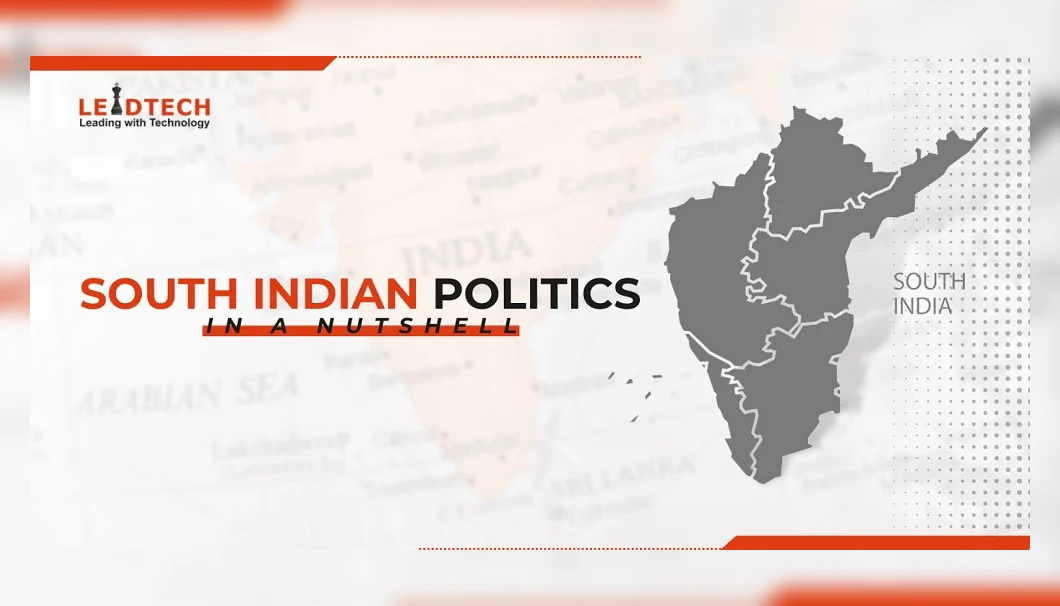
        South Indian Politics – In A Nutshell

        Politics in South India is particularly distinct. Most southern states have strong linguistic and cultural identities, which ensures the inevitable dominance of regional parties, and the subsequent growth limitation of national parties.

        DEFYING THE NORM

        Admittedly, during the early years of post-independence, Congress penetration was deep, but one of the first Indian states to defy the norm was a Southern state (Kerala, 1957, CPI government). Tamil Nadu went next, and elected a DMK government in 1967. Andhra Pradesh and Karnataka both came next in 1983, successively electing TDP (on 9 January) and Janata Party (on 10 January) respectively.

        NARRATIVE BUILDING

        Regional politics is not new in India. Parties always come into existence to satisfy a public need – and regional parties do exactly that. But many of these parties burn out when their narrative weakens or if their narrative becomes too exclusive. TDP was conceptualized by harnessing the Telugu identity, but the party ceased to make it their focal point gradually, and TRS filled that gap. Now TRS is on the same path.

        STILL STRONG

        But many parties continue to sustain themselves, even when external forces attempt to enter the contest. Kerala, which had a highly active, hyper-aware working-class community, naturally gravitated towards the mobilizing Communists as early as the 1950s. Even today, they manage to come back to power intermittently. Congress leader C Rajagopalachari’s insistence on Hindi gave birth to the imposition-resistant DMK, and virtually eliminated Congress from Tamil Nadu for many years to come. Even though Congress now features in TN politics, it is only a minority partner in a SPA coalition headed by DMK; and unsurprisingly, the party still hitting the language chord (BJP) sits as a minority partner in the Opposition. Andhra Pradesh and Telangana have now managed to virtually keep both INC and BJP out of power.

        THE EXCEPTION

        The only possible exception to this trend in South Indian politics is Karnataka. The state is not controlled by 3 parties, as is the popular belief. JD(S) is the main regional party, but it is only influential in a few areas, where loyal caste groups have kept it alive. National parties with singular narratives fill in the gap everywhere else. INC, which has not only lost its national narrative, but also several key leaders, still flourishes under a strong state leadership.

        THE FUTURE

        Democratic politics, to a large extent, is a game. It starts with a narrative, which evolves into a movement, and concludes with the election. If the narrative is strengthened, the need for a sponsored/organized movement is obviated – the public organizes it themselves. The elections then just act as a formality – a yardstick to measure the impact of the narrative.

        Especially in a country as diverse as India, where dialects change every 20 kilometers, a common narrative is not only the best possible strategy, but also the need of the land. The public demands a unifying message – without which they would feel rudderless. Even if it polarizes them, narrows their minds, or causes them discomfort otherwise – it provides a sense of security; of belongingness.

        South India politics may appear like a whole nother game. The states do not align themselves with national narrative, yet they make no attempts to secede. They want to stay a part of the family, but still hold onto their own identity. This shall continue for the foreseeable future – which is what the trends prove too.

        HOW WE CAN HELP YOU

        If you’re a political candidate or party, or even an influential leader with political ambitions, look no further. In today’s age, everyone needs professional expertise in building strong narratives, propagating them, and executing a mass movement. Leadtech has been in this profession since 2008, and is still going strong. Leadtech has handled over 1400 clients and led 95% to victory. With project coordinators and teams employed all over the country, Leadtech’s teams have an in-depth understanding of local politics and sentiments, and the resources to execute campaigns to help their clients emerge victorious. Contact the Director, Vivek Singh Bagri at 9650060882 for more information.

        Categories
        constituency management

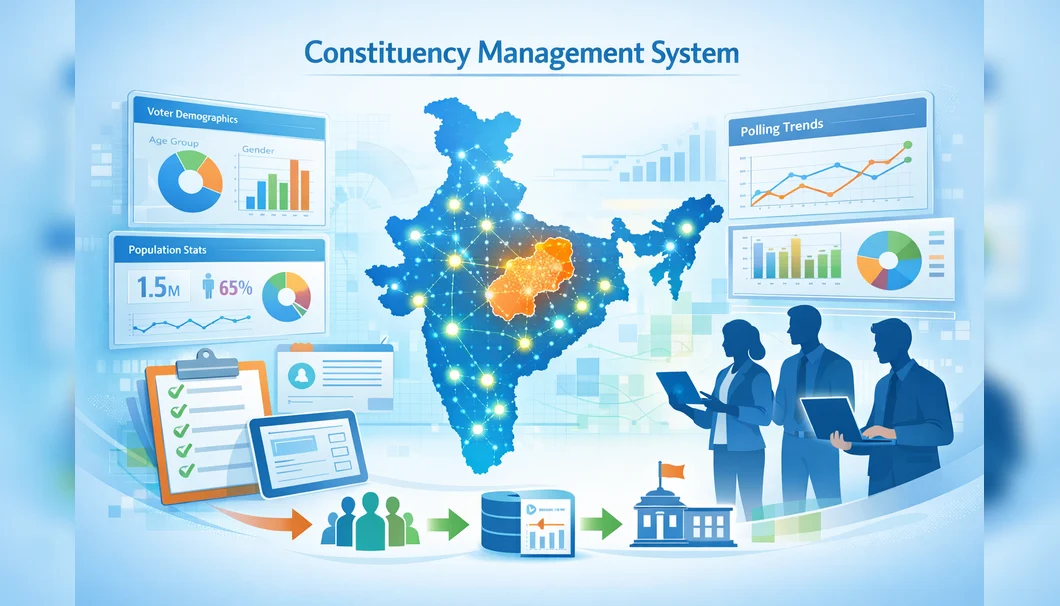
        Constituency Management System

        Today we are living in the era of ICT (information, communication and technology) where people are well connected to each other through multiple platforms most predominantly on social media. If any incident happens in one part of the state, it would have deep-rooted consequences in other parts of the state too. Since politics is never static rather a dynamic state of affairs and political changes happen every day. And these changes have direct or indirect implications on various stakeholders’ i.e. political parties, civil society organizations, political consultancies, media organizations and of course people at large of that particular constituency.Constituency Management System In politics, winnability does a matter and in order to win the election, political parties should have all means of communication to control or influence the minds of voters/electors, their actions, taste and try to provide alternatives to the existing system. Therefore the role of Constituency Management (CM) becomes very crucial in electoral politics.

        Constituency

        A constituency is a political unit also called an electoral unit in our political system. It consists of all eligible voters/electors registered with the local administration who elect their representatives to a legislative or other public body.

        Management

        From the electoral point of view, the term management stands for managing risks, and optimal use of resources to meet the specific objectives and policies of the organization.

        Constituency Management (CM)

        Management of constituency is an organized activity which requires a dedicated team of young professionals who help a candidate manage or control his/her constituency more pragmatically.

        • Constituency Management (CM) deploys various strategies like maintaining the database of all eligible voters and segregating on the basis of caste, class, male and female, literacy and so on.
        • CM keeps updating a candidate about the political developments in the constituency and their possible implications in election politics. Ultimately makes his/her presence more visible in a constituency.
        • Keep updating party workers at the grass-root level via using various social media platforms and taking their feedback. For instance, targeting selected voters organizations, i.e., farmers organizations, Asha workers, Mahila Morcha, Student’s organizations, traders organizations including small traders, retired teachers associations, ex-army officers associations, targeting selected voters by organising social camps or fairs or other social gatherings while taking into consideration of local media. Based on ground realities and the candidate’s strengths and weaknesses, CM would suggest various strategies to win election.
        • Maintaining good relations with all influential people of the areas, colonies, wards, villages, etc.
        • Special focus will be given to voter lists, keep updating them, and periodically checking it very thoroughly while making goodwill with the concerned officers of the Tehsil at the district level.

        What kind of role LEADTECH Political Consultancy can play? 

        LEADTECH Political consultancy is a professional organization led by young minds of different disciplines. It has a large presence, gained popularity and recognition in the political arena and worked with various political parties at all levels and helps them to win in their electoral politics.

        It has become a leading company which mainly uses technology-driven solutions to electoral politics. Owing to the rapid changes in politics, LEADTECH has been keeping innovating, evolving new strategies and providing IT (Information Technology) based solutions to manage the politician and election works.

        Recently, LEADTECH has developed three software regarding Constituency Management (CM) as if

        • GOTV Cum Voter Search Software
          Using this technology one can update the voter’s details listed on the electoral roll. Booth in charge can update the present situation on Election Day. Accordingly, party workers can be asked to take convenient action in “Get out the Voter” for voting.
        • Constituency Management Software
          All the details of the voters, developmental work, Jan Sampark, Household Info, Mobile numbers of the voters, caste demographics and voting trends can be managed effectively with our Constituency Management Software.
        • Promotional Mobile Application
          Now, LEADTECH is developing a promotional app to communicate with voters effectively. Using this app, people can download the leader’s app to express their concerns, inform regarding developmental issues, the invitation can be sent quickly, and finally can help in making more party workers and volunteers.