
Categories
Election Jan Sampark Leadtech Services services Voters

Power of Jan Sampark: Why Continuous Voter Engagement Matters

In the ever-changing landscape of politics, one truth remains constant: voters are not to be taken for
granted. Their opinions are fluid, their preferences can shift in the blink of an eye, and a change in
circumstances can alter their decision-making process. This makes it essential for political leaders and
parties to keep a close, ongoing relationship with their voters. A concept that has emerged as an effective
means of voter engagement is Jan Sampark – a campaign model that emphasizes direct communication,
frequent interactions, and timely responsiveness.

The Importance of Jan Sampark

Jan Sampark, meaning “people’s contact,” isn’t just about leaders showing up for rallies or events during
election time. It’s about creating a lasting, genuine connection with the people you represent. Leaders
who invest in consistent, personal contact with voters are more likely to understand their concerns,
address their grievances, and remain relevant when election time comes around.
Voters are increasingly aware of the world around them. They are no longer solely swayed by grand
speeches or flashy rallies. In fact, their loyalty can shift unexpectedly, even with a slight change in the
political environment. Therefore, building and maintaining a rapport with voters is key to securing their
support, especially in an age where trust is constantly in flux.

Beyond Traditional Campaigns

Traditionally, campaigns were heavily reliant on face-to-face interactions. However, in today’s digital
age, Jan Sampark can extend beyond physical presence. Imagine a situation where a leader may not
physically show up at every event or in every local area. Instead, party workers and volunteers continue
to maintain contact with voters. These individuals become the link between the leader and the people,
offering a consistent reminder that the leader is present, listening, and engaged with their concerns.
This ongoing engagement is more than just a series of handshakes or photo ops. It creates a sense of
reliability and trust, where voters can easily reach out to their leaders when needed. It shows that the
leader is not just visible during election time, but is a consistent presence in the lives of those they
represent.

Social Media: A Leader’s Virtual Presence

In the modern world, social media has become an extension of a political leader’s presence. Platforms
like Twitter, Facebook, and Instagram are no longer just tools for announcements; they are a reflection
of the leader’s views, actions, and ongoing mission. A well-maintained social media page allows leaders
to connect with their audience in real-time, share their ideas, engage in meaningful dialogues, and
respond to the concerns of voters quickly.

For voters, social media is often the quickest and most direct way to know what their leaders are up to.
Whether it’s posting updates about the leader’s visits to different regions, sharing their personal views
on critical issues, or showcasing initiatives that benefit the community, social media platforms allow
voters to stay informed.

But it’s not just about broadcasting messages. Social media creates an interactive space for voters to
engage with leaders, ask questions, and voice concerns. This dynamic creates a sense of accessibility,
as voters feel that their leaders are within reach.

Why This Matters: Keeping Voters Engaged and Informed

In a fast-paced world filled with distractions, maintaining a strong connection with voters requires
persistence, creativity, and consistency. By embracing Jan Sampark, political leaders not only foster a
more engaged electorate but also ensure that their leadership remains relevant over time. Voters
appreciate the personal connection, and this strengthens their trust and loyalty.

Through constant engagement—whether through local campaigns or virtual platforms—leaders can
shape a more informed, empowered, and committed voter base. And when the time comes for elections,
the relationship that has been built through these ongoing interactions will be invaluable.

So, while it may seem tempting to focus solely on the grand spectacle of traditional campaigns,
remember that the real work happens in the day-to-day contact with voters. By staying close to the
people, understanding their grievances, and consistently making them feel heard, political leaders can
ensure their influence and support remain strong, not just for elections, but for the long-term.

Conclusion

In the end, Jan Sampark is not just about connecting with voters during election time—it’s about creating
a relationship that lasts. When leaders show up consistently, both physically and virtually, and maintain
an open line of communication, they not only ensure they are seen but also that they are heard. Voters
want to feel acknowledged, supported, and connected to their leaders. By prioritizing this ongoing
engagement, political leaders can build trust, loyalty, and a foundation for long-term success.
Categories
Election PR Management

Why Start Election Preparations at Least 18 Months Early

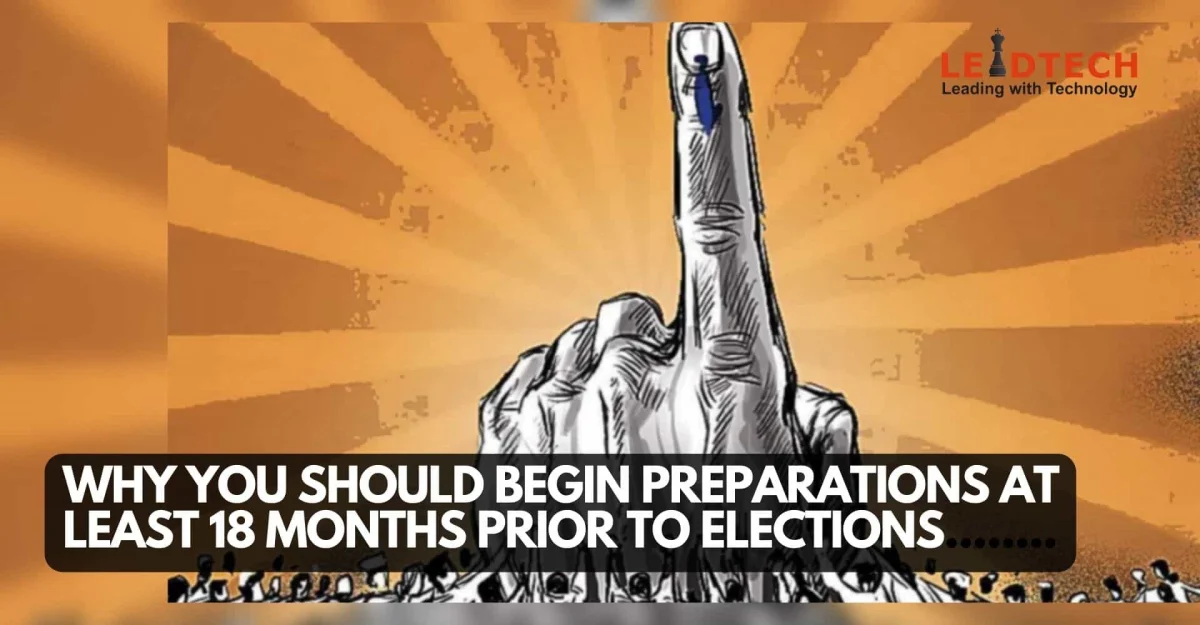
Why You Should Begin Preparations At Least 18 Months Prior to Elections

Indian elections have become highly competitive in the past decade or so. With data-driven technology seeping deep into the electoral process, simple election techniques have become redundant and highly ineffective. Political aspirants have to work harder than before to shine brighter than their competitors, and ensure they have a profound impact on the constituents who they hope will support them in the polls.

Most Indian constituencies need a lot of time and attention – either they are naturally heavily populated, or they are sparsely populated but spread in a way that constituents are harder to reach. In either case, a lot of energy needs to be devoted to reach out to each and every voter. Door to door campaigns are the cornerstone of all elections, despite moving into a more digital world, since the technology only complements the traditional process.

The way to win an election is to map voters in all divisions of a constituency – be it for local corporations, the Assembly, or the Parliament. The aspirant needs to be aware of his/her strong areas and weak areas. This helps guide both manifestos and campaign action – both of which are crucial in flipping weak areas to strong, and also improving the situation in the constituency (and eventually the country).

This data is not static – it is constantly evolving. Government agencies obviously do not provide such information, and general market researchers and news agencies may have biased data based on their sponsorships. A political aspirant needs to hire an agency for themselves to collect such data on a regular and real-time basis, so they are constantly updated on developments in the constituency.

Many agencies can provide this service, but one of India’s foremost agencies working largely for individual clients is Leadtech Management Consulting Pvt Ltd. In the past 17 years, they have worked for over 1400 clients with over 95% success rate.

However, simply mapping voters is not enough. Mapping is only the first step in this lengthy process – and it only reveals the real-time sentiment of the constituency. Constituents need to be influenced, motivated, and persuaded with a strategic vision and promises of a better tomorrow, under better governance. Communication (and narrative building in specific) is also guided by  data. This is followed by mass campaigns, which need to be designed according to the data.

Political aspirants need to remember that they are not alone in this race. Their competitors are most probably working along the same lines, because as previously mentioned, data-driven elections have become the norm now. All parties and candidates have found that there is no way to win elections (or even attempt to win) except hiring external agencies for assistance and consultation.

Choosing the right agency, at least 18 months prior to elections, is beneficial for twin reasons. Firstly, you get a headstart over your competitors. Even if they are better liked in your constituency, you will be able to reach more voters much before your competitor can, and thereby swing voters in your favor. This is only possible if enough time is given to the agency to function properly – not if you hire someone at the eleventh hour.

Secondly, the right consultant with several years of experience can help you design a strong, solid winning campaign. Data is confidential and exclusively for the client, and plans are unique for each client. Hiring them 18 months prior helps you execute more of the strategy as per the plan, or else elements can be missed due to lack of time.

Contact Vivek Singh Bagri (Director, Leadtech) at 9650060882 if you are a political aspirant and are looking for consultation for upcoming elections.

Categories
Election 2022 Political research

6 Reasons Congress May Stay in Opposition for the Next Decade

CongressCongress was the dominant party in India post independence. For the first 25 years, they ruled without strong opposition. From the 1970s to 1990s, INC often lost power, but they always managed to come back. They were indisputable winners – with secure vote banks in every nook and corner of the country. But post 2014, their situation has only been described as “dismal”. BJP’s dominance at the Center has virtually eliminated INC from its original position. But is it all due to the BJP? Let’s explore –


  1. Leadership – The high command bodies of Congress (eg. Working Committee) are generally headed by Gandhi family members. Many members have never even contested elections, like Ambika Soni.
  2. Organizational Structure – INC has a lot of leaders, but none of them are organized. Each of them acts on their own, which is detrimental to the party. In-party dissatisfaction, voiced mainly by the G23, also makes the party look weak.
  3. History – INC has a long history of corruption, nepotism, and fascism – the shadow of which it still can’t escape.
  4. Defection – Party seniors, who have been associated with the party for a long time, are now beginning to leave the party since they no longer see benefit in this association. Another major reason for defection is lack of rewards – Jyotiraditya Scindia left because INC refused to make him the CM of MP.
  5. Narrative – INC’s media team is probably their biggest drawback. Their public narrative, explaining their consecutive defeats across states, is always that their message never reached the audience in the way they had intended. INC is also unable to control the media storm about Nehru, or bank upon their involvement with the independence movement. Congress still hasn’t changed their media structure.
  6. Behavior – INC has even begun behaving like the Opposition. Their stances are pro-minorities to distinguish themselves from BJP, but minorities are firstly not enough to win, and secondly, even these minorities aren’t totally polarized in their favor.

INC is a stubborn party with a weak foundation. Their decline is not only due to BJP, but their own cons – the range of which includes the aforementioned. Even with a strategist like Prashant Kishor on board, they are unlikely to gain back their position in the country.

Categories
Election 2022 Political research

10 Quick Facts About Gujarat Elections Campaign

  1. Gujarat Vidhan Sabha is the unicameral legislature of the state of Gujarat, with 182 seats.
  2. Post independence, the area of Gujarat came under 3 states – Bombay, Saurashtra, and Kutch. Gujarat, as a state, was formed in 1962.
  3. From 1962 to 1995, INC had varying levels of success in this assembly, forming the government on numerous occasions.
  4. Their main opposition during this period kept changing, from Swatantra Party (liberalism) to INC (O) (a faction of Congress).
  5. INC lost in 1975 due to a strong opposition presence – most of which banded together to form a short-lived coalition government. However, in the 1980s, they revived themselves using the KHAM formula, and won 149 out of 182 seats – the highest majority in Gujarat’s history.
  6. However, since the late 80s, BJP began rising on the national front, especially in Gujarat, which serves as the home state for the party. In 1990, BJP could form a coalition government with Janata Dal, but the coalition broke in less than 8 months, and INC became the coalition partner.
  7. Since 1995, Gujarat has been a BJP bastion. BJP has won here consecutively for 6 terms.
  8. However, in the initial years of BJP dominance, from 1995 to 2001, due to infighting and defections, Gujarat saw 4 different Chief Ministers from 2 different parties. In the first term, BJP lost the majority in the assembly and RJP formed the government. In the second term, BJP maintained its majority but the then-incumbent CM Keshubhai Patel resigned due to ill-health, paving the way for Narendra Modi. Post that, BJP has been consistently strong.
  9. Likewise, the party’s vote share was in the 42% to 45% range during its initial years, but jumped to the 48% to 50% range during the Modi era (which lasted almost 13 years, until 2014 when Modi took over as PM). In the past 8 years, Gujarat has seen 3 new CM faces, including the state’s first female CM.
  10. However, despite a consistently high vote share, BJP’s seats have decreased progressively, from 127 seats in 2002 to 99 seats in 2017. INC is again emerging as a strong opposition face, witnessing an increase of 26 seats in the same period, mainly due to the evolution of the KHAM formula into the KHAMP formula.

Gujarat Elections Campaign 2022

Gujarat’s political future is uncertain, as the main opposition party, INC, is growing stronger. New parties like AAP are also trying to elbow their way into Gujarat politics, which may split the votes in future. The results of the upcoming 2022 Gujarat Election Campaign may surprise India.

LEADTECH has worked in 8 constituencies in the 2007, 2012, and 2017 Gujarat Legislative Assembly elections, and 2 constituencies in the 2014 and 2019 General elections in Gujarat. Leadtech is a non-partisan political consultancy, with clients from all social and political backgrounds. Over 85% of our projects have been fully successful, in which our clients win the elections by large margins. The others have witnessed a large upswing in vote shares, which resulted in close bipolar contests, even if not a win.

Categories
Election 2022 Election PR Management Political research

Can Congress Win Gujarat Assembly Election 2022?

Indian National Congress had a stronghold over the state assembly of Gujarat since its inception in 1962, which was occasionally threatened by short-lived opposition. However, since 1995, BJP has become dominant in the state by breaking the INC winning streak.

INC had several reasons for its win. Initially, INC banked upon its historical involvement in India’s independence and its commitment to modern India’s development. They did not face stiff competition from any of the opposition parties over the years. The opposition had strongholds only over certain communities, for example, Swatantra Party was strong among rich and middle class peasants, but even these communities were not completely alienated from the INC.

In 1974, following the Nav Nirman movement, the then-incumbent Congress CM, Chimanbhai Patel had to resign. This led to a period of President’s rule, following which fresh elections were held. In 1975 elections, INC emerged as the single-largest party, but couldn’t form the government, since all the opposition parties came together. But this was followed by the National Emergency, and within a year, the dissolution of the state government. INC briefly came to power again, but it was short lived.

The 1980s saw a massive revival of the Congress, mainly due to the KHAM formula. KHAM, which stands for Kshatriyas (including Kolis), Harijans, Adivasis, and Muslims, formed the major vote bank of INC. This caste equation appealed to the already secure voter groups of INC (like SC, ST and Minorities) but also polarized the populous Koli community in INC’s favor, which formed 24% of the population. INC used reservation as a tool to garner votes from these communities. This led to INC winning the largest majority in Gujarat’s legislative history, winning 149 out of 182 seats.

1990 saw a completely different wave, as BJP was gaining prominence nationally. INC won only 33 seats, and JD formed the government in coalition with BJP. However, INC managed to bring back Chimanbhai Patel, and stayed in power. But this lasted only till 1995.

1995 onwards, INC lost its winning streak and was reduced to the status of main opposition. Their vote share has been consistent too – in the 38% to 40% range. However, INC has been  progressively flipping more assembly seats – in 2002, they won 51 seats, but by 2017, they had won 77 seats. This can be credited to Hardik Patel, Jignesh Mewani, Alpesh Thakor, and Bharatsinh Solanki – who helped evolve the KHAM formula into the KHAMP formula – now inclusive of the Patels – a group previously alienated by INC.

Congress, although historically strong in the state, had lost its majority in the 90s, and could not revive it since then. However, they have a strong formula which could work in their favor, if executed right. We see evidence of this in the 2017 election results – the first time since 1995 when BJP failed to cross 100 seats. In fact, the winning margin of BJP was reduced to just 22 seats in 2017, compared to 54 seats in 2012. INC, being the main opposition, secured most of the remaining seats.

To win, INC firstly needs a credible CM face. In addition to that, they need a strong narrative, which would place them as a better alternative to BJP. They should consider targeting urban areas as well, by expanding the KHAMP formula. They must also beware of AAP, which plans to enter Gujarat politics. Most importantly, if INC wants to win, it needs to target certain assemblies in which it is strong, but loses by slim margins. In these cases, hiring a reliable political consultancy can help them win more seats and secure a majority in the upcoming Gujarat Assembly Elections 2022.

Leadtech is a political advisory firm with 15 years of experience in Gujarat legislative and parliamentary elections. 85% of our clients have won with thumping majorities in their constituencies, and the remaining have seen substantial upswing in their vote share. Contact us now to find out more.

Categories
Assembly Election Political research

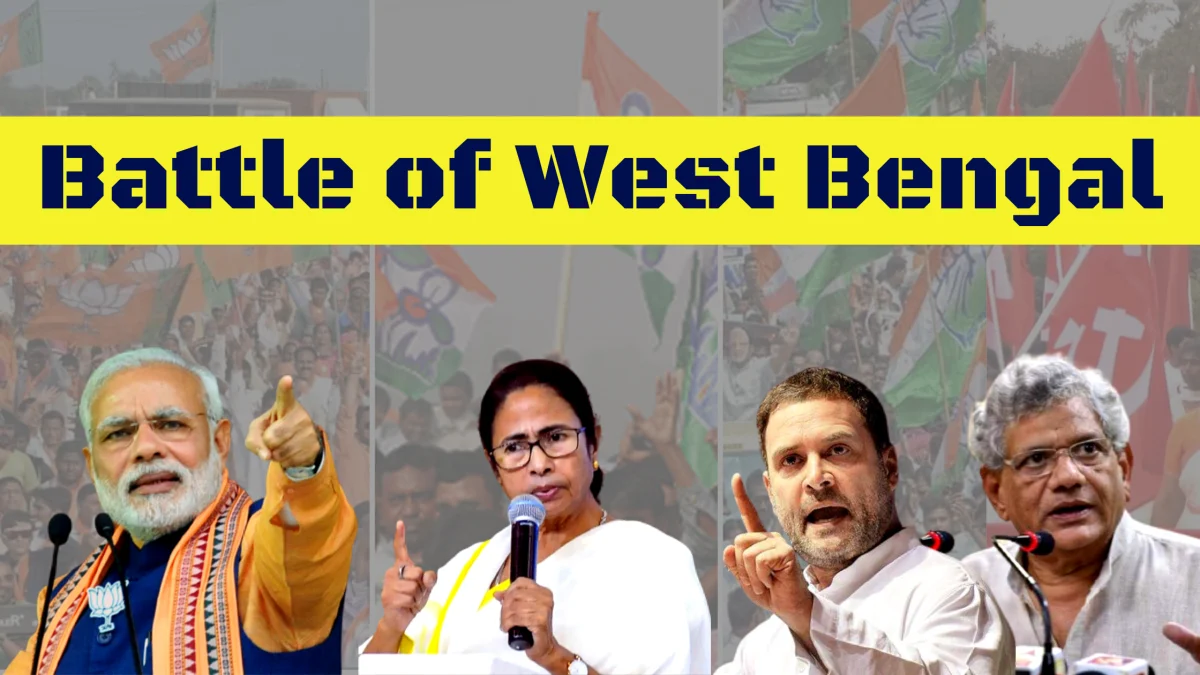
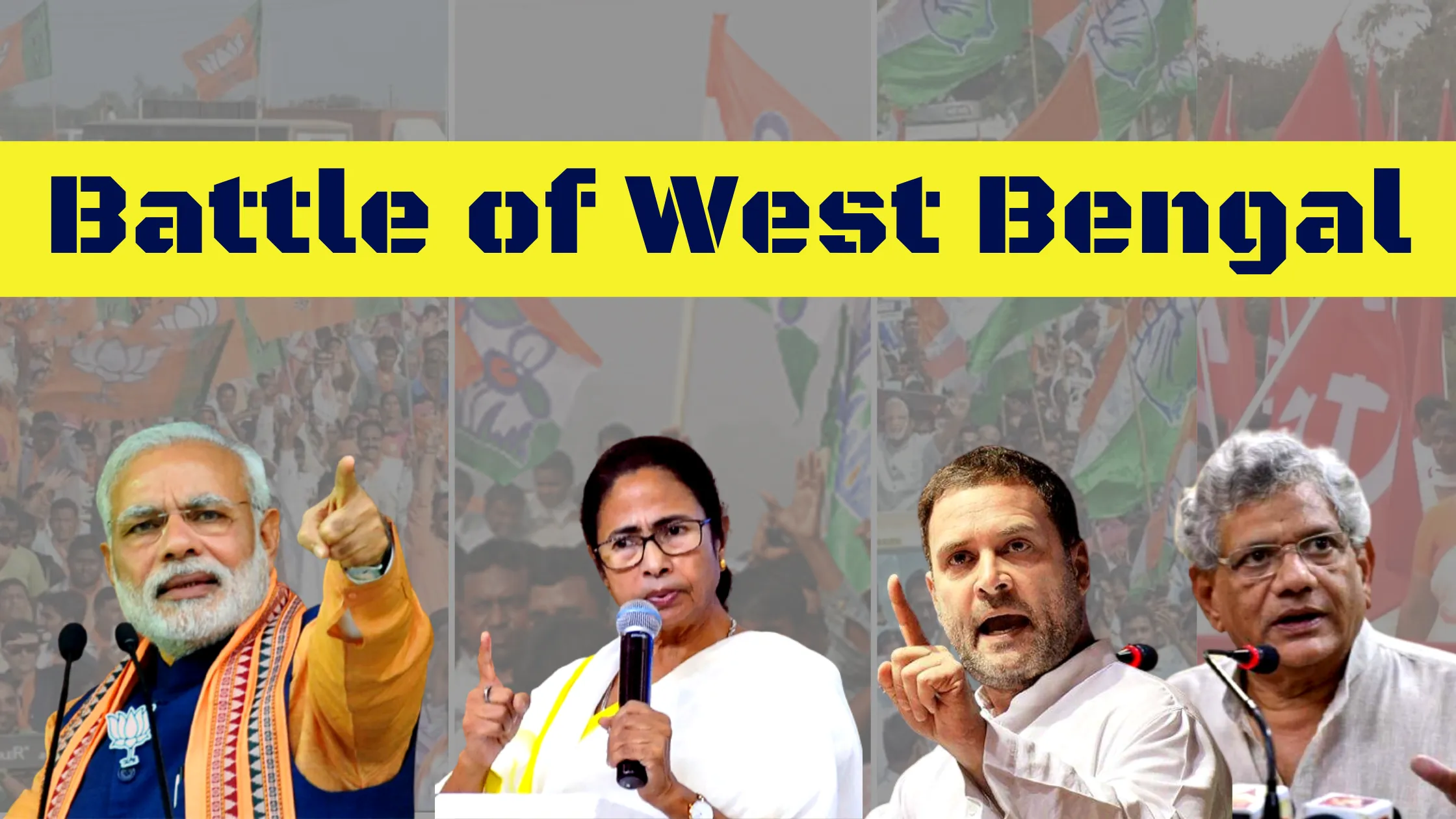
Battle of West Bengal

West Bengal Election 2021

In an attempt to stir the political conscience of West Bengal, the All-India Trinamool Congress used the anti-industrial sentiments of the population as a campaigning tool in 2011. A decade later, the party’s aversion to fast-paced industrialization has landed it in murky waters. With the advent of formidable opposition, the 2021 West Bengal Legislative Assembly Election has proven to be diverse in terms of participation and campaigning issues, ahead of polling.

The major parties contesting election in 2021 include the All-India Trinamool Congress (Federal Front), the Indian National Congress along with Communist Party of India – Marxist (Mahajot) and the Bharatiya Janata Party. The Trinamool Congress has retained its approach of rolling out mass distributive and other policies right before election season. With policies like Swyastha Sathi, a healthcare initiative, and Duare Sarkarand, the party hopes to retain its voter base. Party leadership has also made use of the ‘othering’ approach to draw distinction between the BJP, a predominantly Hindu party, and homegrown TMC. The party has also sparing used the Citizenship Amendment Act to attack the BJP.

BJP alleges that the Trinamool Congress lacks vision for the state. The party promises more rapid industrialization and economic development in the state if voted to power. Additionally, the Bharatiya Janata Party has also employed use of phrases such as “Ebar Bangla, parle shamla” (Save Bengal this time) hinting at Mamata Banerjee’s strategy of minority appeasement and lack of good economic governance. The opposition, including the INC and CPI (M) along with the BJP have severely criticized Banerjee’s use of political violence to retain voter support.

In 2016 Legislative Assembly Election the primary campaigning issues used by the opposition were the Narada and Saradha scandals, lack of industrialization, and flaming of political violence by TMC. However, the party responded by introducing mass distributive schemes of grains and pulses for the poor and by restoring infrastructure across the state. Millions of minority students were handed out scholarships and the Muslim community was registered under the OBC category.

While political strategies change with every election cycle, their nature remains stagnant. Parties pick on each other’s shortcomings to secure their own vote bank. However, instances of violence close to elections have become more predominant in West Bengal with no solution in sight.