
Categories
Political research

BJP in UK: Downfall or Strategy Against Mamata Banerjee?

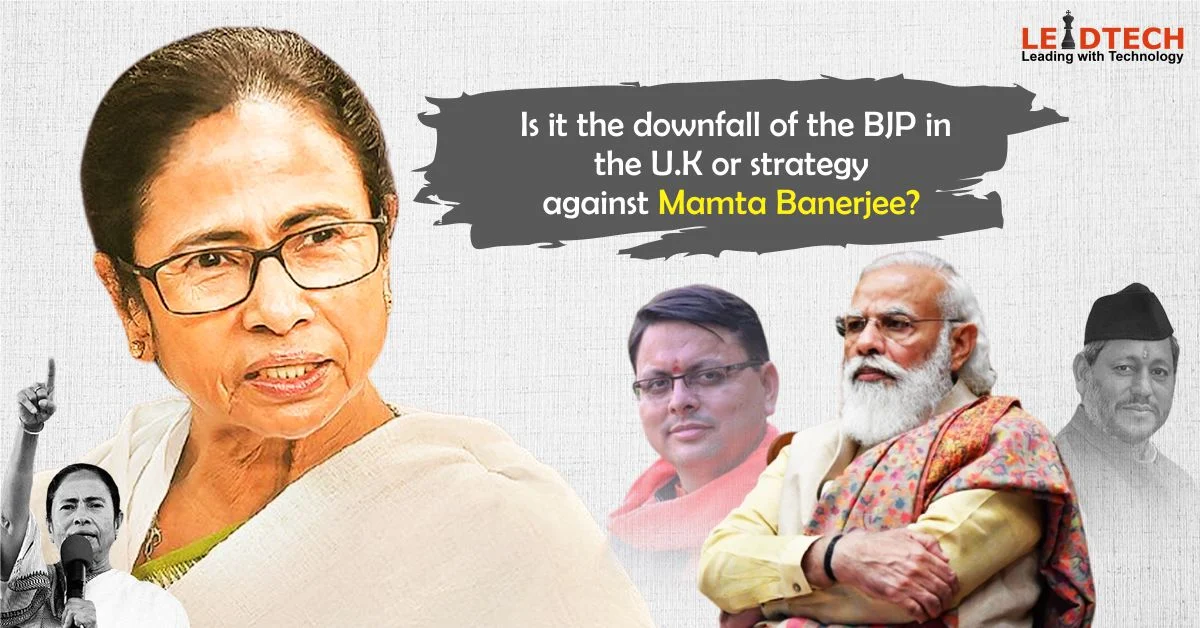
The tenure of Uttarakhand’s CM has been in turmoil since the day state was formed. We have witnessed that hardly any CM has completed his full tenure without being faced either internal rivalry or anti-incumbency. Uneven developments in the state, hill vs plain divide, caste equation and above all leader’s personal relation with central high command (Delhi), etc. being considered for political instability.  As many political pundits observed that the exit of two BJP chief Ministers i.e. Trivendra Singh Rawat and Tirath Singh Rawat was not just a constitutional crisis.  Let’s go into the deeper analysis of political developments that have increased political instability in the state.

Trivendra Singh Rawat (18th March 2017 to 10th March 2021):

He remained in the office for 3 years and 357 days. Many political observers have cited various reasons for the resignation of Trivdendra Singh Rawat such as
(a) his due to distance relationship with BJP central leadership i.e. Modi-Shah,
(b) Putting restriction in the organization of Kumbh Mela,
(c) Over-dependence on Bureaucracy,
(d) Internal rivalry within BJP and lack of expansion of the cabinet, etc.

In order to unite all factions, BJP high command appointed Madan Kaushik as Uttarakhand Chief and asked him to assess the ground reality. Meanwhile ignoring the fact that Tirath Singh Rawat was not a leader of masses being elevated to the post of CM due to his close relationship with Bhagat Singh Koshyari, a committed RSS pracharak and current governor of the state of Maharashtra. While neglecting Anil Baluni and Dhan Singh Rawat, both are close to RSS and enjoy goodwill in central leadership as well.

Tirath Singh Rawat (10th March 2021 to 4th July 2021):

After becoming the CM, Tirath Singh Rawat reversed many vital decisions of his predecessor Mr. Trivendra Singh Rawat such as
(a) Organizing Kumbh Mela in the midst of covid-19 and putting people’s lives in danger,
(b) Commitment to disband Char Dham Devasthanam Board
(c) Putting on hold of creation of commissioner ate at Gairsain
(d) Questioning women/girls who were wearing ripped jeans, etc.

Below we have highlighted two issues that triggered the politics of Uttarakhand as if

Kumbh Mela the super spreader of Covid-19 second waves:

Kumbh Mela means a lot to Sanatanies and to Hindus and so as the responsibility. The responsibility bearer should make clear and strict decisions and address the guidelines to the public of the State and the people who will visit the Mela from other States. Rather than this, he (Mr. Tirath Singh Rawat) took the decision to remove the requirement of the Covid test. He further said, “Kumbh happens only after 12 years. Therefore, we do not want people to miss on the opportunities of experiencing the festivals”. So, this left him surrounded by controversies, and courting the controversies over the fake RT-PCR test during the Kumbh Mela and mismanagement of the issue had also affected his goodwill.

Opening of tourism Sector:

To boost the tourism sector, the hotelier requested the former CM to remove the restriction of RT-PCR in tourists and allow hotels to operate 50%-75% occupancy. Just to boost the tourism sector during Covid-19, when the corona was at its peak, it obviously questions the government whether they were putting the entire state at stake just to boost the tourism sector.

Is BJP indirectly trying to target the Mamta Banerjee?

On the 3rd of July, 2021 in front of the Union Minister Mr. Narendra Singh Tomar and other BJP leaders a new CM will be assigned to the State, since Mr. Tirath Singh Rawat filed the resignation within 4 months of minister ship of the State. For this reason he could not handle the situation of the state, which lead the state to instability. “Target is not Tirath Singh Rawat but Mamata Banerjee. Tirath Singh was the sacrificed goat who had been sacrificed to ensure that Mamta did not get elected. The way she has challenged the prime minister. We all know the PM does not accept any challenges. We have seen what happened to L K Advani and Murli Manohar Joshi” said Congress MLA and deputy leader of the opposition Karana Mahra in an interview.

Let’s have a look at legal provisions:

As per article 164 (4) of the Constitution, “a Minister who for any period of six consecutive months is not a member of the Legislature of the State shall at the expiration of that period cease to be a Minister. Further, Section 151 (A) of Representation of People Act 1951 says that by-elections to be held for Parliament or State Legislature for a vacant seats within 6 months. If we read Section 151 (A) with Article 164 (4) then it lays down two conditions:
(I) if the period of the vacant seat is less than a year then there is no need to conduct by-election
(II) if the Election Commission of India in the consultation with Central Government certifies that it is difficult to held by-election within the stipulated time period.

Therefore the central authority of the BJP has not willing to support of by-election in the state of Uttarakhand that resulted in resignation of Tirath Singh Rawat. Many political pundits said that it might affect Mamata Banerjee’s CM candidature as well.

In case of Unicameral Legislature:

Unlike Maharashtra both Uttarakhand, as well as West Bengal, have a unicameral legislature means one house i.e.  State legislative assembly. In the bicameral legislature, as it happened in the state of Maharashtra, where after having lots of political tension between the Governor, Shiv Sena, and BJP, Mr. Uddhav Thakarey was nominated from the state legislative council. But in the case of West Bengal, the situation is different and that’s why all political pundits keep a bird’s eye view on 5th November.

Supreme Court in SR Chaudhary vs State of Punjab in 2001 clearly ruled out that a person cannot become a minister or a chief minister again after the expiry of 6 months if he is not elected. Upon asking about the recent constitutional crisis in the state of West Bengal and Uttarakhand and to disallow a by-election, the former president of Supreme Court Bar Association Dudhyant Dave said, “I don’t think this argument will hold water before the law court. Elections were held in Bihar, West Bengal, Tamil Nadu, and Puducherry at the height of the pandemic. How can they stop this now? The court will not permit it”. Lastly, much depend on the newly appointed chief election commissioner that how he would assess the ground situation, and whether he allows to conduct the election or not.
Categories
Assembly Election Election News

BJP in Southern India

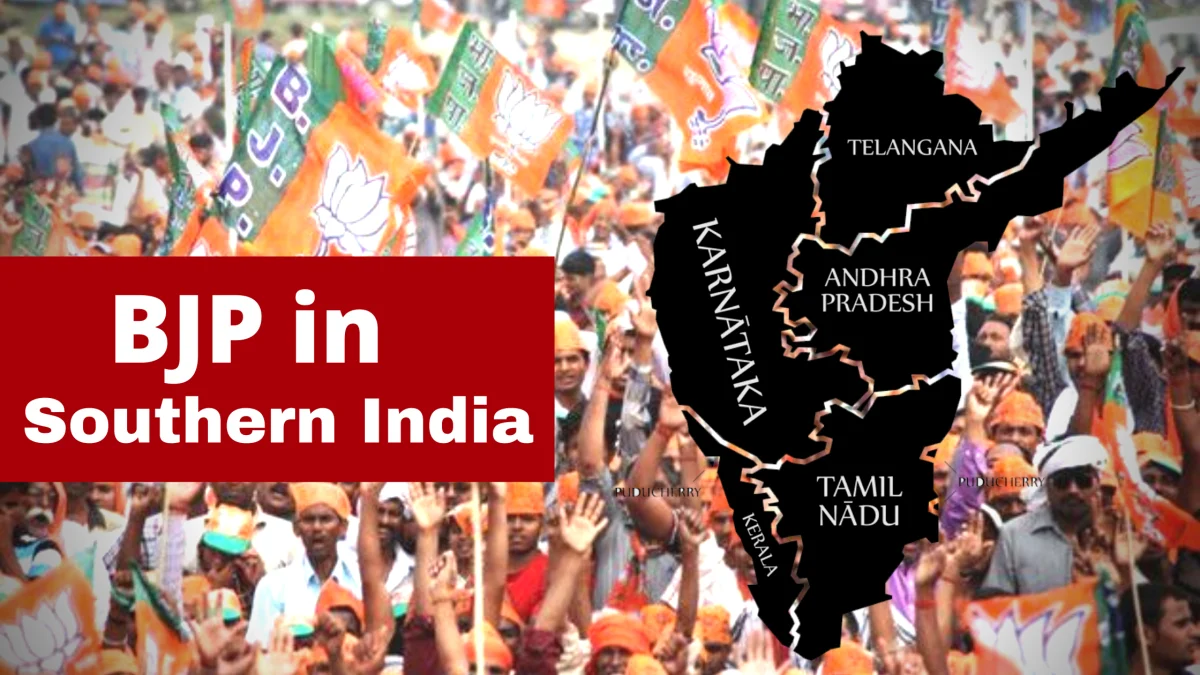
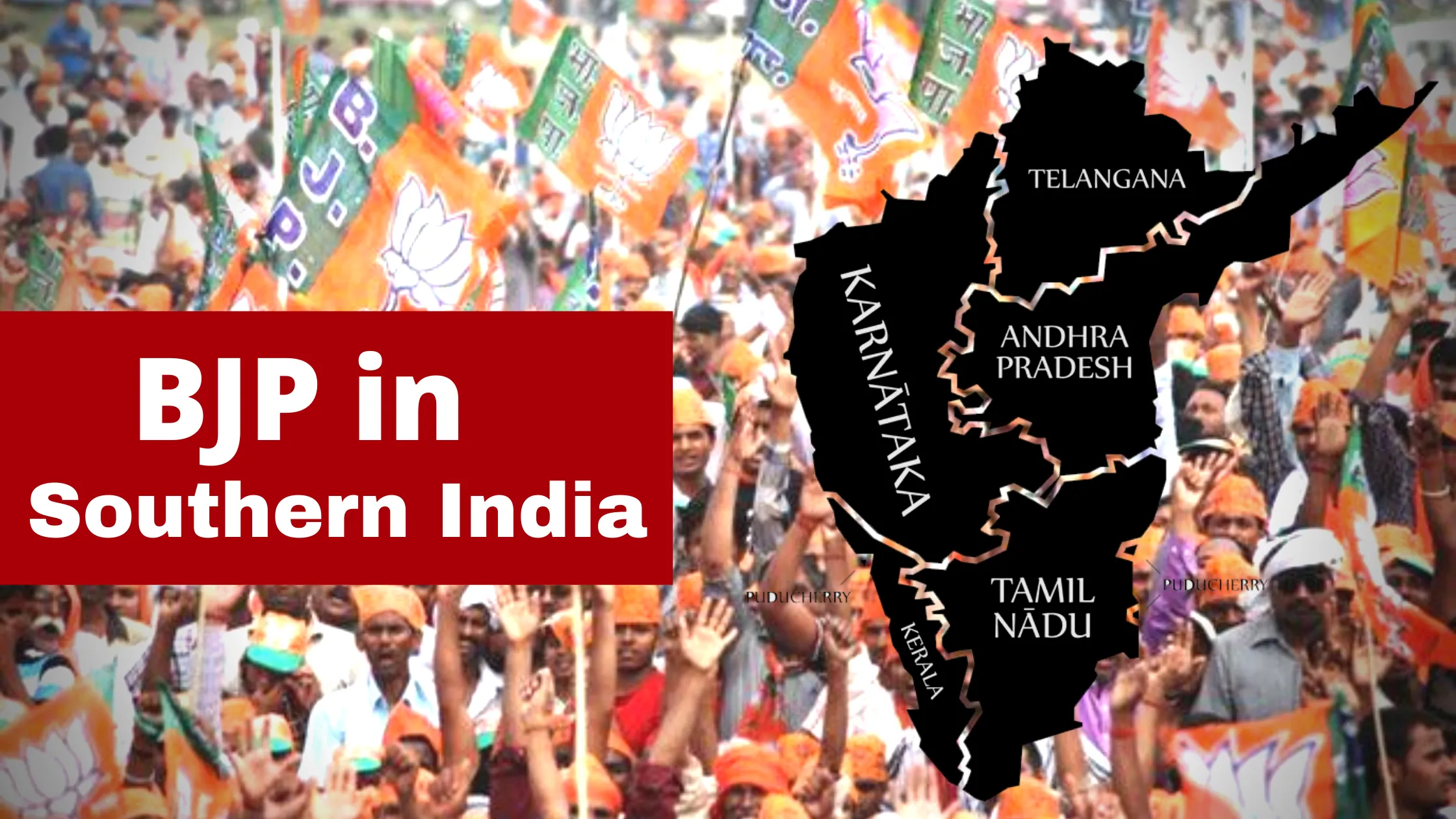
BJP in Southern IndiaThe 2008 Karnataka Legislative Assembly Election served as Bhartiya Janata Party’s gateway to southern India where, for the first time, the party formed government despite not winning a clear majority.  Since then, the party has effectively consolidated a dedicated voter base in most of the adjoining states with the exception of Kerala where the Left Democratic Front and the Congress party have managed retained power.
One of the prime reasons behind the saffron surge down south is the dwindling hold of regional parties over traditionally held constituencies. Parties like AIADMK, Telangana Rashtra Samithi, Telugu Desam Party, Yuvajana Sramika Rythu Congress Party, and Janata Dal (Secular), which have long enjoyed cultural support in certain states owing to family fiefdoms, have been unable to sustain themselves over the years. This coupled with a unified awakening of Hindu consciousness in the southern region has sidelined party dynasties that have ruled Karnataka, Kerala, Tamil Nadu, and Andhra Pradesh for decades. Additionally, with a politically disintegrating Congress party, voters now look over to the BJP for economic growth and stability. The Bhartiya Janata Party has also, through the course of several election cycles, formed strategic alliances to come to power. An example of the same being the JDS-BJP alliance in the state of Karnataka.

Tracing the BJP’s trajectory in Kerala, the party has managed to establish a presence over the years. The Bhartiya Janata Party has substantially increased its vote share from 6.03% in the 2011 Legislative Assembly to 14.96% in the 2016 State Election. Keeping in line with its progress, the party won 15% of the votes in Kerala’s 2020 Civic Body Election. While it has not been able to form government in Kerala so far, the BJP is projected to win a substantial vote share in the upcoming election. Similarly, the party has been unable to win a single seat in the Union Territory of Puducherry, since its vote share has only gone up to 2.4%. The nominations of three MLAs from the Bhartiya Janata Party by the Centre in 2018 to the assembly sparked controversy which was quickly dispersed by the Madras High Court by upholding the Centre’s action. The party is expected to form a coalition with AIADMK in the upcoming election.

With the exception of Kerala and Puducherry, the BJP has practically taken over the southern states, projecting a unified front against politically endorsed regionalism which has served local parties for decades. The party’s stellar performance in the newly formed state of Telangana at the assembly and municipal level is a testament to their growing influence in South. Although the BJP’s seat share in Andhra Pradesh has dropped from 4 to none, the party has been able to establish a vote bank in the state given their strategic alliances with the existing regional parties. Similarly, in Tamil Nadu, the party has been observing a steady rise in popularity given their promises of fast paced economic development. While the Bhartiya Janata Party has not been able to solidify power in the southern states, it is in the process of doing so as a part of its expansionist agenda. The party attempts to unite a fragmented South under the banner of Hinduism and economic development.

Categories
Assembly Election Political research

Battle of West Bengal

West Bengal Election 2021

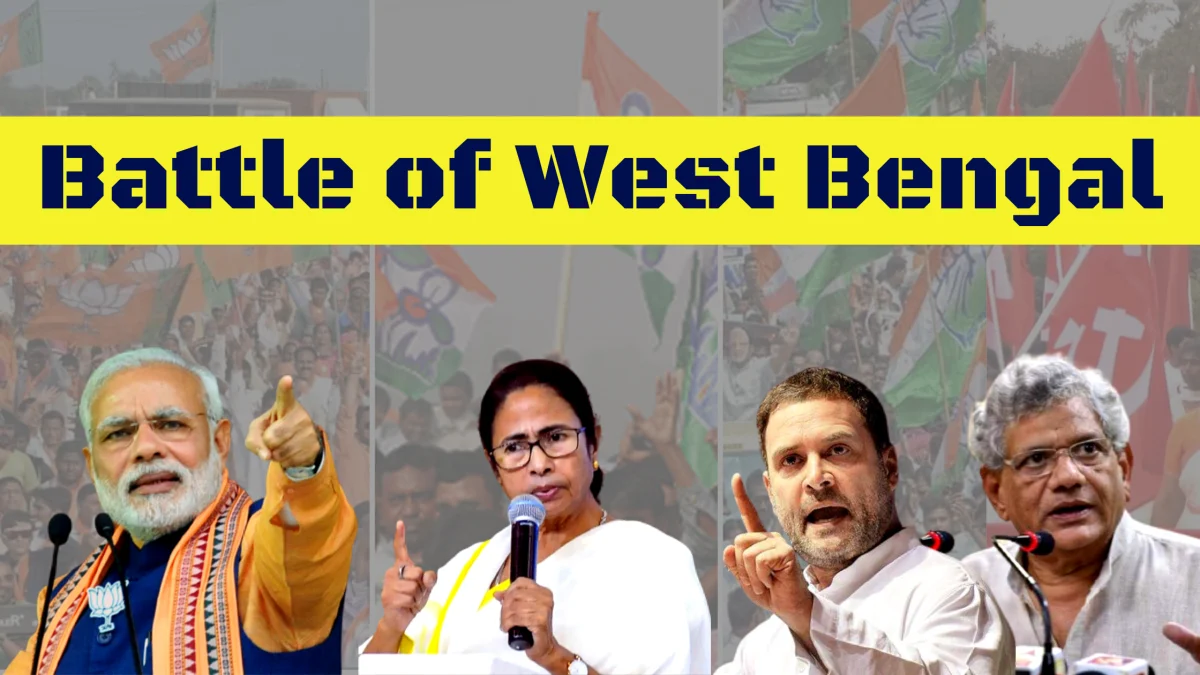
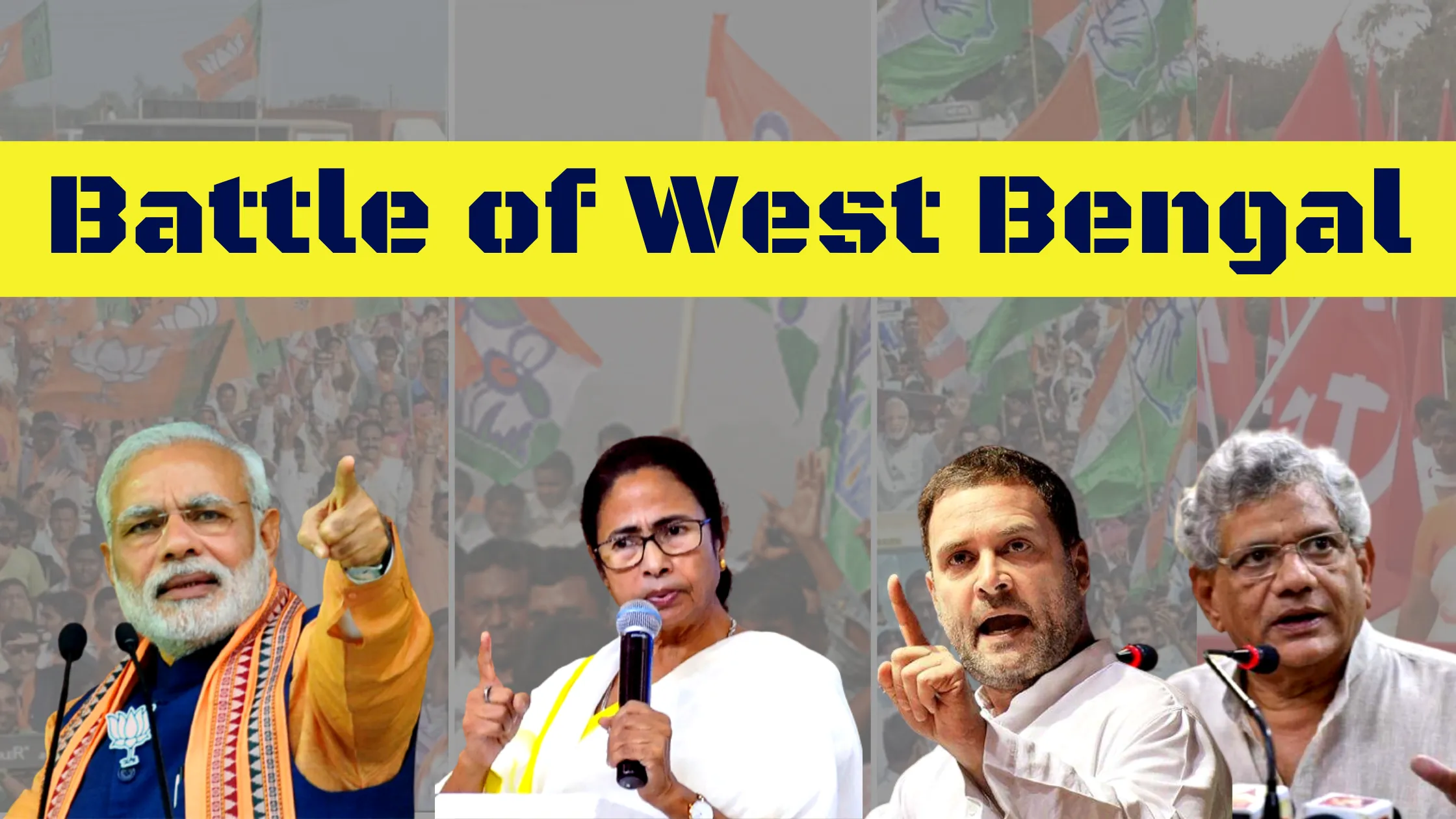
In an attempt to stir the political conscience of West Bengal, the All-India Trinamool Congress used the anti-industrial sentiments of the population as a campaigning tool in 2011. A decade later, the party’s aversion to fast-paced industrialization has landed it in murky waters. With the advent of formidable opposition, the 2021 West Bengal Legislative Assembly Election has proven to be diverse in terms of participation and campaigning issues, ahead of polling.

The major parties contesting election in 2021 include the All-India Trinamool Congress (Federal Front), the Indian National Congress along with Communist Party of India – Marxist (Mahajot) and the Bharatiya Janata Party. The Trinamool Congress has retained its approach of rolling out mass distributive and other policies right before election season. With policies like Swyastha Sathi, a healthcare initiative, and Duare Sarkarand, the party hopes to retain its voter base. Party leadership has also made use of the ‘othering’ approach to draw distinction between the BJP, a predominantly Hindu party, and homegrown TMC. The party has also sparing used the Citizenship Amendment Act to attack the BJP.

BJP alleges that the Trinamool Congress lacks vision for the state. The party promises more rapid industrialization and economic development in the state if voted to power. Additionally, the Bharatiya Janata Party has also employed use of phrases such as “Ebar Bangla, parle shamla” (Save Bengal this time) hinting at Mamata Banerjee’s strategy of minority appeasement and lack of good economic governance. The opposition, including the INC and CPI (M) along with the BJP have severely criticized Banerjee’s use of political violence to retain voter support.

In 2016 Legislative Assembly Election the primary campaigning issues used by the opposition were the Narada and Saradha scandals, lack of industrialization, and flaming of political violence by TMC. However, the party responded by introducing mass distributive schemes of grains and pulses for the poor and by restoring infrastructure across the state. Millions of minority students were handed out scholarships and the Muslim community was registered under the OBC category.

While political strategies change with every election cycle, their nature remains stagnant. Parties pick on each other’s shortcomings to secure their own vote bank. However, instances of violence close to elections have become more predominant in West Bengal with no solution in sight.

Categories
Assembly Election Election Political research Social Media Management

Digital Media Strategies in Political Campaign

Digital Media Strategies in Political Campaign

With the advent of digital media, the nature of political campaigning has changed over the years. Digital campaigning, at a national level, was first introduced by the Bharatiya Janata Party in the 2009 Lok Sabha Election. The 2014 Lok Sabha Election was a testament to the same where the BJP, with its dedicated social media campaigning, took the country by storm. Since then parties across the country have been drifting away from more traditional structures of reaching out to their audience and have started embracing digital campaigning.

Interactive Voice Response (IVR) has emerged as an effective tool to gather public opinion towards candidates. IVRs engage with voters through automated outbound calls and voters register their opinions by merely pressing a button on their phone. Additionally, bulk messages or blast messages also help candidates reach out to a wide audience and keep in touch with them. It is a one-way communicative channel that makes one-to-one communication easier. Furthermore, with a huge chunk of the population making use of WhatsApp, it also has come up as a platform for engagement by candidates through forwarded messages.

The most crucial element to digital campaigning is collating a specialized media team. The team creates content and engages with people for the candidate. Fundamentally, social media campaigns, across platforms, should appeal to a wide demographic. However, since most candidates have a target audience based on the nature of their policies, specialized ads for a targeted audience on certain social media platforms should also be a priority. Another important aspect of digital campaigning is personal engagement. This personal engagement, through live videos or tweets, should ideally be of positive nature with personal anecdotes.

It is also important for the campaign team to be consistent with their posting, whether it is on social media or a website made for the campaign. The goal of leaving an impact on people can be achieved by churning more graphic content with images, slogans, party/candidate symbols, colors, etc. in lieu of written content.

Hence, digital campaigning can help candidates reach out to a wider audience if used strategically. It is an attractive campaigning field since a lot of everyday discourse happens on the internet. Candidates can expand their voter base with the help of impactful targeted ad campaigns and change the course of the election.